
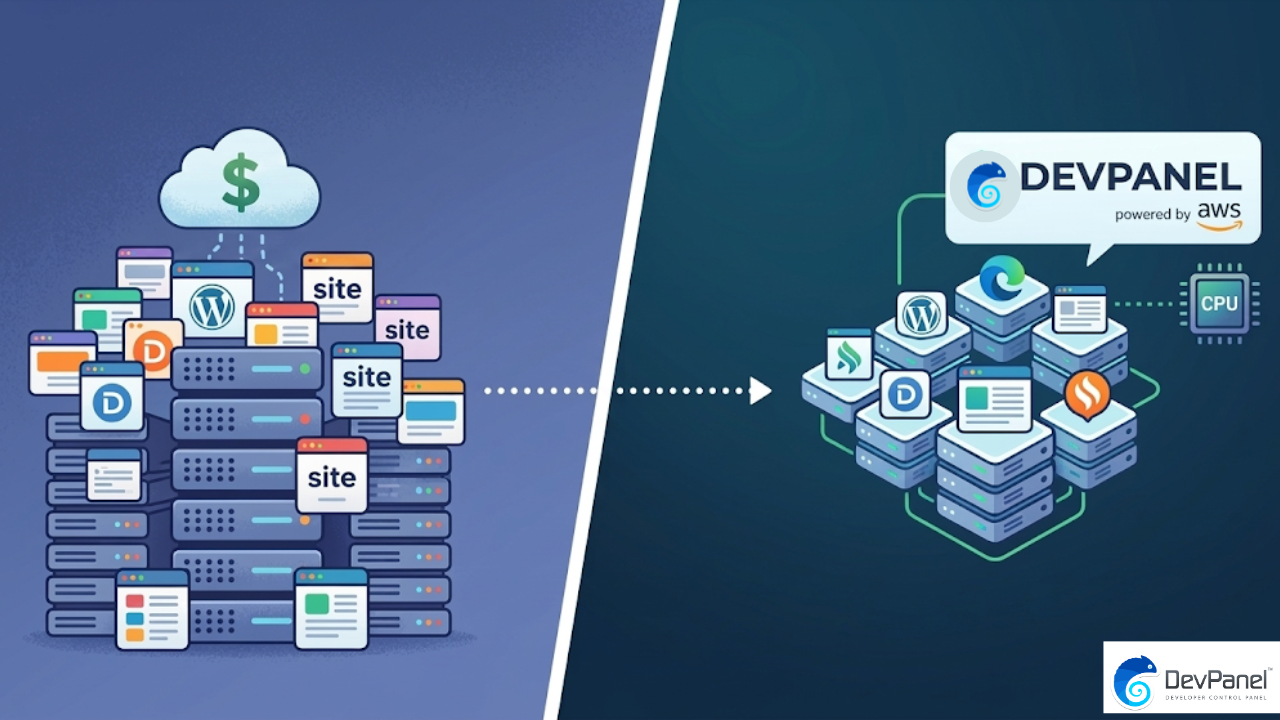
Cheap Ways to Host Multiple Websites on AWS in 2026 (Pantheon vs AWS vs AWS + DevPanel)
Many organizations assume hosting multiple high‑traffic websites requires expensive enterprise platforms, yet in 2026 many teams report 75% to 80% lower hosting costs when running sites on AWS with DevPanel compared to legacy platforms like Pantheon. The shift toward cloud‑controlled infrastructure is changing how agencies, enterprises, and nonprofits scale large portfolios of websites.
Key Takeaways
| Question | Short Answer |
|---|---|
| What is the cheapest way to host multiple high‑traffic sites on AWS? | Running infrastructure in your own cloud account and automating deployments with DevPanel often reduces operational costs significantly. |
| How much does AWS hosting typically cost? | Starter clusters for multi‑site deployments typically start around $250–$280/month when automated through platforms like DevPanel pricing. |
| Is Pantheon cheaper than AWS? | Pantheon offers simplicity but charges tier‑based pricing per site, which often increases quickly for high‑traffic portfolios. |
| Can agencies host unlimited websites on AWS? | Yes. Agencies can deploy many projects within a single AWS cluster using automation tools like DevPanel platform features. |
| How do developers manage multiple environments? | Teams typically rely on automated cloud environments created with tools like cloud development environments. |
| Who benefits most from AWS multi‑site hosting? | Agencies, enterprises, and organizations managing dozens of high‑traffic websites. |
1. Why High‑Traffic Multi‑Site Hosting Is Expensive Without the Right Architecture
Hosting multiple high‑traffic websites creates a unique challenge. Each site needs reliable compute resources, database performance, and protection against traffic spikes.
Traditional managed platforms simplify operations but charge per‑site tiers. As traffic grows, costs multiply quickly across dozens or hundreds of sites.
AWS offers raw infrastructure flexibility. The challenge is operational complexity without automation.
This is where modern cloud automation platforms change the economics. Teams gain direct control of infrastructure while removing most of the DevOps burden.
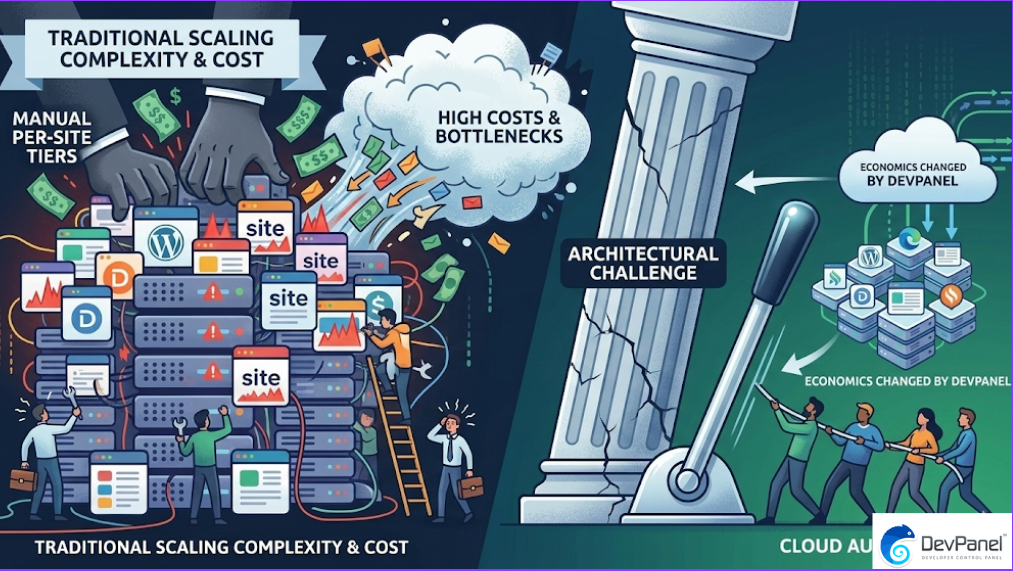
2. Pantheon Hosting vs AWS Infrastructure: Key Cost Differences
Pantheon is a managed shared hosting platform designed primarily for WordPress and Drupal. It removes infrastructure management but introduces tier‑based pricing that scales with traffic and number of sites.
AWS works differently. You pay directly for compute, storage, and networking resources used by your applications.
For high‑traffic portfolios, the cost model becomes the deciding factor.
| Factor | Pantheon | AWS |
|---|---|---|
| Pricing model | Per‑site tier | Infrastructure usage |
| Scaling control | Limited | Full control |
| Infrastructure ownership | Platform controlled | Your AWS account |
| Multi‑site economics | Costs rise per site | Shared infrastructure |
The challenge with AWS alone is the operational overhead. Teams must configure and manage clusters, scaling policies, networking, and deployment pipelines manually.
3. The Middle Path: AWS With Automation Platforms Like DevPanel
Running AWS with automation tools is the middle path between raw infrastructure and expensive PaaS platforms. It combines direct cloud ownership with simplified management.
Platforms like DevPanel automate cluster provisioning, CI/CD pipelines, and deployment workflows. Teams keep full root access while eliminating repetitive operations.
Infrastructure remains inside your AWS account. This keeps costs transparent and predictable.
For agencies managing dozens of sites, shared clusters significantly reduce per‑site costs.
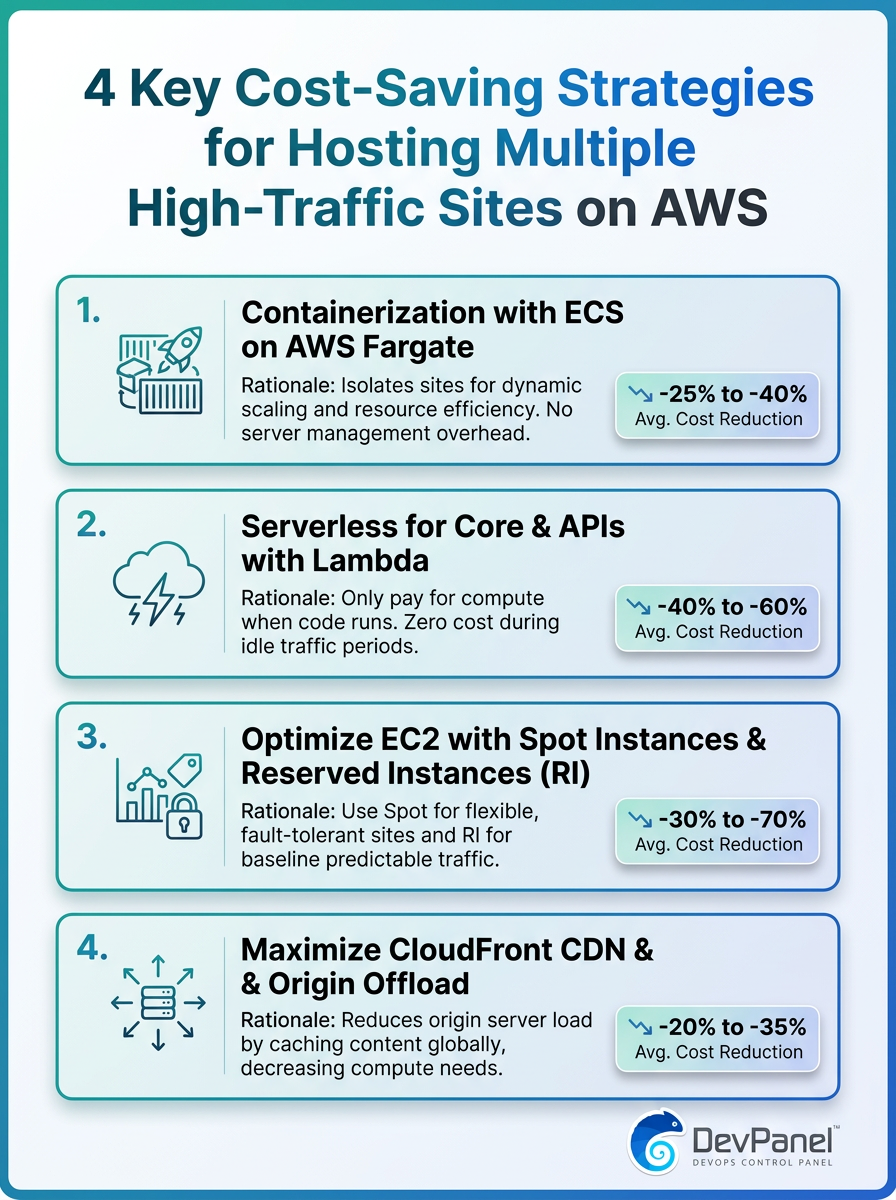
Discover four practical, cost-saving strategies for hosting multiple high-traffic sites on AWS. Learn how to optimize performance while cutting unnecessary spend.
4. DevPanel Pricing and Infrastructure Cost Structure
The DevPanel platform follows a Bring Your Own Cloud model. Your applications run directly inside your AWS account.
This means you only pay for actual infrastructure usage. The DevPanel Community Edition is free to use.
Need an estimate of what Your project will cost : Lets Talk
Did You Know?
AWS Graviton4 instances deliver a 40% better price‑performance ratio for WordPress workloads compared to traditional x86 instances.
5. Multi‑Site Hosting Architecture for Agencies
Digital agencies often manage dozens or hundreds of client websites. Running each site on a separate managed platform becomes extremely expensive.
AWS cluster architecture allows multiple sites to share the same infrastructure. Traffic spikes are balanced across scalable nodes.
DevPanel simplifies this architecture. Teams can deploy, clone, and scale sites using standardized workflows.
Automation reduces manual configuration and speeds up onboarding of new projects.
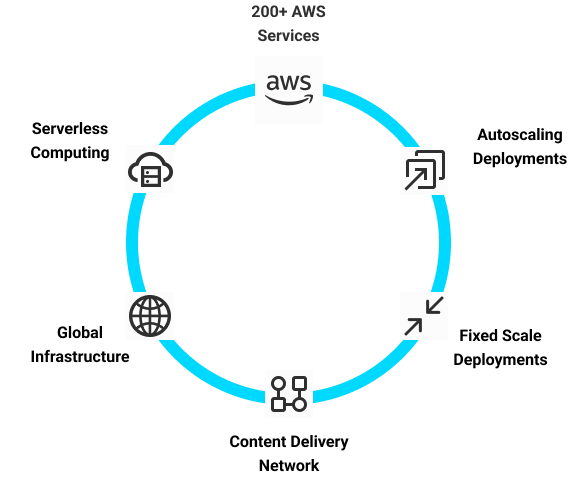
6. Built‑In Security and Compliance for High‑Traffic Sites
Large traffic volumes increase exposure to security risks. Infrastructure must support firewall protection, backups, and disaster recovery.
AWS provides a robust security foundation. DevPanel layers automation and monitoring on top.
Organizations retain full ownership of their infrastructure. Compliance controls remain inside their own cloud account.
This approach is often required for regulated industries.
7. Cloud Development Environments Reduce Operational Overhead
Managing multiple websites requires efficient development workflows. Teams must create staging environments, test releases, and coordinate deployments.
Cloud development environments solve this problem. Developers can launch fully configured environments in minutes.
DevPanel integrates browser‑based tools like VS Code and PhpMyAdmin. This standardizes development across teams.
Every branch and environment stays connected to the same source repository.
8. Hosting High‑Traffic Sites for Nonprofits and Budget‑Sensitive Teams
Nonprofits often run high‑traffic campaigns during fundraising events. Infrastructure must scale quickly without breaking limited budgets.
AWS clusters combined with automation offer predictable costs. Organizations only pay for infrastructure usage.
Both DevPanel and AWS also provide free hosting credits and automation tools. These reduce the technical burden on small teams.
For nonprofits, the ability to scale during campaigns is essential.
Did You Know?
Hosting costs for sites receiving around 200,000 monthly visitors often reach about $1,000 per month on Pantheon, while comparable AWS infrastructure can start between $140 and $250.
9. Performance Optimization for Massive Traffic Spikes
High‑traffic websites require more than raw compute power. Database performance, caching layers, and load balancing must work together.
AWS infrastructure supports advanced scaling strategies. Sites can automatically scale during traffic surges.
DevPanel integrates deployment strategies like blue‑green releases. This prevents downtime during updates.
These capabilities are critical for media platforms, enterprise sites, and government portals.
10. Choosing the Right Strategy: Pantheon vs AWS vs AWS + DevPanel
The best hosting strategy depends on operational capacity and scale. Small teams may prefer fully managed platforms despite higher costs.
Large organizations usually prioritize infrastructure ownership and cost efficiency. This is where AWS becomes attractive.
Automation platforms bridge the gap between control and usability. This is where DevPanel becomes attractive.
Pantheon is a shred hosting Platform which exposes you to the noisy neighbor performance problems.
| Option | Best For | Cost Control | Flexibility |
|---|---|---|---|
| Pantheon | Small teams | Low | Limited |
| AWS Manual | DevOps teams | High | Very high |
| AWS + DevPanel | Agencies and enterprises | High | High with automation |
Conclusion
Hosting multiple high‑traffic websites does not have to require enterprise platform pricing. In 2026, many organizations are shifting toward AWS infrastructure to gain direct control of performance and cost.
Pantheon simplifies hosting but becomes expensive as site portfolios grow. Raw AWS offers flexibility but requires significant operational expertise.
The middle path, AWS combined with automation platforms like DevPanel, gives teams both control and efficiency. You keep infrastructure inside your own cloud account while reducing DevOps complexity.
For agencies, enterprises, nonprofits, and government teams managing many high‑traffic websites, this approach often delivers the best balance of scalability, performance, and predictable costs.