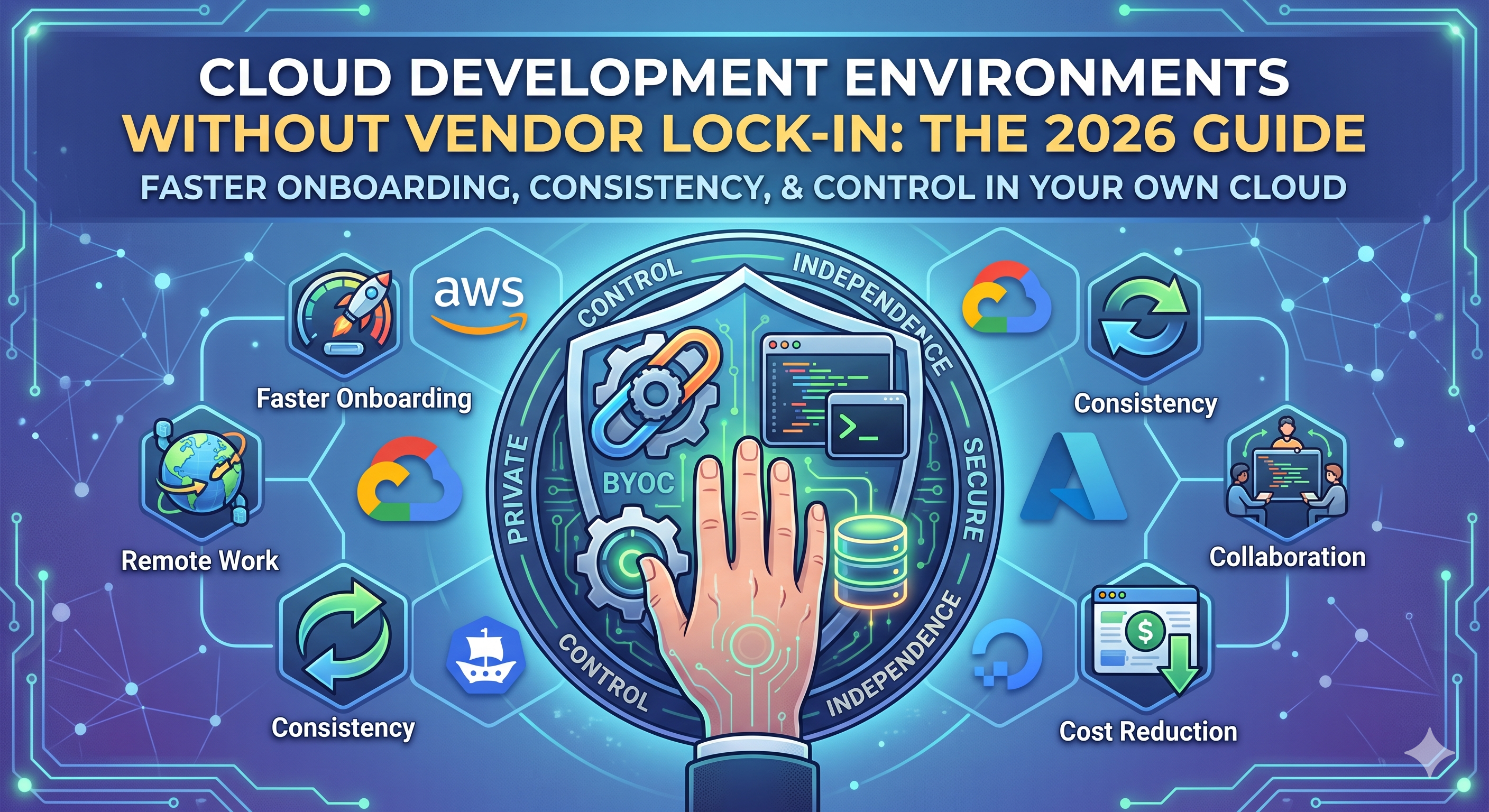
Cloud Development Environments Without Vendor Lock-In: The 2026 Guide
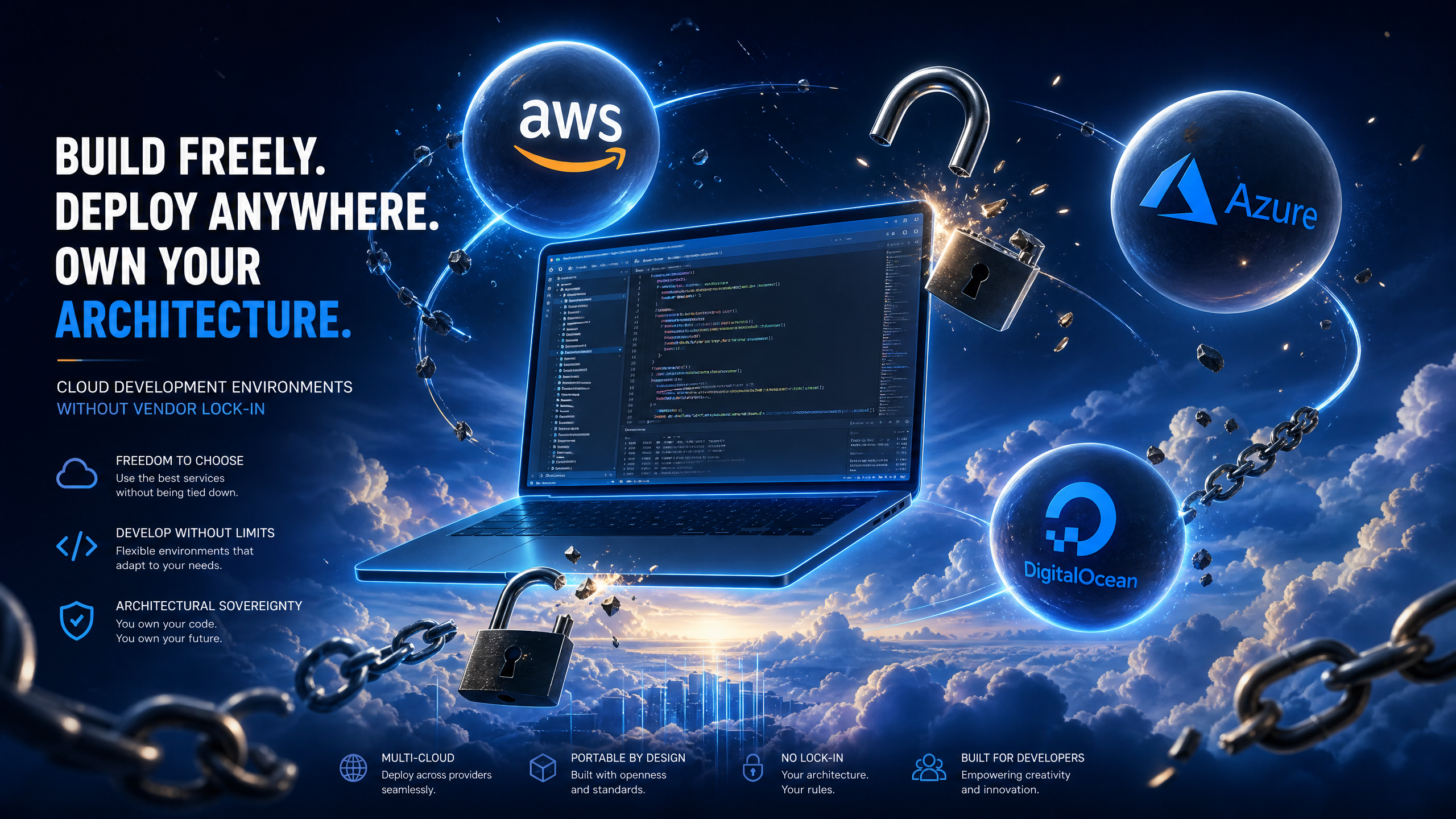
For years, software engineering organizations were forced to choose between two fundamentally flawed development models: building directly on physical laptops (with fragmented environments and slow onboarding), or embracing the first generation of managed Cloud Development Environments (CDEs) which meant surrendering infrastructure control and locking into aggressive vendor markups.
In 2026, this binary tradeoff is obsolete. The modern battleground centers entirely on architectural sovereignty: Who owns the cloud infrastructure your development environments run on?
This guide explores the structural shift toward decentralized, high-performance Cloud Development Environments, specifically highlighting how the Bring Your Own Cloud (BYOC) model offers teams a modern developer experience without sacrificing data residency, infrastructure control, or financial predictability.
Key Takeaways at a Glance
| Question | Core Concept | Impact on Engineering Teams |
|---|---|---|
| What is a CDE? | A remotely hosted, centrally configured development workspace. | Eliminates manual laptop setups; standardizes dependencies. |
| What is a BYOC CDE? | A deployment model where the CDE platform operates inside your own cloud account. | Preserves full ownership over data, network perimeters, and infrastructure spend. |
| How does BYOC lower costs? | It routes infrastructure consumption directly to your cloud provider bill. | Eliminates vendor markups on compute and leverages existing cloud contracts. |
| Is DevPanel free? | Yes, the Community Edition is free to run within your own cloud. | Unrestricted access to teams; you only pay your cloud provider for raw resources. |
What Is a Cloud Development Environment?
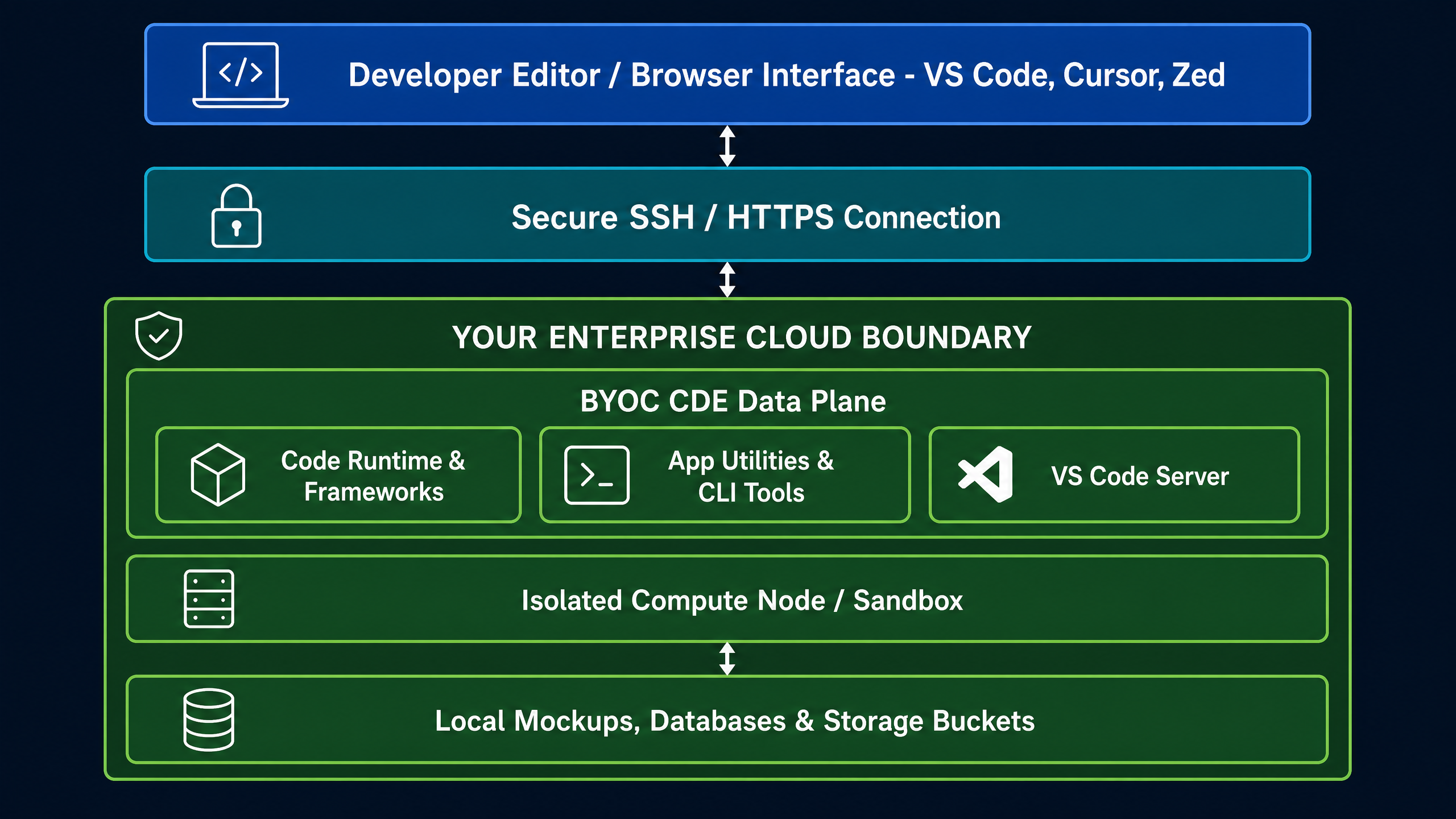
A Cloud Development Environment (CDE) is a complete, preconfigured software development workspace that executes on remote infrastructure. It moves the entire execution layer of software engineering off localized hardware and drops it into a scalable, centralized compute tier.
Unlike a Cloud IDE—which is just the browser-based interface—a CDE represents the full backend stack (compute, runtimes, storage, services).
The fundamental goal of a CDE is to make the runtime environment fully declarative and repeatable. Instead of relying on a multi-page setup wiki, the environment configuration is treated as code. When a new engineer joins, they click a button, initialize a workspace, and start committing clean code within minutes.
Why Cloud Development Environments Are Non-Negotiable in 2026
The momentum behind CDE adoption is driven by concrete architectural demands:
- The Rise of AI Coding Agents: AI tools require deep execution access to run tests and compile code. CDEs provide isolated, highly controllable sandboxes where AI agents can execute safely without impacting corporate hardware.
- Modern Microservice Complexity: Modern applications rely on dense arrays of containerized microservices and databases. Attempting to run this complete stack locally degrades laptop performance. CDEs offload this heavy lifting to elastic cloud infrastructure.
- The Collapse of the Local Security Boundary: Storing source code and active production access tokens on local hard drives creates massive compliance risks. Centralizing workspaces inside cloud perimeters provides security teams with a clear point of control.
The Strategic Imperative of Bring Your Own Cloud (BYOC)
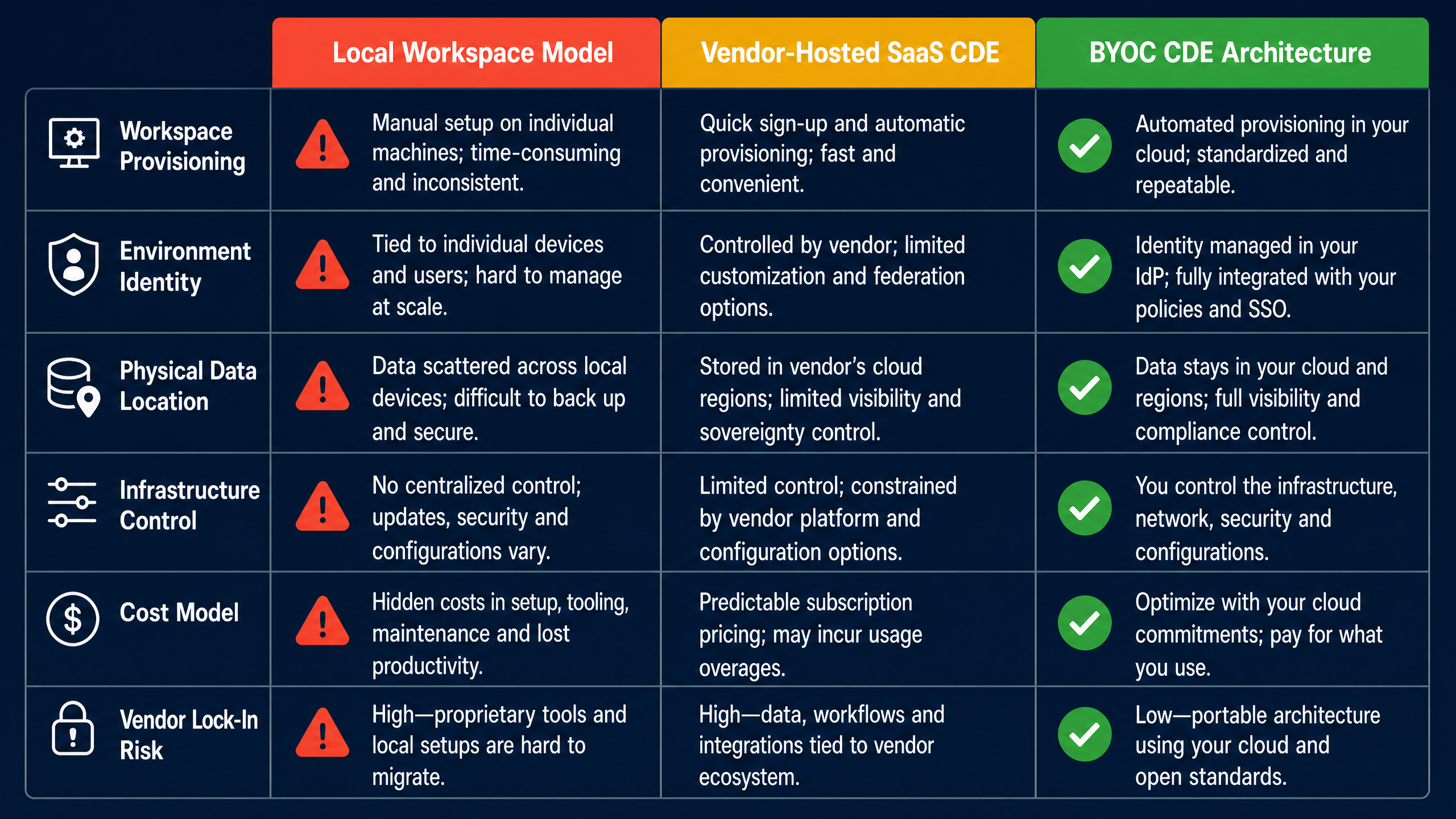
As organizations migrate to CDEs, they must choose between Vendor-Hosted SaaS CDEs and Bring Your Own Cloud (BYOC) CDEs.
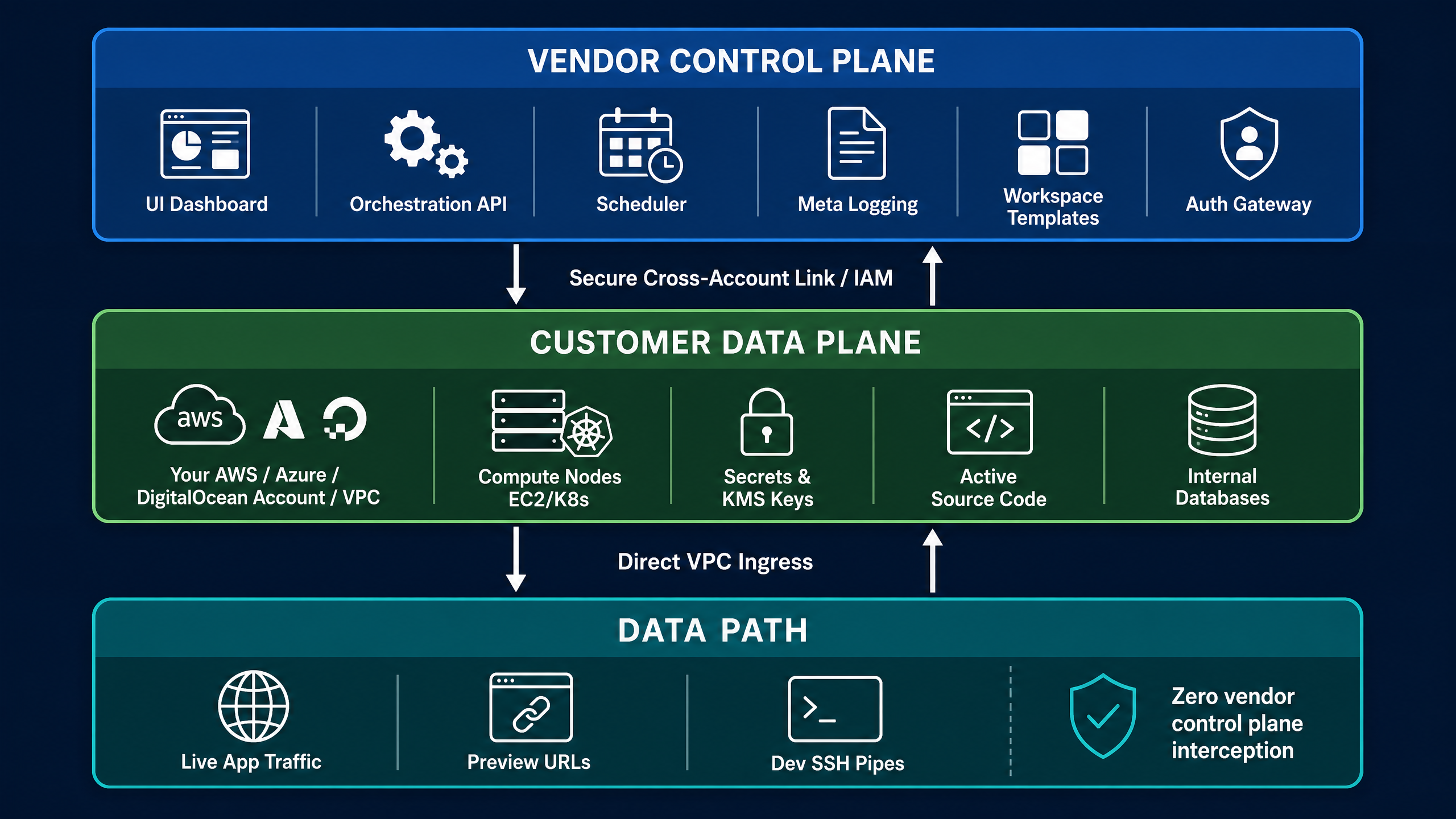
In a true BYOC architecture, the vendor manages the control plane (the UI and orchestration), but the data plane is completely embedded inside your corporate cloud account (AWS, Azure, DigitalOcean). Your active source code, databases, and configurations live exclusively inside your isolated virtual private clouds (VPCs). The vendor’s infrastructure is completely bypassed during active execution.
DevPanel’s Approach to Cloud Development Environments
DevPanel is an application orchestration and workspace management platform designed specifically around the BYOC model. It gives development teams a highly responsive, automated developer experience while ensuring the underlying cloud real estate remains fully owned by your enterprise.
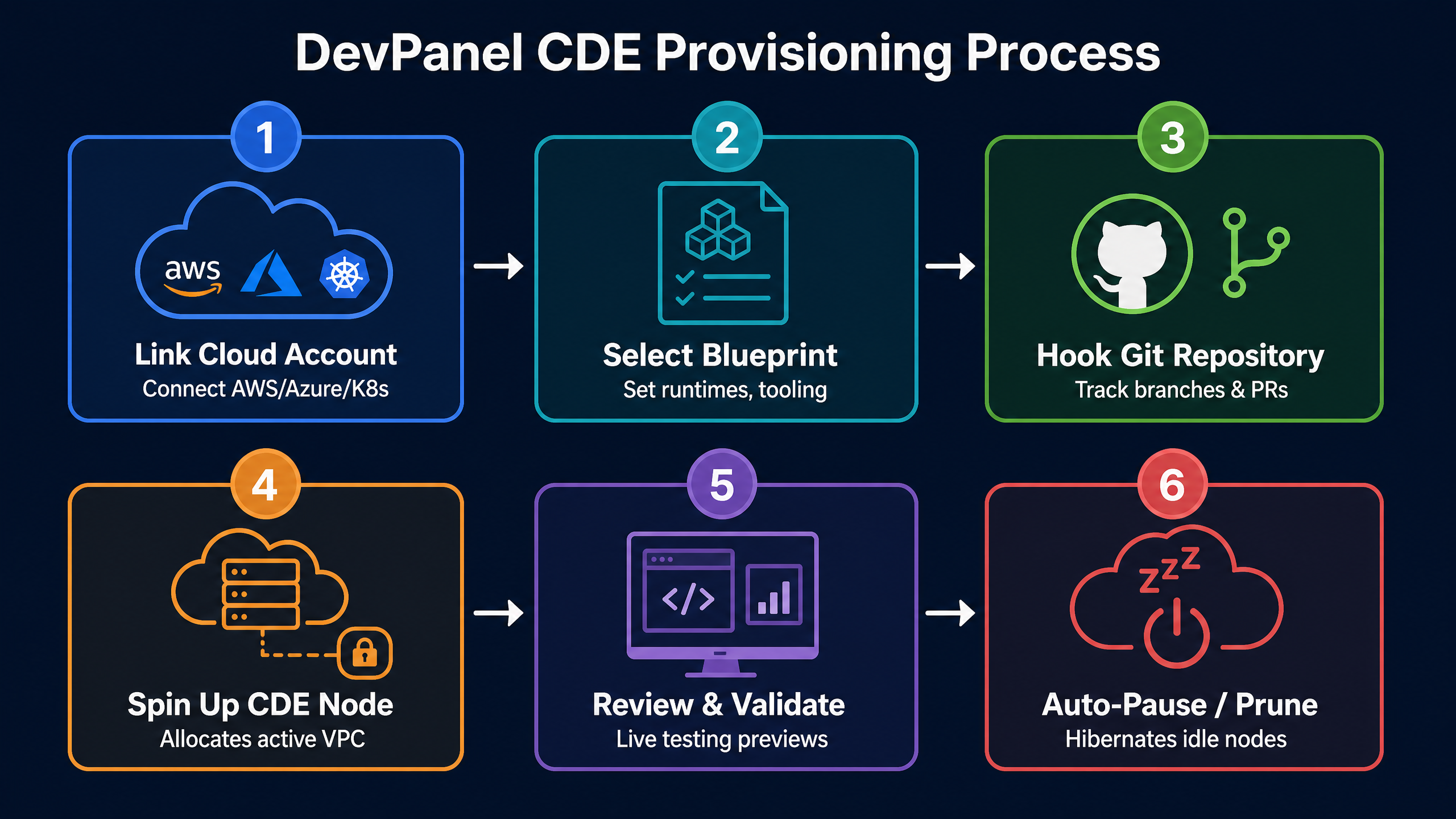
The DevPanel Community Edition allows teams to run full-scale development orchestration inside their private cloud environments without user caps. It supports multi-cloud elasticity, uncapped workspace scale, and direct provisioning of browser-optimized VS Code instances alongside secure SSH endpoints for desktop-native tools.
Real-World Operational Case Studies
The value of decoupling development platform orchestration from infrastructure ownership is best illustrated through real-world operational deployments.
Case Study 1: Global Government Media Enterprise
A major U.S. government news organization responsible for driving 1-2 billion monthly pageviews needed an alternative to their expensive managed cloud platform. Paying an intermediary vendor’s markup was costing them close to $1,000,000 annually.
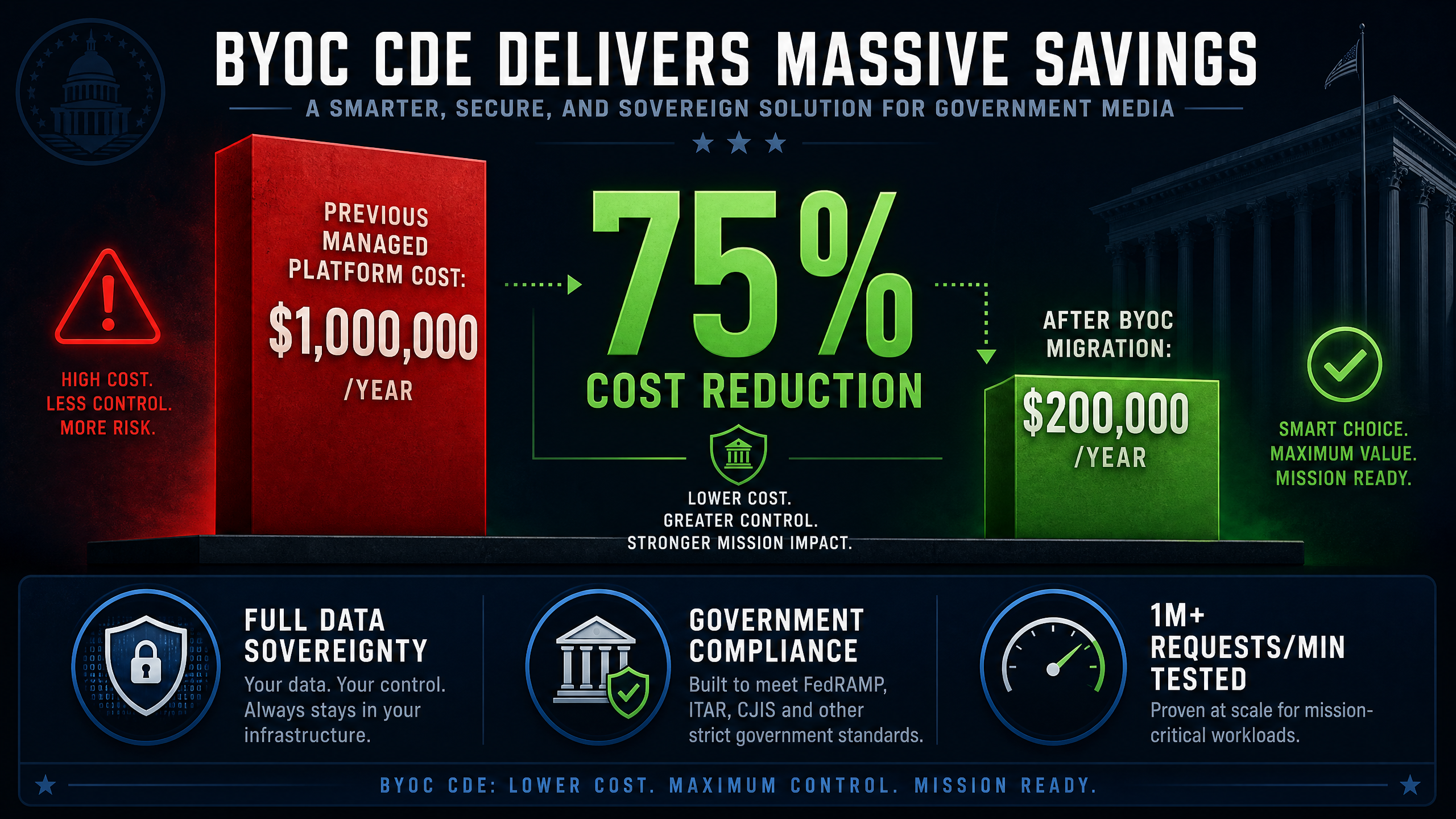
By deploying DevPanel directly on top of their internal AWS account structure, they achieved a massive 75% budget reduction. Their ongoing annual AWS hosting and management expenditures dropped to approximately $200,000, while every file and database record remained fully contained inside their strict, audited AWS perimeter.
Case Study 2: The Academy of Model Aeronautics
The Academy of Model Aeronautics (AMA) operates a massive web portfolio, managing more than 30 distinct websites across Drupal, Backdrop, and WordPress. Keeping these disparate environments updated required constant hand-offs.
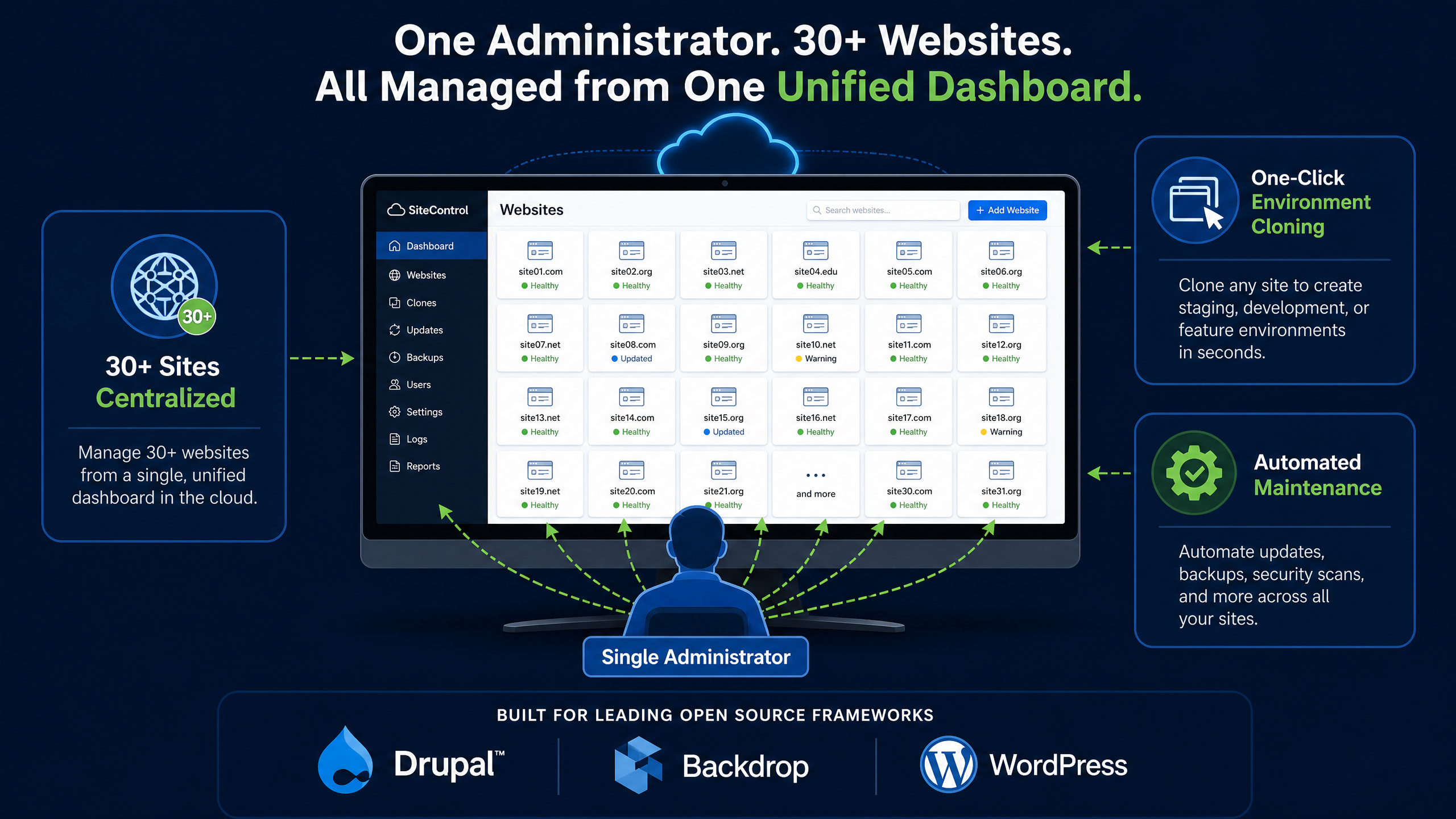
By integrating DevPanel, the AMA centralized all 30+ production sites and development environments into a single dashboard. Routine maintenance, multi-site deployments, and environment creation were condensed into a highly automated workflow managed by a single individual, completely removing the need for a dedicated cloud operations team.
Security, Auditing, and Compliance Strategies
Transitioning workspaces into a centralized CDE platform drastically improves an organization’s security posture compared to unmanaged local devices. Platform teams should audit platforms across core criteria regarding data integrity, system access, and platform safety.
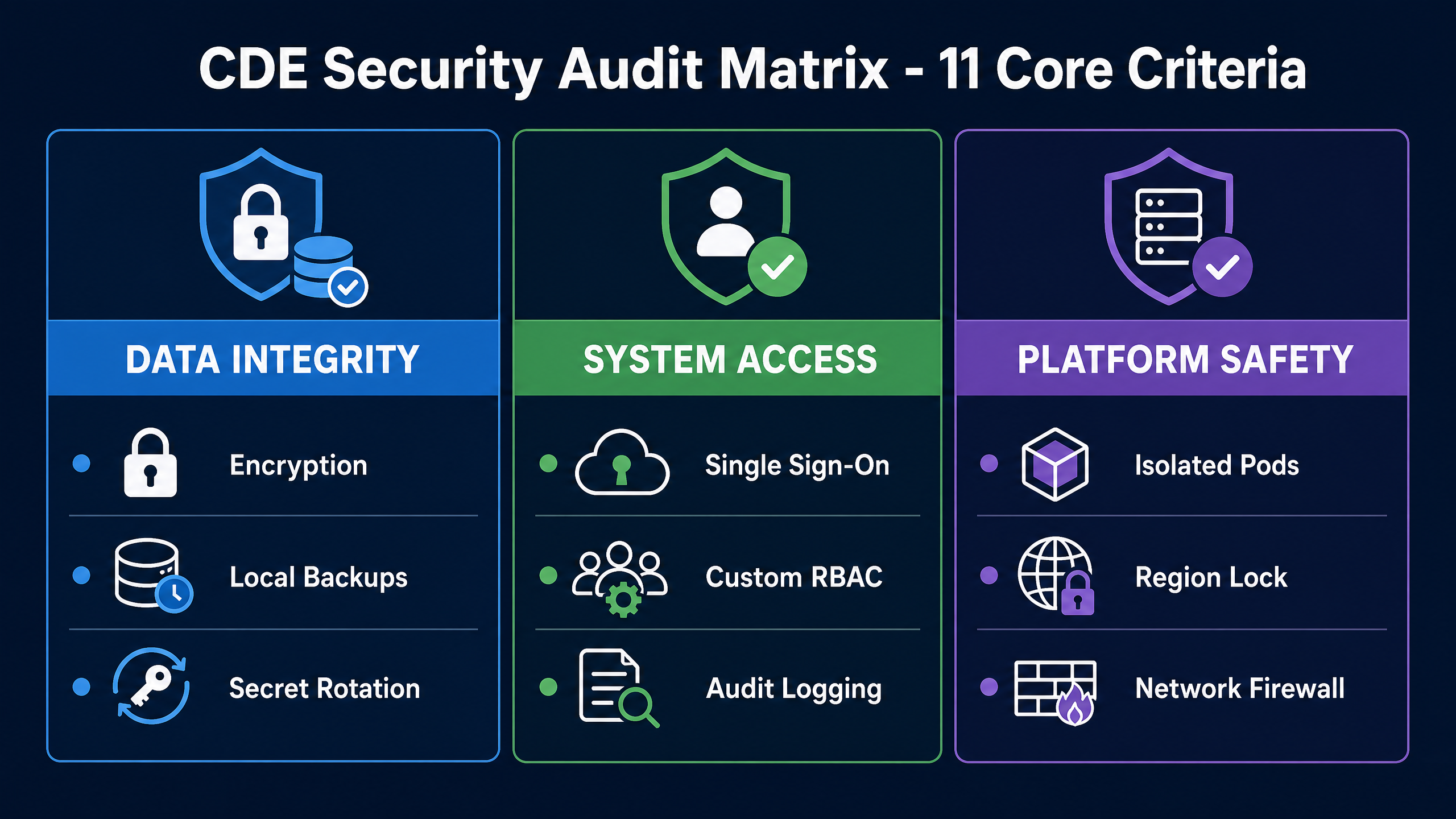
Key requirements include ensuring active source code remains stored inside encrypted volumes within your cloud parameter, integrating seamlessly with your Identity Providers (SSO), and verifying that the platform tracks every environment initialization and terminal access session for compliance audits.
Total Cost of Ownership (TCO) and Financial Efficiency
Evaluating the financial impact of a CDE platform requires looking beyond the basic software licensing subscription fee.
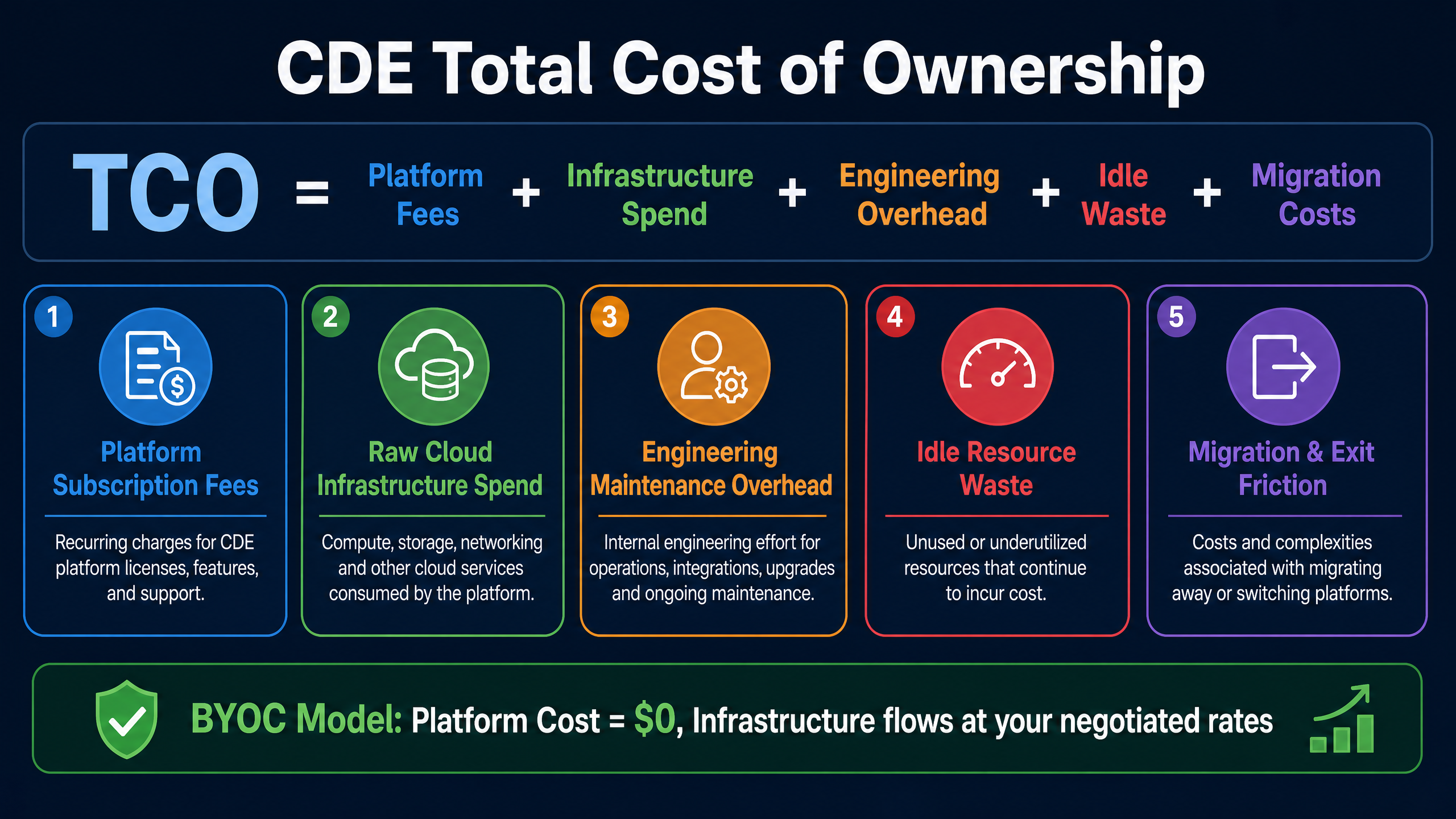
Under a vendor-managed SaaS model, infrastructure costs are heavily marked up by the provider, and migration costs can be exceptionally high due to proprietary system lock-in.
A BYOC model like DevPanel optimizes this equation. Because the platform subscription fee for the Community Edition is zero, and infrastructure costs flow directly through your existing cloud contract at your negotiated rates, your total cost of ownership remains highly predictable. Automated auto-pausing features significantly minimize idle resource waste by spinning down environments when developers are inactive.
Conclusion
In 2026, Cloud Development Environments are no longer a luxury—they are an operational necessity. However, surrendering your infrastructure to a vendor-hosted platform introduces unnecessary risk, high costs, and architectural lock-in.
By adopting a Bring Your Own Cloud (BYOC) CDE architecture, organizations can empower their developers with instantaneous, standardized environments while retaining complete sovereignty over their data, their security perimeters, and their cloud spend.