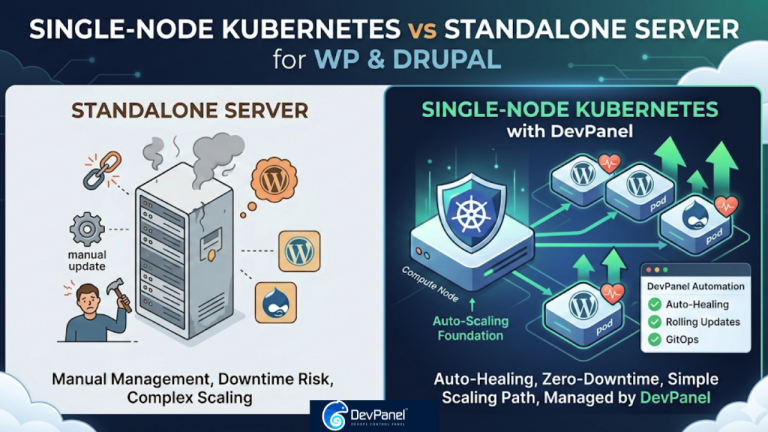
A modern tech infographic comparing traditional 'STANDALONE SERVER' hosting (left) against 'SINGLE-NODE KUBERNETES with DevPanel' (right) for WordPress and Drupal. The standalone side uses muted colors with a distressed, smoking server, distressed icons for manual updates, downtime risks, and complex scaling. The Kubernetes side uses vibrant blues and greens, showing a modern, glowing compute node with organized, blue-green pods for WordPress and Drupal. It highlights automated features like Auto-Healing (heart icon), Auto-Scaling (up arrow), and Rolling Updates (checkmarks), with text: 'Managed by DevPanel' and 'DevPanel Automation'. The small DevPanel logo is at the bottom right.

Why Kubernetes on a Single Node Beats Standalone Servers for WordPress & Drupal: A Technical Deep Dive

In the world of web hosting, the “Standard VPS” has long been the default. You spin up a Linux instance, install a LAMP or LEMP stack, and drop your WordPress or Drupal files into /var/www/html. It’s familiar, it’s simple, and for a long time, it was “good enough.” But as digital experiences become more complex…
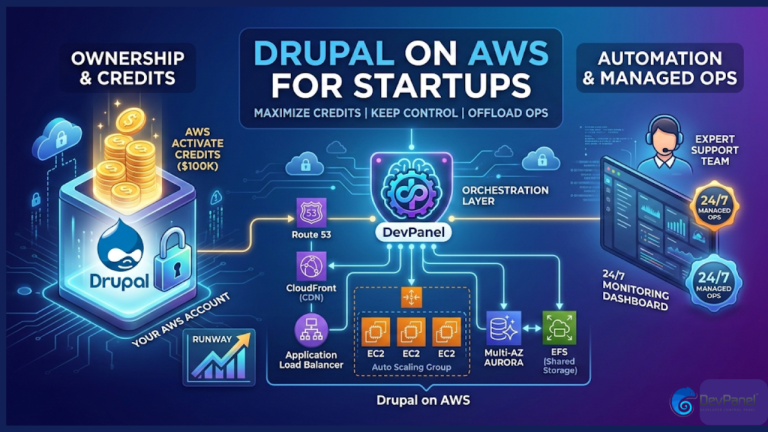
Infographic explaining how startups use a Private PaaS (like DevPanel) to run Drupal on AWS, maximizing AWS Activate credits while retaining control and offloading 24/7 operations.

Drupal on AWS for Startups: The “Private PaaS” Strategy to Maximize Credits and Control

In the high-stakes world of early-stage startups, “runway” is more than a buzzword—it is the literal measurement of your company’s life expectancy. For many founders, a major part of that runway comes in the form of cloud credits. Landing $25,000, $100,000, or even $200,000 in AWS Activate credits feels like winning the lottery. But here…

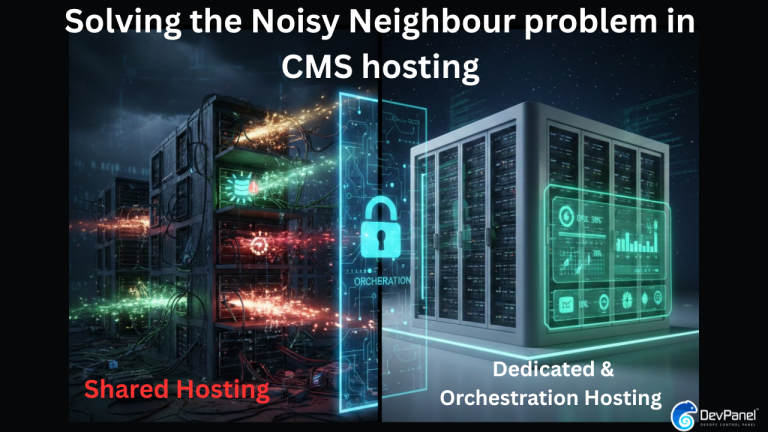
A split-screen illustration comparing shared CMS hosting with high resource contention (left) and dedicated orchestrated CMS hosting with clean, isolated performance metrics (right).

Solving the Noisy Neighbor Problem in CMS Hosting: The Ultimate Guide to Performance Isolation

The “noisy neighbor” problem represents one of the most persistent yet frequently misunderstood challenges in modern CMS hosting. For organizations running complex content management systems like Drupal and WordPress, this phenomenon can manifest as unpredictable performance degradation, inconsistent response times, and operational complexity that defies straightforward diagnosis. If you’ve ever experienced that sinking feeling where…

A conceptual 3D visualization of data sovereignty in a server room, comparing "Shared" hosting infrastructure with complex wiring and "Dedicated" hosting infrastructure protected by a glowing digital shield and lock icons, featuring a holographic global map and GDPR compliance checklist in the background.

Data Borders and CMS Architecture: Navigating Sovereignty in the Age of Cloud Compliance

In the modern digital landscape, the question “Where is my data?” has evolved from a simple IT inquiry into a multi-million dollar boardroom concern. For organizations deploying Content Management Systems (CMS) like Drupal and WordPress, the physical location of data is no longer the only factor—the legal jurisdiction governing that data is what defines its…

Drupal hosting cost compared across different Providers

Pantheon vs. Acquia vs. DevPanel: Choosing the Best Drupal Hosting in 2026

The Atomic Answer (Executive Summary): In 2026, the primary factor in choosing a Drupal host is Infrastructure Orchestration. Enterprises are moving away from “Opinionated PaaS” models like Pantheon and Acquia to avoid high markups and vendor lock-in. The strategic choice for 2026 is Hybrid Orchestration via platforms like DevPanel. This model allows you to deploy…

The Drupal drop logo next to the DigitalOcean logo displayed on a clean monitor screen with the text "Powering Digital Experiences" underneath.

The Definitive Guide to Hosting Drupal on DigitalOcean: 9 Deployment Strategies Analyzed

Introduction: The “Drupal on DigitalOcean” Paradox When teams decide to deploy Drupal on DigitalOcean, they are often driven by a desire for cost-efficiency and performance. DigitalOcean is famous for its developer-friendly Droplets starting at just $6/month and its robust managed databases. However, a paradox quickly emerges: the cheaper the infrastructure, the higher the operational labor…

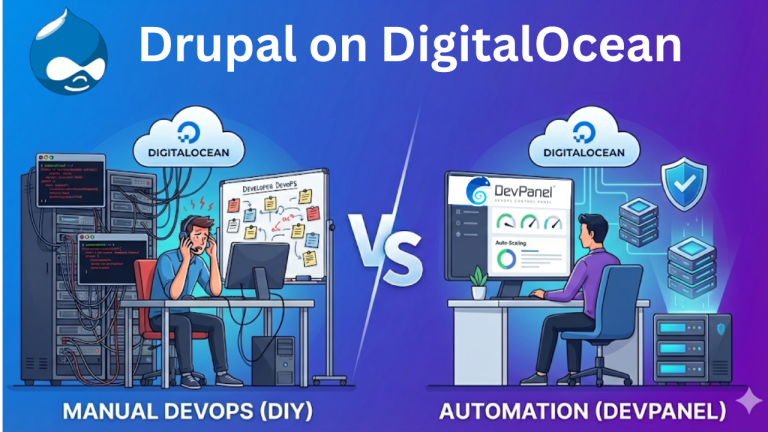
Split screen illustration comparing two hosting methods. Left side: A stressed developer dealing with tangled wires and a chaotic whiteboard labeled "Manual DevOps (DIY)". Right side: A calm developer using a clean DevPanel dashboard labeled "Automation (DevPanel)". Main text reads: "Drupal on DigitalOcean: The Hidden Cost of Manual DevOps vs. The Power of DevPanel Automation

Drupal on DigitalOcean: The Hidden Cost of Manual DevOps vs. The Power of DevPanel Automation

Introduction: The Infrastructure Paradox For organizations deploying Drupal today, the challenge is rarely about code—it is about the infrastructure that supports it. DigitalOcean has democratized access to cloud computing, offering raw power like Droplets and Kubernetes at accessible price points. However, for Drupal teams, this accessibility creates a paradox: low infrastructure costs often mask high…

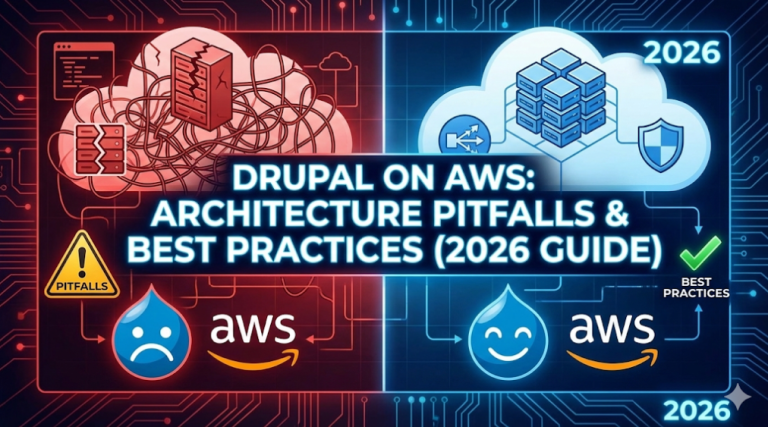
Here is the alt text for the image, optimized for both accessibility and SEO: ``` Infographic titled "DRUPAL ON AWS: ARCHITECTURE PITFALLS & BEST PRACTICES (2026 GUIDE)". The left side, colored red and labeled "PITFALLS", shows chaotic, tangled server wires and a broken rack next to a sad Drupal logo and AWS logo. The right side, colored blue and labeled "BEST PRACTICES", shows a clean, organized, and secure cloud server setup next to a happy Drupal logo and AWS logo. ```

Drupal on AWS: Architecture Pitfalls & Best Practices (2026 Guide)

🎧 Listen, Watch, & Learn Before diving into the architecture breakdown, explore the deep-dive research and multimedia discussions behind this guide. Key Takeaways (TL;DR) Why Your Drupal on AWS Architecture is Probably Wrong Hosting Drupal on Amazon Web Services (AWS) is far more complex than deploying a simple static application. A proper, production-grade setup is…