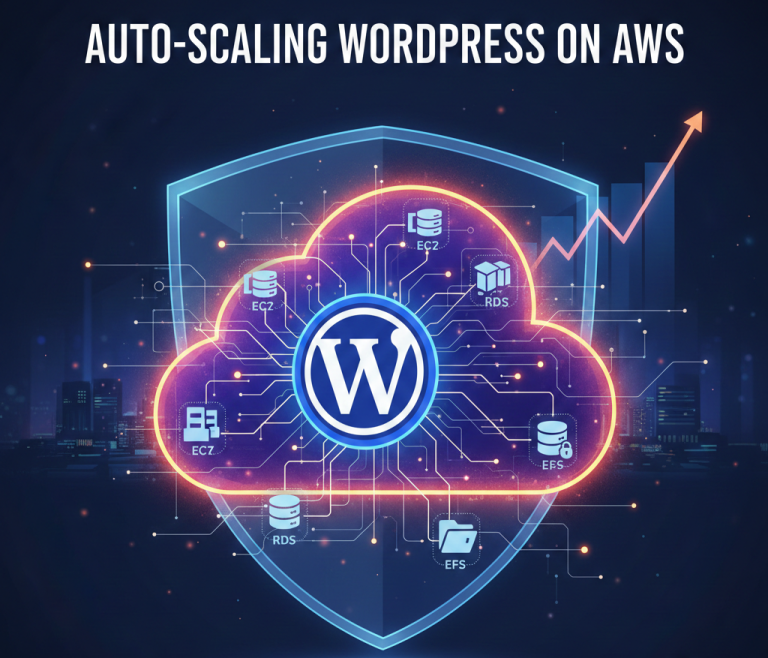
DevPanel logo next to a technical diagram of an auto-scaling WordPress architecture on AWS with cloud, database, and server icons.

Auto-Scaling WordPress on AWS: The Practical Guide To CMS Growth Without Outages

WordPress powers more than 43% of all websites, and as traffic spikes, manual server management quickly turns into a bottleneck. Auto-scaling WordPress on AWS gives growing CMS teams a way to handle surges predictably, with some sites cutting hosting costs by over 50% after migrating to autoscaled AWS infrastructure. Key Takeaways Question Answer What is…

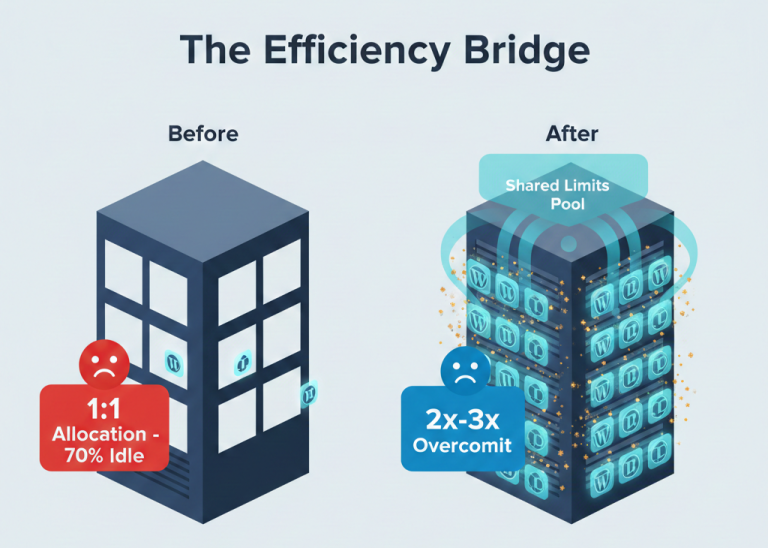
An infographic titled "The Efficiency Bridge" by DevPanel, comparing traditional 1:1 Kubernetes resource allocation to 2x-3x resource overcommit. The "Before" side shows a node with wasted space and 70% idleness , while the "After" side shows a high-density node with WordPress and Drupal sites efficiently sharing a limits pool to maximize profitability.

Kubernetes Resource Overcommit: The Ultimate Guide to Optimizing Infrastructure Efficiency and Costs

In the evolving world of cloud-native development, platform operators are constantly seeking the “holy grail” of infrastructure: the perfect balance between high performance and low cost. For many years, Kubernetes users relied on a 1:1 resource allocation strategy to ensure stability. However, this often leads to significant waste, especially for bursty applications. Kubernetes resource overcommit…

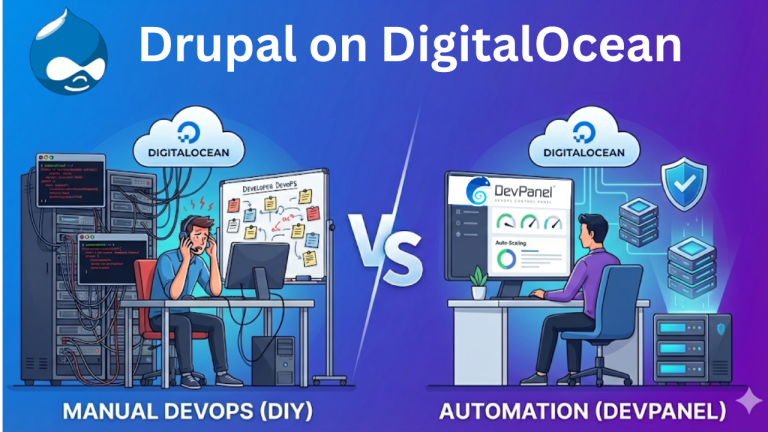
Split screen illustration comparing two hosting methods. Left side: A stressed developer dealing with tangled wires and a chaotic whiteboard labeled "Manual DevOps (DIY)". Right side: A calm developer using a clean DevPanel dashboard labeled "Automation (DevPanel)". Main text reads: "Drupal on DigitalOcean: The Hidden Cost of Manual DevOps vs. The Power of DevPanel Automation

Drupal on DigitalOcean: The Hidden Cost of Manual DevOps vs. The Power of DevPanel Automation

Introduction: The Infrastructure Paradox For organizations deploying Drupal today, the challenge is rarely about code—it is about the infrastructure that supports it. DigitalOcean has democratized access to cloud computing, offering raw power like Droplets and Kubernetes at accessible price points. However, for Drupal teams, this accessibility creates a paradox: low infrastructure costs often mask high…

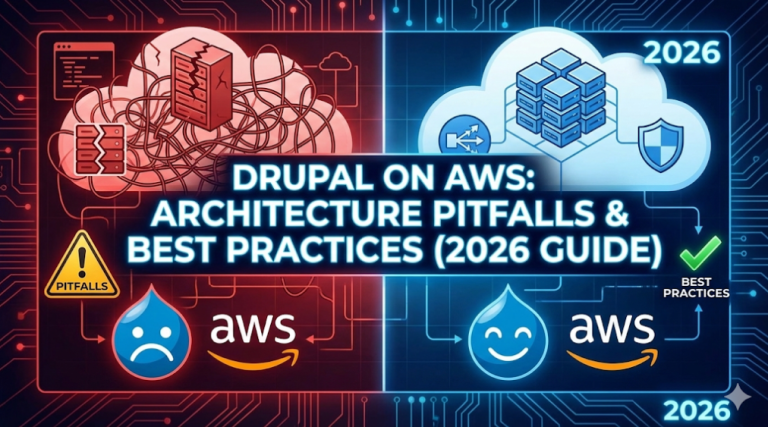
Here is the alt text for the image, optimized for both accessibility and SEO: ``` Infographic titled "DRUPAL ON AWS: ARCHITECTURE PITFALLS & BEST PRACTICES (2026 GUIDE)". The left side, colored red and labeled "PITFALLS", shows chaotic, tangled server wires and a broken rack next to a sad Drupal logo and AWS logo. The right side, colored blue and labeled "BEST PRACTICES", shows a clean, organized, and secure cloud server setup next to a happy Drupal logo and AWS logo. ```

Drupal on AWS: Architecture Pitfalls & Best Practices (2026 Guide)

🎧 Listen, Watch, & Learn Before diving into the architecture breakdown, explore the deep-dive research and multimedia discussions behind this guide. Key Takeaways (TL;DR) Why Your Drupal on AWS Architecture is Probably Wrong Hosting Drupal on Amazon Web Services (AWS) is far more complex than deploying a simple static application. A proper, production-grade setup is…

Diagram titled "The Ultimate Guide to Drupal on AWS" featuring the Drupal and AWS logos.

The Ultimate Guide to Drupal on AWS: Architecture, Orchestration, and Scaling Strategies

The Ultimate Guide to Drupal on AWS Launching and maintaining Drupal on AWS offers maximum flexibility and scalability, but most approaches require a heavy operational and DevOps burden1. While AWS provides the “infrastructure bricks,” wiring them together—from initial setup through ongoing SDLC management—is often a manual, high-friction process. Why Architecture Choice Matters in 2025 In…