
How DevPanel Powers DrupalForge: The Infrastructure Behind a Gold-Level Drupal Certified Partner
From launching Drupal demos in seconds to managing cloud development environments, discover the technology behind DrupalForge and what it means for Drupal agencies, developers, and hosting providers.
DrupalForge has reached an exciting milestone: Gold-level recognition as a Drupal Certified Partner.
This achievement celebrates the contributions of DrupalForge’s volunteers, developers, and community leaders to the Drupal ecosystem. It also provides an opportunity to explore an important part of the platform’s story: the technology that makes it possible.
Behind DrupalForge’s instant Drupal demos, browser-based development environments, and cloud-powered workflows is DevPanel, the platform’s primary sponsor and underlying infrastructure technology.
DrupalForge demonstrates what becomes possible when developers can access application environments without first navigating complicated infrastructure setup.
For DevPanel, it is also a real-world example of how cloud infrastructure can be made more accessible, automated, and manageable.
DrupalForge Goes Gold: A Milestone for the Drupal Community
DrupalForge was built around a straightforward mission: make Drupal easier to discover, explore, develop, and share.
Instead of asking users to install Drupal, configure databases, manage containers, or prepare local development environments, DrupalForge provides a much simpler starting point.
Users can select a Drupal template and launch a working demonstration in seconds.
Developers can explore code, experiment with modules, and access cloud development tools. Agencies can demonstrate solutions to prospective customers. Organizations can evaluate Drupal without first committing substantial time to technical configuration.
This accessibility is especially important for an open-source ecosystem built around experimentation and community participation.
DrupalForge’s Gold-level recognition reflects its commitment to contributing to Drupal’s continued growth.
The platform operates as a community service under OPS Association, a nonprofit organization, with support from contributors, volunteers, and sponsors.
DevPanel is proud to support that mission by providing the underlying infrastructure technology.
DrupalForge’s recognition belongs to its community. DevPanel’s role is to help provide the technology that allows that community’s work to reach more people.
The Infrastructure Challenge Behind Instant Drupal Demos
Launching one Drupal website is relatively straightforward for an experienced developer.
Launching hundreds of independent Drupal environments, making them accessible to users, managing their resources, and automatically cleaning them up is a different challenge.
A platform like DrupalForge needs to handle several infrastructure responsibilities.
It must provision application environments, make them accessible to users, isolate workloads, allocate computing resources, and support development tools.
It must also manage environments that may only be needed for a short demonstration while supporting users who want to continue developing their applications.
For traditional hosting platforms, these requirements can involve considerable custom engineering.
Teams may need to build provisioning scripts, container management workflows, environment management systems, and operational dashboards.
As demand increases, infrastructure management can become a project of its own.
That is where DevPanel comes in.
DevPanel: The Technology Powering DrupalForge
DevPanel is a cloud application management platform designed to simplify how teams develop, deploy, and manage applications.
It provides a control layer for application environments and cloud infrastructure, helping developers and organizations work across different stages of the application lifecycle.
DrupalForge uses DevPanel’s underlying technology and APIs to support its Drupal development and demonstration workflows.
This separation is important.
DrupalForge provides the community-facing experience: users discover templates, launch demonstrations, and interact with Drupal applications.
DevPanel supports the infrastructure and application management capabilities behind those experiences.
Together, they provide a workflow that makes sophisticated cloud technology accessible through a simpler user experience.
1. Automated Drupal Environment Provisioning
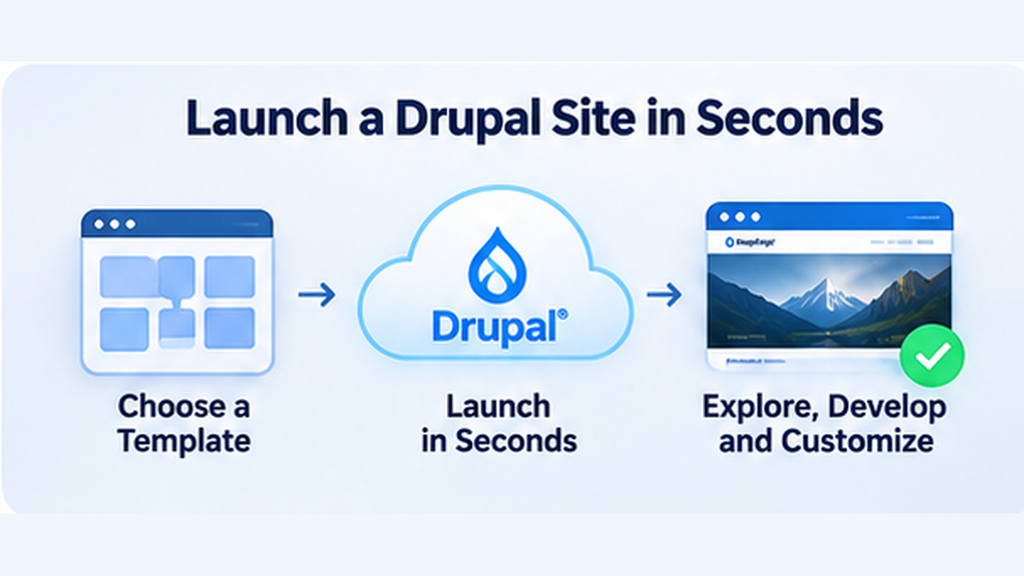
One of DrupalForge’s most recognizable capabilities is its ability to launch Drupal sites in seconds.
Users choose a template, and the platform provisions a ready-to-use environment.
Behind that experience are infrastructure workflows that handle application creation and deployment.
DevPanel’s application management capabilities help DrupalForge automate the provisioning and management of these environments.
This eliminates much of the manual work traditionally associated with creating individual Drupal installations.
The result is particularly valuable for demonstrations, workshops, training environments, and proof-of-concept projects.
Instead of preparing an environment for every participant, organizers can give users access to ready-to-use Drupal applications.
2. Cloud-Based Development Environments
Launching a demonstration is only the beginning.
Developers frequently need access to source code, command-line tools, dependencies, and application files.
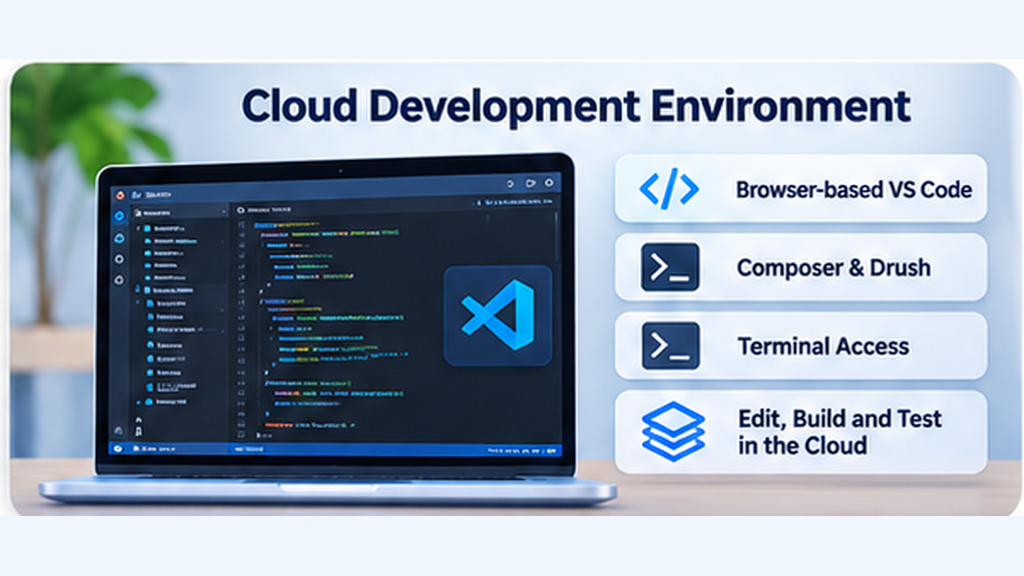
DrupalForge supports browser-based development experiences that allow users to work with Drupal directly from the cloud.
These environments can provide access to tools such as VS Code, Composer, Drush, and terminal workflows.
DevPanel provides the cloud development environment capabilities supporting this experience.
For developers, this means less dependence on individual laptop configurations.
For agencies, it creates opportunities to simplify onboarding and share development workflows.
For educators, it reduces the time spent troubleshooting local environments before students can begin learning.
The more accessible the development environment becomes, the more time developers can spend creating applications.
3. Managing Multiple Cloud Environments
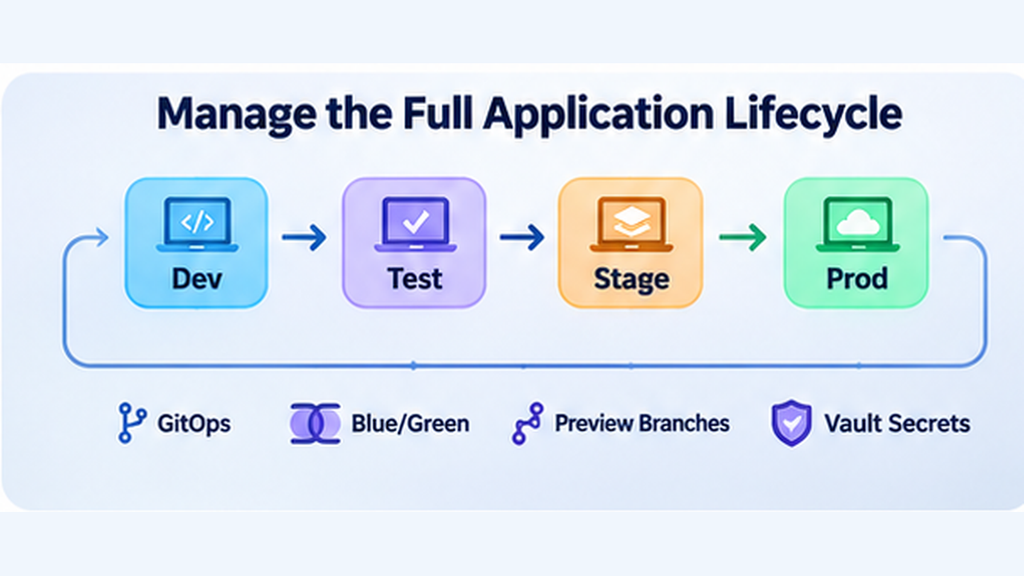
Drupal applications rarely exist in just one environment.
A typical application may move through development, testing, staging, and production.
Agencies managing multiple customers face an even larger challenge: each client may have different hosting requirements, infrastructure policies, and cloud providers.
DevPanel is designed to help manage these environments through a centralized control layer.
Its capabilities include application management, development workflows, deployment processes, and support for infrastructure running across cloud providers.
DrupalForge applies these capabilities to its community-oriented Drupal experience.
For organizations looking beyond temporary demonstrations, the broader DevPanel platform provides a foundation for more structured application management.
4. Cloud Infrastructure Flexibility
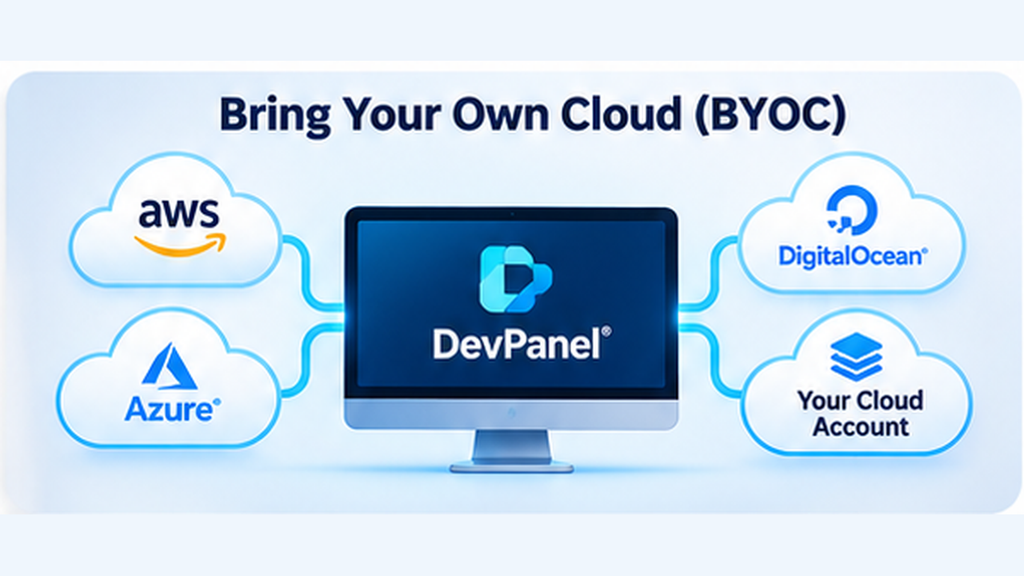
Modern organizations do not always want their applications locked into a single hosting provider.
Some need to use an existing AWS account. Others prefer Azure, DigitalOcean, or infrastructure managed by a hosting partner.
DevPanel’s Bring Your Own Cloud (BYOC) approach is designed to support organizations that want greater control over where their applications run.
This is especially relevant to agencies serving enterprise, government, healthcare, education, and other organizations with specific infrastructure requirements.
Rather than forcing every client into the same hosting arrangement, a BYOC platform can provide a more consistent operational experience across different environments.
DrupalForge illustrates how a user-facing service can be built on cloud infrastructure without requiring its users to understand every underlying configuration.
For agencies and infrastructure providers, similar principles can be applied to their own services.
What DrupalForge Demonstrates About Building Cloud Platforms
DrupalForge is more than a Drupal demo service.
It is an example of how specialized application platforms can be built using a common infrastructure management foundation.
Consider the difference between building every infrastructure feature from scratch and using an existing application management platform.
Without a shared foundation, developers may need to create their own provisioning systems, deployment processes, development environments, and management interfaces.
With DevPanel, teams can focus more of their development effort on the workflows that make their own platform valuable.
For DrupalForge, that means creating an accessible experience for discovering and sharing Drupal solutions.
For a digital agency, it might mean building a client portal for managing application environments.
For a hosting provider, it could mean offering customers a branded application management experience.
For a software company, it might mean launching managed development environments for a particular framework or application category.
The underlying idea is the same: infrastructure should enable the service, not consume all the engineering resources needed to create it.
Why This Matters for Drupal Agencies
Drupal agencies operate at the intersection of software development, client requirements, infrastructure, and ongoing support.
Even agencies with excellent developers can struggle with the operational complexity of managing multiple applications.
Common challenges include inconsistent development environments, manual deployment processes, client-specific infrastructure requirements, and fragmented hosting workflows.
DrupalForge and DevPanel address different parts of this problem.
DrupalForge helps agencies discover, demonstrate, and share Drupal solutions.
DevPanel helps teams manage the application environments and cloud infrastructure supporting development and deployment.
Faster Client Demonstrations
Agencies often need to show prospective clients what a Drupal solution can do.
Preparing a demonstration from scratch can take time that would be better spent understanding the client’s requirements.
DrupalForge allows agencies to start with working templates and demonstrations.
This can help shorten the journey from an initial conversation to a tangible example.
More Consistent Development Workflows
Different developers may use different operating systems, local configurations, and dependencies.
Cloud-based environments can reduce these inconsistencies by providing more standardized starting points.
DevPanel supports development workflows that allow teams to manage application environments without relying entirely on local machines.
For growing agencies, this can make onboarding and collaboration easier.
Greater Control Over Client Infrastructure
Some customers require applications to run within their own cloud accounts.
Others need specific compliance controls, internal security policies, or infrastructure ownership arrangements.
DevPanel’s BYOC approach helps agencies accommodate these requirements while maintaining a more consistent application management experience.
Rather than developing completely separate operational processes for every client, agencies can work toward a standardized approach to cloud application management.
Opportunities for New Services
Agencies are increasingly expected to provide more than website development.
Customers may also need ongoing hosting coordination, deployment management, monitoring, technical support, and application maintenance.
A consistent infrastructure management foundation can make these services easier to organize and deliver.
That creates opportunities for agencies to build longer-term customer relationships around application operations and support.
Opportunities for Hosting Providers, MSPs, and Software Vendors
The lessons from DrupalForge extend beyond Drupal agencies.
Managed service providers, hosting companies, and independent software vendors often want to deliver specialized applications or development services without creating a custom infrastructure platform for every offering.
DevPanel provides a way to separate the customer-facing service from the underlying cloud management layer.
For hosting providers, this can mean building differentiated services on top of infrastructure they already operate.
For MSPs, it can mean offering application environment management alongside traditional infrastructure services.
For software vendors, it creates opportunities to deliver managed application experiences without making customers responsible for every deployment detail.
DrupalForge demonstrates one possible application of this model.
Its focus is Drupal, but the underlying platform approach can support other application types and frameworks.
The objective is not simply to make hosting easier.
It is to make infrastructure management a reusable capability that supports multiple services and customer experiences.
From Drupal Demos to a Broader Marketplace Vision
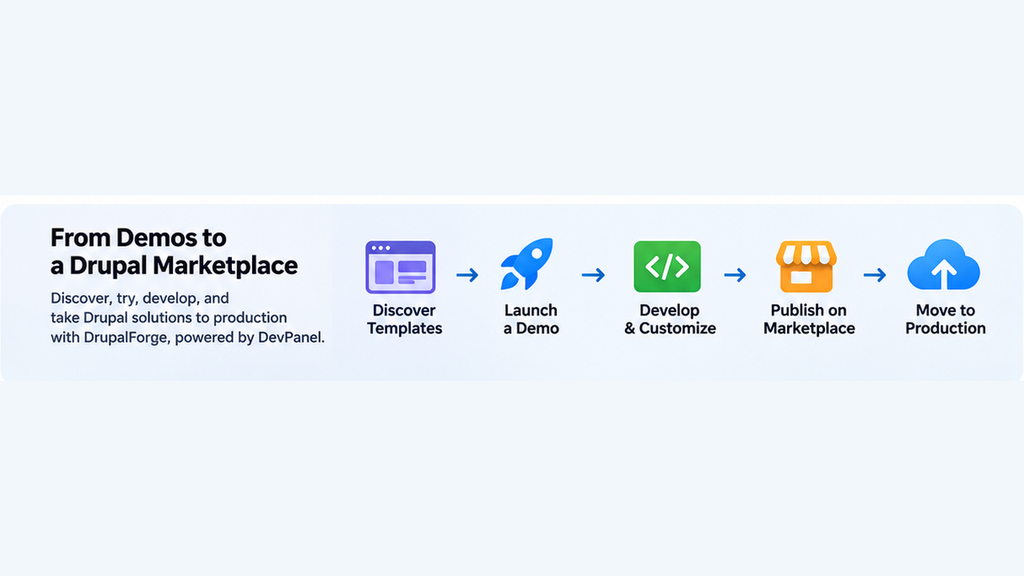
DrupalForge’s journey is continuing.
The project is developing an expanded marketplace model intended to make it easier for developers, agencies, and solution creators to publish and share Drupal templates.
This direction builds on the platform’s existing instant demonstration experience.
A visitor could discover a Drupal solution, launch a demonstration, explore its capabilities, and eventually move toward a production deployment.
For solution creators, the marketplace could provide new opportunities to showcase applications and offer professional services, hosting, or support.
For organizations, it could reduce the effort required to evaluate and adopt Drupal solutions.
DevPanel’s infrastructure capabilities are an important part of supporting this broader vision.
The same foundation used to manage development environments can support more advanced workflows as applications progress toward production.
The marketplace and expanded hosting services remain part of DrupalForge’s evolving roadmap, but the underlying direction is clear.
Make it easier to discover applications, easier to develop them, and easier to move them toward real-world use.
Supporting Open Source Through Infrastructure Innovation
Open-source communities thrive when people can participate.
That participation includes writing code, reviewing contributions, producing documentation, organizing events, teaching workshops, and creating tools that make software easier to use.
DrupalForge contributes by reducing barriers to hands-on Drupal experiences.
DevPanel supports that work by providing infrastructure technology that can power those experiences at scale.
This relationship illustrates how commercial technology and community initiatives can support complementary goals.
DrupalForge remains focused on its community mission, while DevPanel continues developing infrastructure capabilities for agencies, organizations, and service providers.
The Gold-level Drupal Certified Partner recognition is a milestone for the DrupalForge community and a reason to celebrate everyone who has helped the project grow.
It also highlights the value of investing in technology that makes open-source innovation more accessible.
What’s Next for DevPanel and DrupalForge?
As DrupalForge expands its capabilities, its relationship with DevPanel creates additional opportunities to connect community innovation with professional application development and infrastructure management.
DrupalForge will continue focusing on Drupal discovery, demonstrations, templates, and the development of its marketplace ecosystem.
DevPanel will continue supporting application management workflows, cloud infrastructure flexibility, and the needs of teams operating applications across different environments.
For Drupal agencies, hosting providers, and organizations evaluating their cloud strategies, the two platforms provide an opportunity to explore complementary approaches to application development and operations.
DrupalForge shows what an accessible, specialized application experience can look like.
DevPanel provides the broader infrastructure foundation behind it.
Explore DrupalForge and DevPanel
Discover DrupalForge
Explore ready-to-use Drupal templates, launch demos, and experience cloud-based Drupal development at DrupalForge.org.
Explore DevPanel
Learn how DevPanel helps agencies, hosting providers, and organizations develop, deploy, and manage applications on cloud infrastructure they control at DevPanel.com.
DrupalForge’s Gold recognition celebrates the community behind the platform. DevPanel is proud to help power the technology supporting its future.