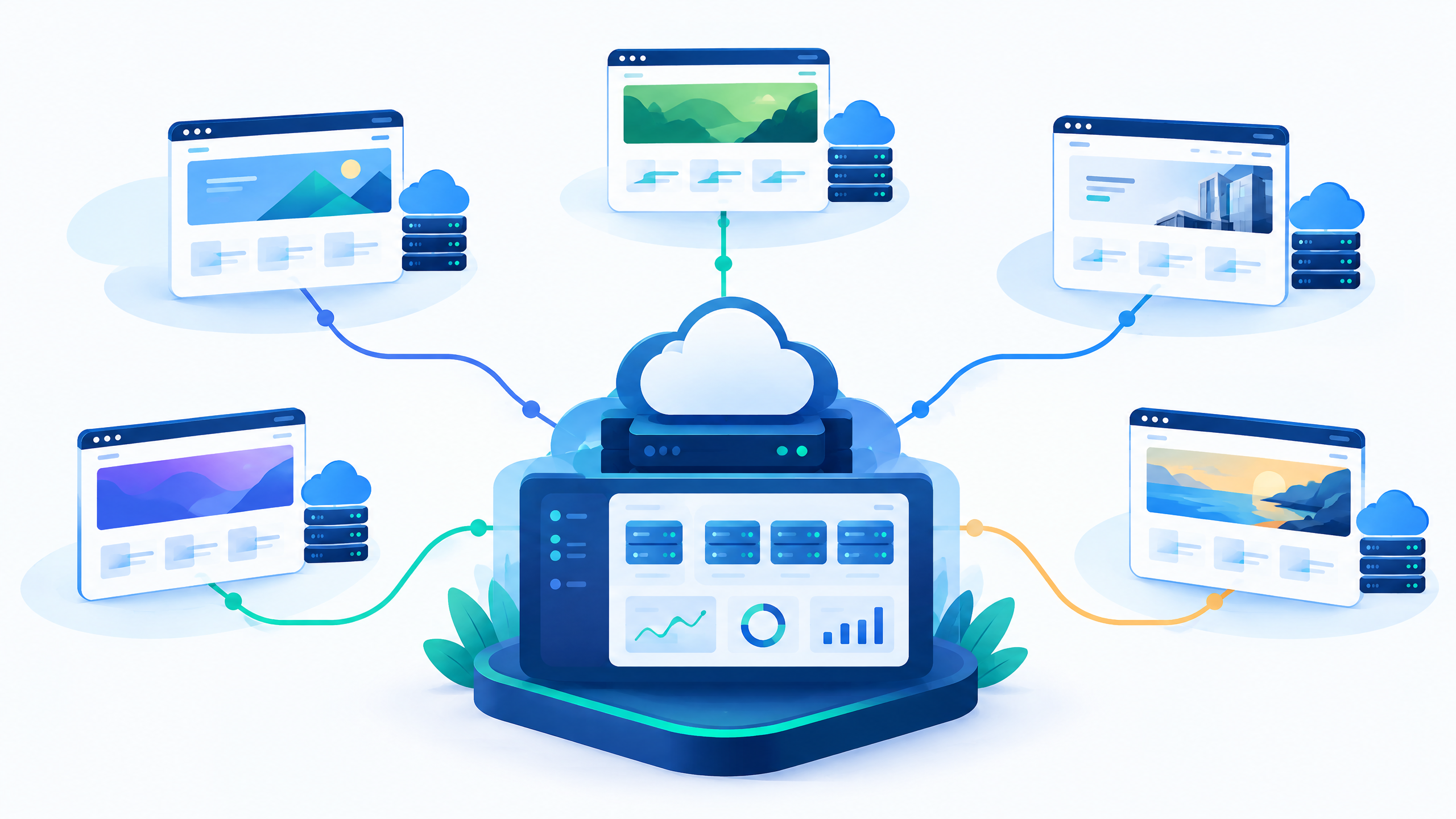
How to Compare Cloud Hosting Platforms for Agencies Managing Multiple Client Sites
Agencies do not just host websites.
They manage client relationships, launch projects, support developers, protect production environments, handle updates, troubleshoot emergencies, and create the operational foundation their clients depend on.
That means the cloud hosting platform an agency chooses is not just a technical decision.
It affects margins, delivery speed, client retention, developer productivity, support quality, and long-term control.
For a small agency managing five client sites, the wrong platform may only feel inconvenient. For a growing agency managing 20, 50, or 100 client environments, the wrong platform can become a serious operational drag.
Every client adds more domains, environments, databases, credentials, deployment workflows, updates, backups, and support expectations. Without a strong platform model, the agency ends up with scattered tools, inconsistent workflows, vendor lock-in, and too much manual work.
The best cloud hosting platform for agencies is not simply the one with the lowest monthly price.
It is the one that helps the agency build a repeatable operating model.
That means customer-owned cloud infrastructure, centralized management, standardized environments, deployment automation, role-based access, multi-client organization, and a clear path to premium recurring services.
This is where DevPanel fits.
DevPanel helps agencies manage applications inside customer-owned cloud accounts while giving teams a unified control layer for environments, deployments, Workspaces, templates, and automation.
For agencies managing multiple client sites, that combination creates a stronger business model: more control, less manual work, and a better foundation for premium cloud services.
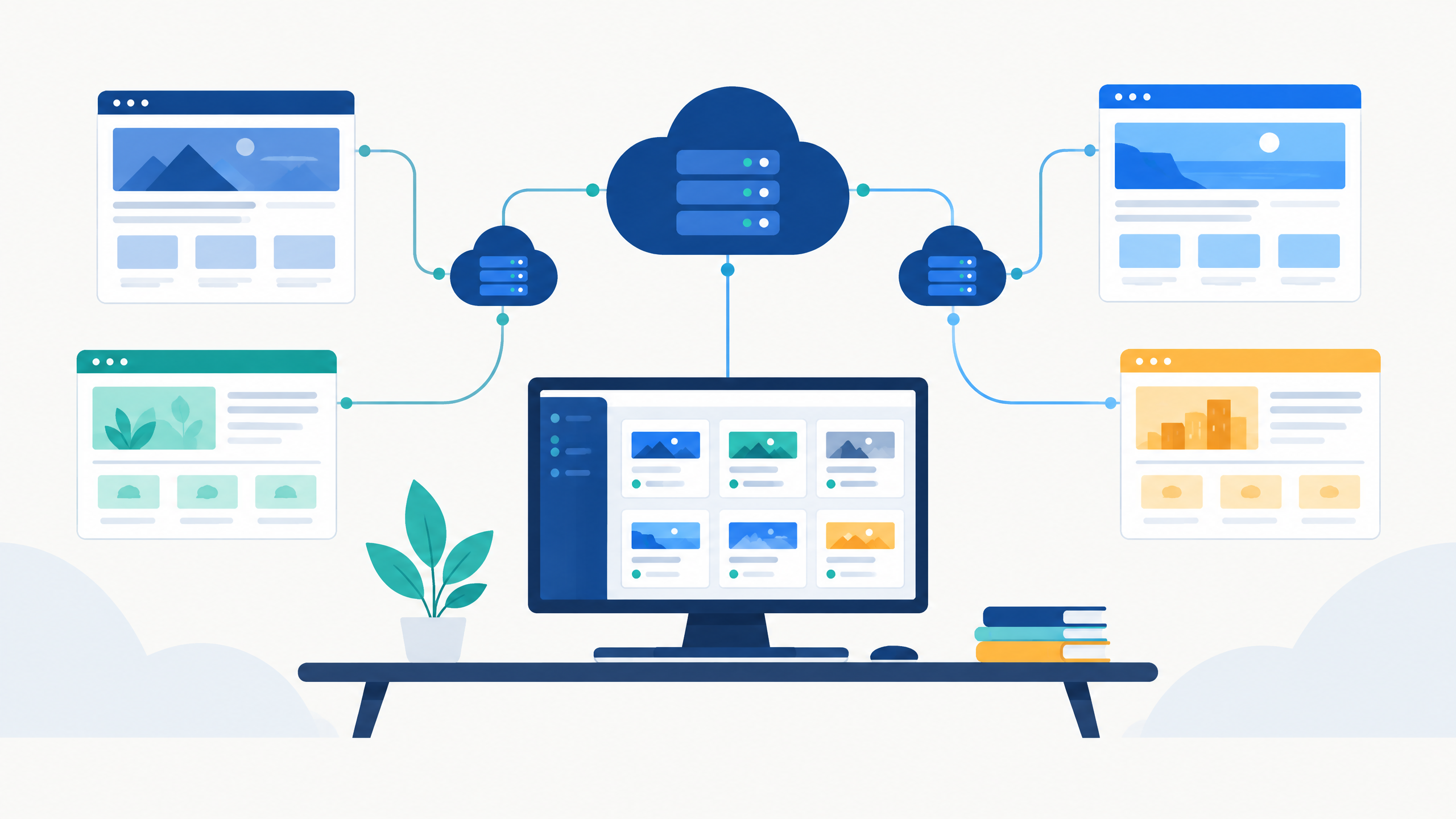
An organized cloud operations model helps agencies manage multiple client environments at scale.
Why Agencies Need More Than Basic Hosting
Many agencies start with simple hosting.
They build the site. They put it on a managed platform. They charge the client a monthly fee. They provide updates, support, and maintenance.
That model can work at the beginning.
But as the agency grows, basic hosting becomes harder to manage.
Each new client adds operational complexity. One site may be on WordPress. Another may be on Drupal. Another may use Laravel. One client may require AWS. Another may prefer Azure. Another may have a nonprofit cloud grant. Another may need staging and production environments. Another may need developer access. Another may need stronger security controls.
The agency eventually faces a new problem.
It is no longer only managing websites.
It is managing a portfolio of infrastructure decisions.
That portfolio needs governance.
It needs standardization.
It needs automation.
It needs visibility.
It needs a platform.
A basic hosting dashboard may show where a site lives, but it usually does not solve the larger agency operations problem. Agencies need a cloud hosting platform that helps them manage client environments as a repeatable service.
The Real Question: Who Owns the Infrastructure?
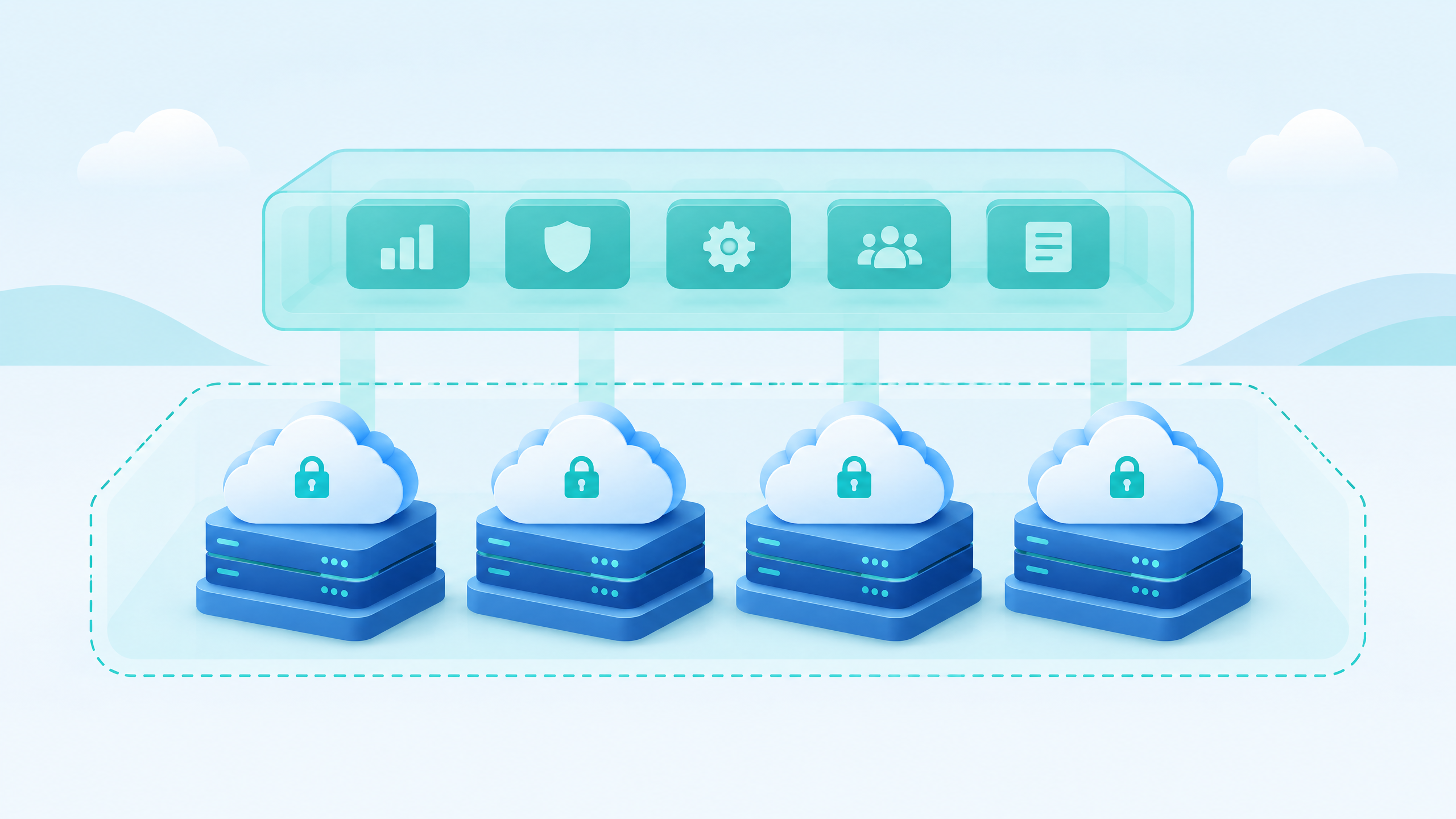
Customer-owned infrastructure keeps the cloud foundation under the agency’s or client’s control.
When agencies compare cloud hosting platforms, the most important question is often overlooked:
Who owns the underlying infrastructure?
In a traditional managed hosting model, the provider owns the infrastructure. The agency and client operate inside the provider’s platform. That can be convenient, but it can also limit flexibility.
In a customer-owned cloud model, the agency or client owns the cloud account. The platform provides the control layer that makes the infrastructure usable.
This distinction matters.
If the client owns the AWS, Azure, DigitalOcean, or other cloud account, the infrastructure is not trapped inside a hosting vendor’s environment. The agency can still provide managed services, automation, support, and governance, but the foundation remains portable.
That gives agencies a stronger strategic position.
They can tell clients:
Your infrastructure stays in your cloud account.
Your data stays under your control.
Your applications are managed through a platform, but not locked inside a black-box hosting model.
That message is more professional than simply saying, “We host your website.”
It positions the agency as a cloud operations partner.
DevPanel as the Control Layer for Agency Cloud Services
DevPanel is best understood as a control layer for customer-owned cloud.
It is not a traditional hosting company where the provider owns the entire environment. DevPanel helps agencies manage applications, environments, deployments, and workflows on cloud infrastructure the agency or client controls.
For agencies, this creates a practical operating model.
They can manage multiple client sites from a centralized platform while still keeping the underlying infrastructure in the appropriate cloud account. They can organize projects with Workspaces. They can standardize development, testing, staging, and production workflows. They can support Git-based deployments, cloud development environments, and repeatable application cloning.
This gives agencies the best of both worlds.
They get the convenience of a managed platform experience, but they do not have to give up infrastructure ownership.
That is a major advantage for agencies serving clients with compliance needs, cloud preferences, existing AWS or Azure accounts, nonprofit grants, or long-term portability concerns.
Why Per-Site Hosting Models Can Limit Agency Growth
Many managed hosting platforms price by site, plan, environment, traffic level, or resource tier.
That may be simple for one client.
It becomes harder when the agency manages many clients.
A per-site model can make every new client environment feel like a separate cost center. It can also make experimentation more expensive. If a developer needs a temporary environment, a test site, or a new proof of concept, the agency may hesitate because every environment has a pricing impact.
That can slow down delivery.
Agencies need the freedom to create environments, test ideas, clone sites, and support development workflows without treating every operational action as a new hosting purchase.
A better model is to separate infrastructure ownership from platform workflow.
With DevPanel, agencies can use customer-owned cloud infrastructure and manage the operational layer through DevPanel. That gives them more flexibility in how they structure client services, support environments, and pricing.
The agency can still charge premium recurring fees, but the value is clearer.
The client is paying for managed cloud operations, not just server space.
Standardized Client Environments Improve Delivery
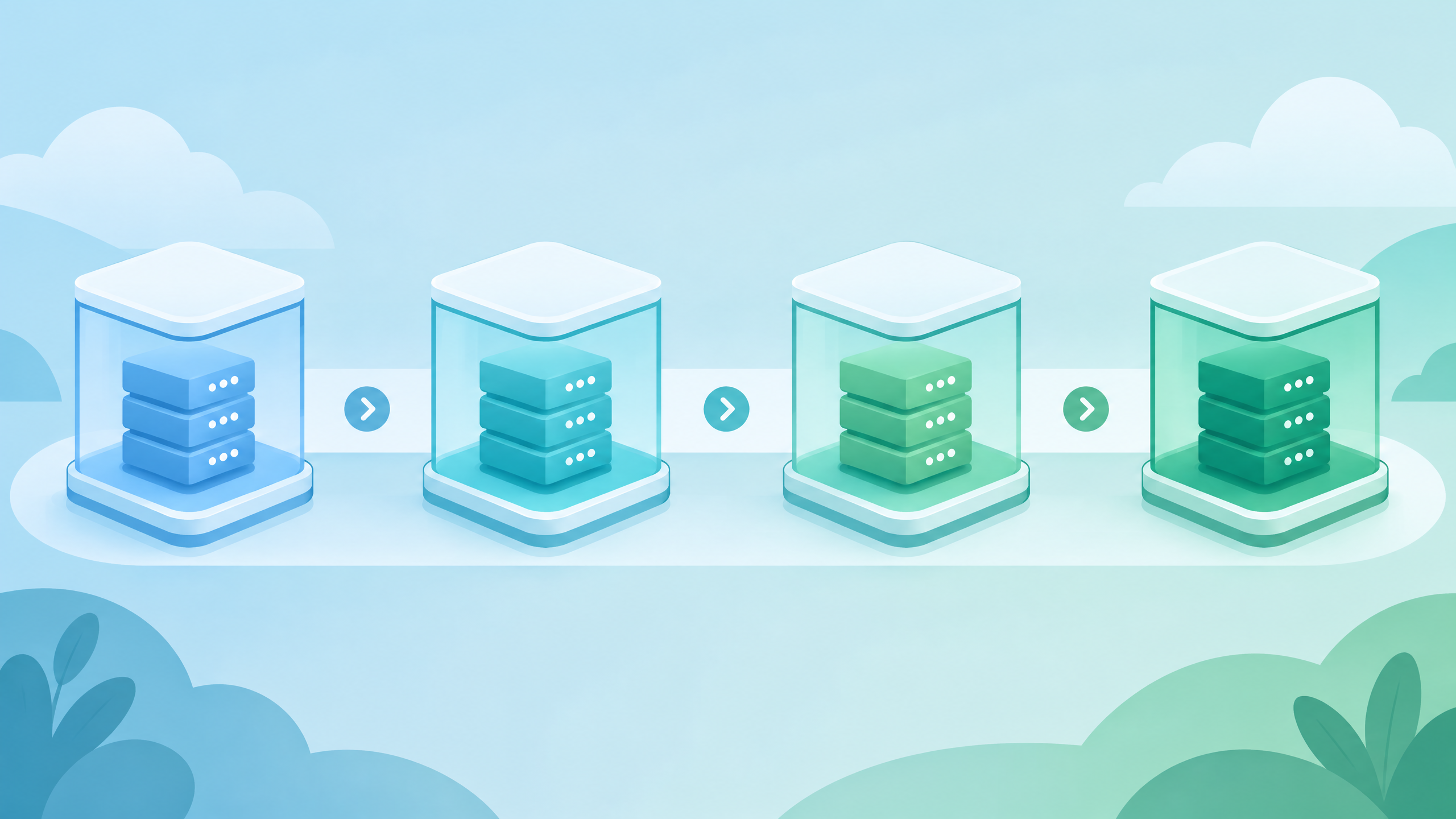
Consistent environment patterns help agencies deliver projects more reliably.
One of the strongest reasons agencies need a platform like DevPanel is standardization.
Without standardization, every client project becomes a one-off system.
One client has staging. Another does not.
One client has backups. Another relies on the host.
One client deploys through Git. Another uses manual uploads.
One developer knows how one site works. Another developer knows the next one.
That model does not scale.
Standardized environments give the agency a repeatable foundation.
A mature agency cloud platform should support:
•Development environments
•Testing environments
•Staging environments
•Production environments
•Git-based workflows
•Application cloning
•Backup and recovery processes
•Access controls
•Template-based project setup
•Consistent deployment patterns
DevPanel helps agencies create this kind of repeatability.
Instead of rebuilding the operating model for each client, the agency can define a standard workflow and adapt it to each project.
That improves delivery quality.
It also protects margins because the team spends less time solving the same infrastructure problems repeatedly.
Workspaces Help Agencies Manage Multiple Clients
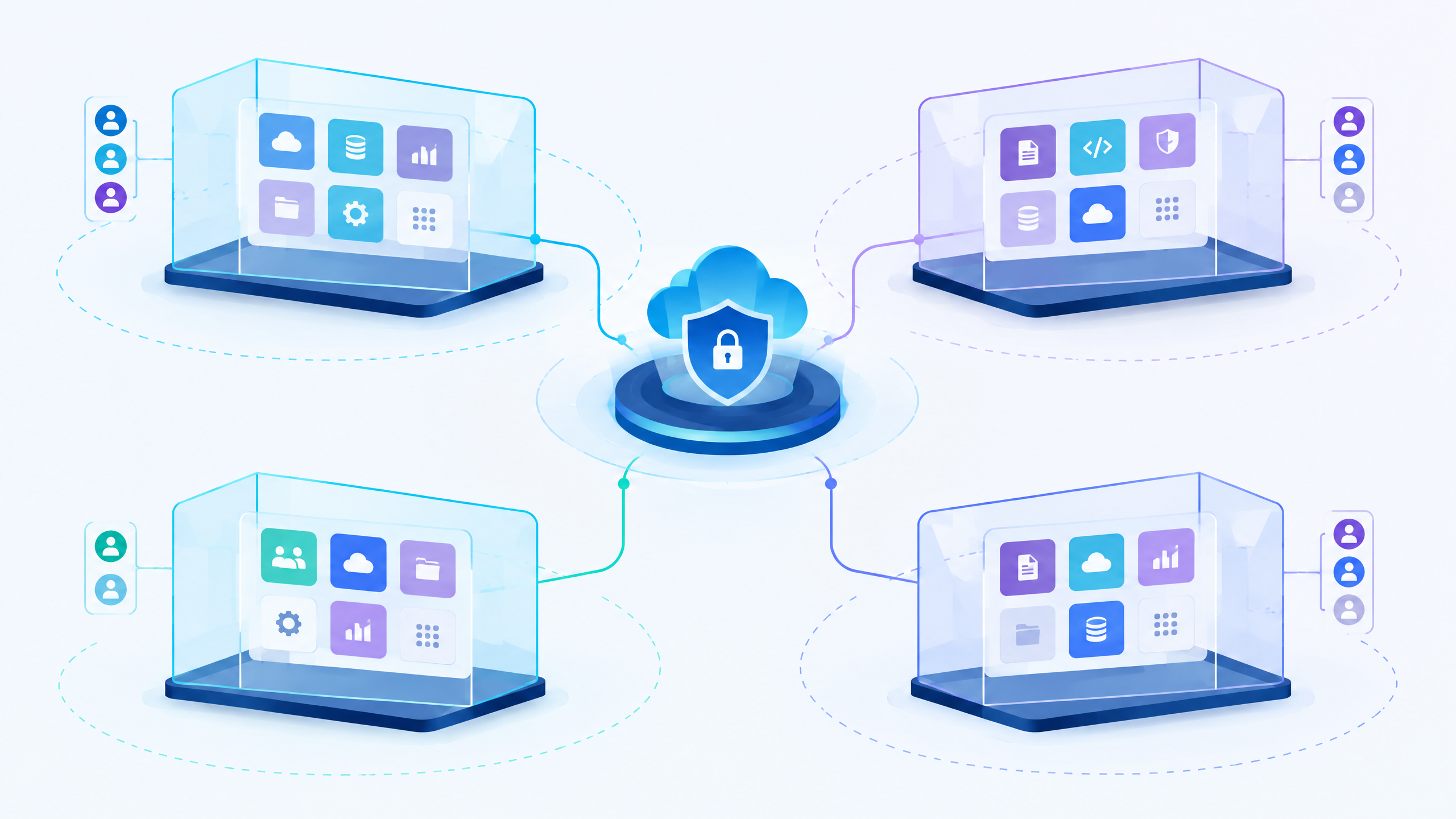
Workspace boundaries help agencies scale client operations while reducing access confusion.
As agencies grow, access control becomes more important.
A small team may be able to manage permissions informally. A larger agency cannot.
Developers, contractors, project managers, support teams, and clients may all need different levels of access. One developer may work on one client but not another. A contractor may need temporary access. A client may need visibility but not control. A senior engineer may need broader administrative access.
Without clear boundaries, access becomes risky.
DevPanel’s Workspace model helps agencies organize teams, projects, and applications in a cleaner way.
A Workspace can represent a client, a department, a project group, or an internal delivery team. The agency can isolate resources and access while still managing everything from a centralized platform.
This is especially useful for agencies managing many client sites.
Workspaces help reduce confusion, prevent accidental access, and make it easier to scale operations without creating chaos.
Multi-Cloud Flexibility Matters for Agencies
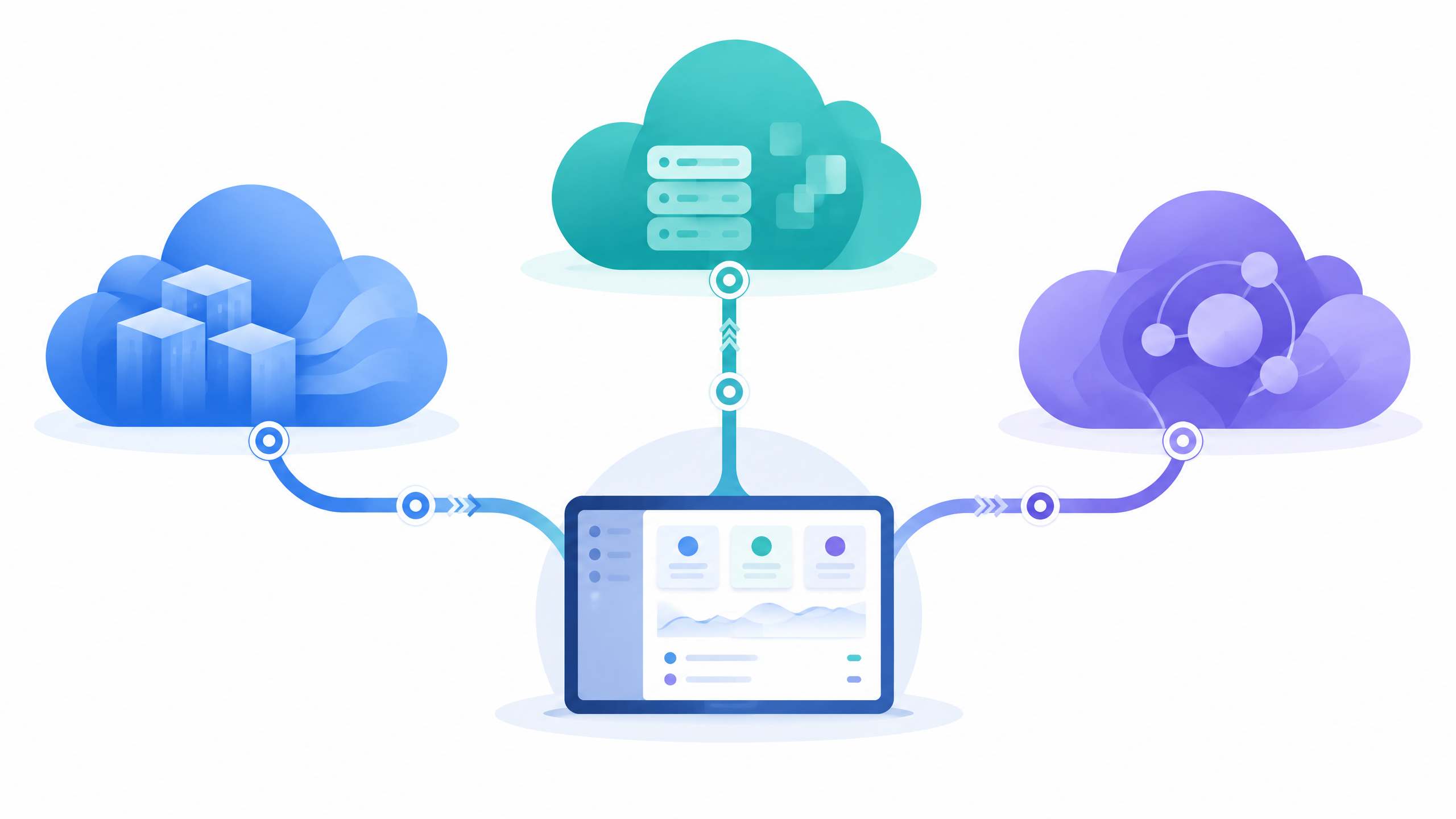
Multi-cloud flexibility lets agencies match infrastructure to each client’s needs.
Agencies rarely serve one type of client forever.
One client may want AWS because its internal team already uses it.
Another may require Azure because of enterprise procurement standards.
Another may prefer DigitalOcean for simplicity.
A nonprofit may have credits or grants from a specific provider.
A government or healthcare client may have stricter infrastructure requirements.
A strong agency cloud platform should not force every client into the same infrastructure model.
Multi-cloud flexibility lets the agency choose the right infrastructure for the client while keeping the management experience consistent.
DevPanel supports this kind of flexibility by helping teams manage applications across cloud providers through a more unified workflow.
That means the agency does not need to become a different kind of hosting company for every cloud provider.
It can offer a consistent service model while adapting to each client’s infrastructure needs.
Automation Reduces Manual Operations
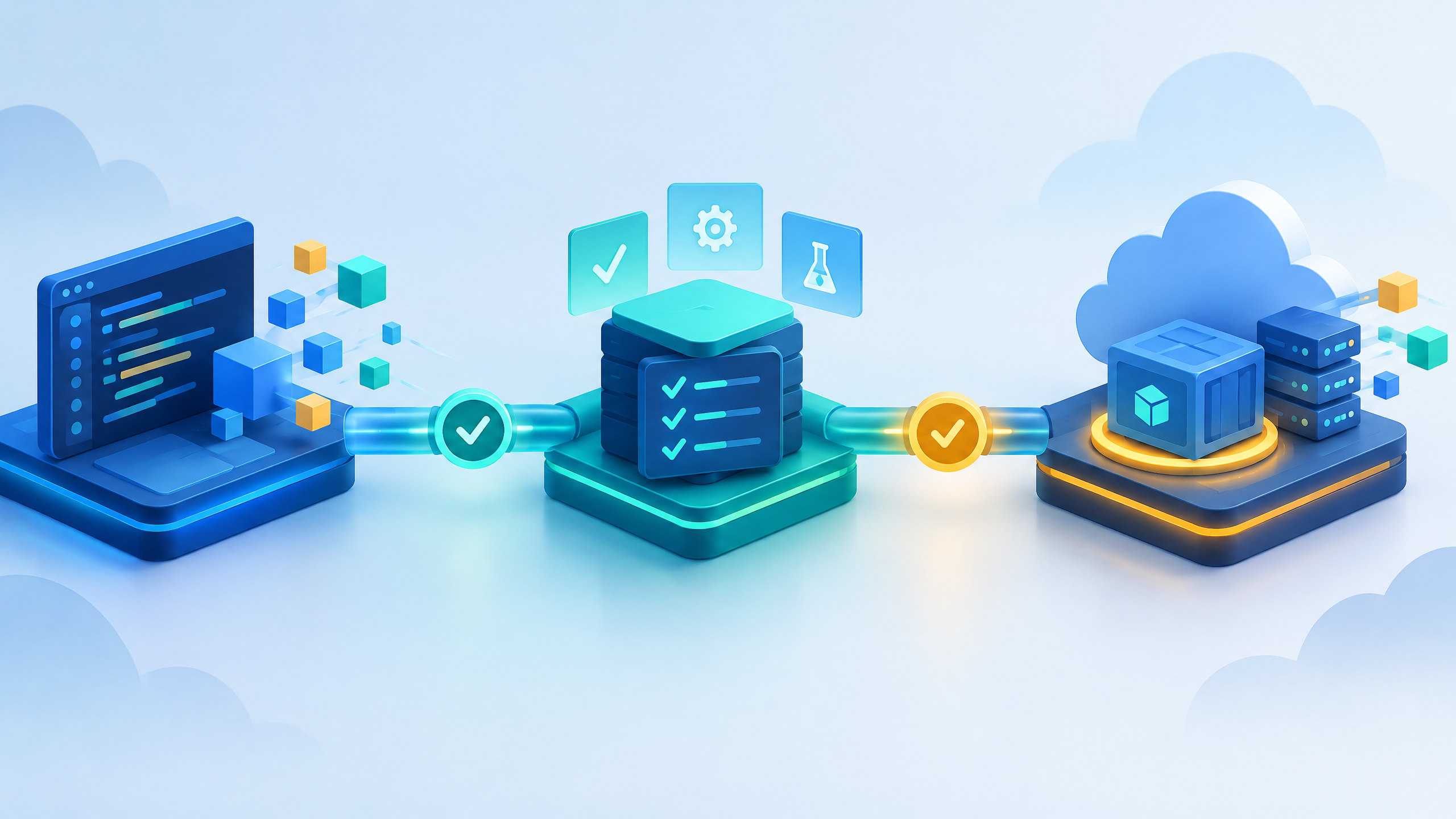
Repeatable automation reduces manual work and lowers deployment risk.
Manual operations are one of the biggest threats to agency profitability.
Every manual deployment, manual clone, manual backup check, manual staging setup, and manual access change consumes time.
At a small scale, that may be manageable.
At a portfolio scale, it becomes expensive.
Manual work also increases risk. A missed step can break production. A poorly documented process can slow onboarding. A fragile deployment workflow can create emergencies.
Automation changes the equation.
A strong agency platform should make common workflows repeatable:
•Create a new environment
•Clone an application
•Connect a Git repository
•Deploy changes
•Test in staging
•Promote to production
•Manage user access
•Standardize templates
•Support rollback and recovery workflows
DevPanel helps agencies reduce manual work by giving teams automated workflows for development, deployment, and environment management.
That does not replace agency expertise.
It gives agency teams more leverage.
Senior developers and DevOps engineers can spend less time on repetitive setup and more time on architecture, strategy, client outcomes, and higher-value work.
CI/CD and Git Workflows Are No Longer Optional
Modern agencies need reliable deployment workflows.
Clients expect faster changes, safer releases, and fewer production issues. Developers expect Git-based workflows. Project managers expect predictable release schedules.
A platform that depends on manual deployment steps creates unnecessary risk.
CI/CD and Git-based deployment workflows help agencies move faster while reducing mistakes.
They also make the agency more professional.
Instead of telling clients, “We will manually push the update,” the agency can say, “We use a structured deployment workflow with development, staging, and production environments.”
That creates confidence.
DevPanel supports this kind of delivery model by helping teams connect development workflows to application environments and deployment processes.
For agencies, this is not just a technical feature.
It is part of the service promise.
Better deployment workflows lead to better client outcomes.
Templates Help Agencies Productize Expertise
Agencies often repeat similar work across clients.
A healthcare agency may build similar provider directories, clinic pages, intake forms, and patient education sections.
A higher education agency may build department sites, program pages, faculty profiles, and event sites.
A nonprofit agency may build donation pages, campaign sites, membership portals, and resource libraries.
A commerce agency may build product catalogs, campaign landing pages, and checkout experiences.
Templates help agencies turn this repeated expertise into a reusable foundation.
A template can include approved architecture, CMS configuration, plugins or modules, content types, theme structure, integrations, security settings, and deployment workflows.
When templates are tied to a platform like DevPanel, agencies can launch client-ready foundations faster and with more consistency.
This improves margins.
It also improves quality.
The agency is not starting from a blank page each time. It is starting from a proven base and customizing where the client needs it.
That is how agencies move from project-by-project delivery to platform-enabled services.
Premium Cloud Services Create Better Recurring Revenue
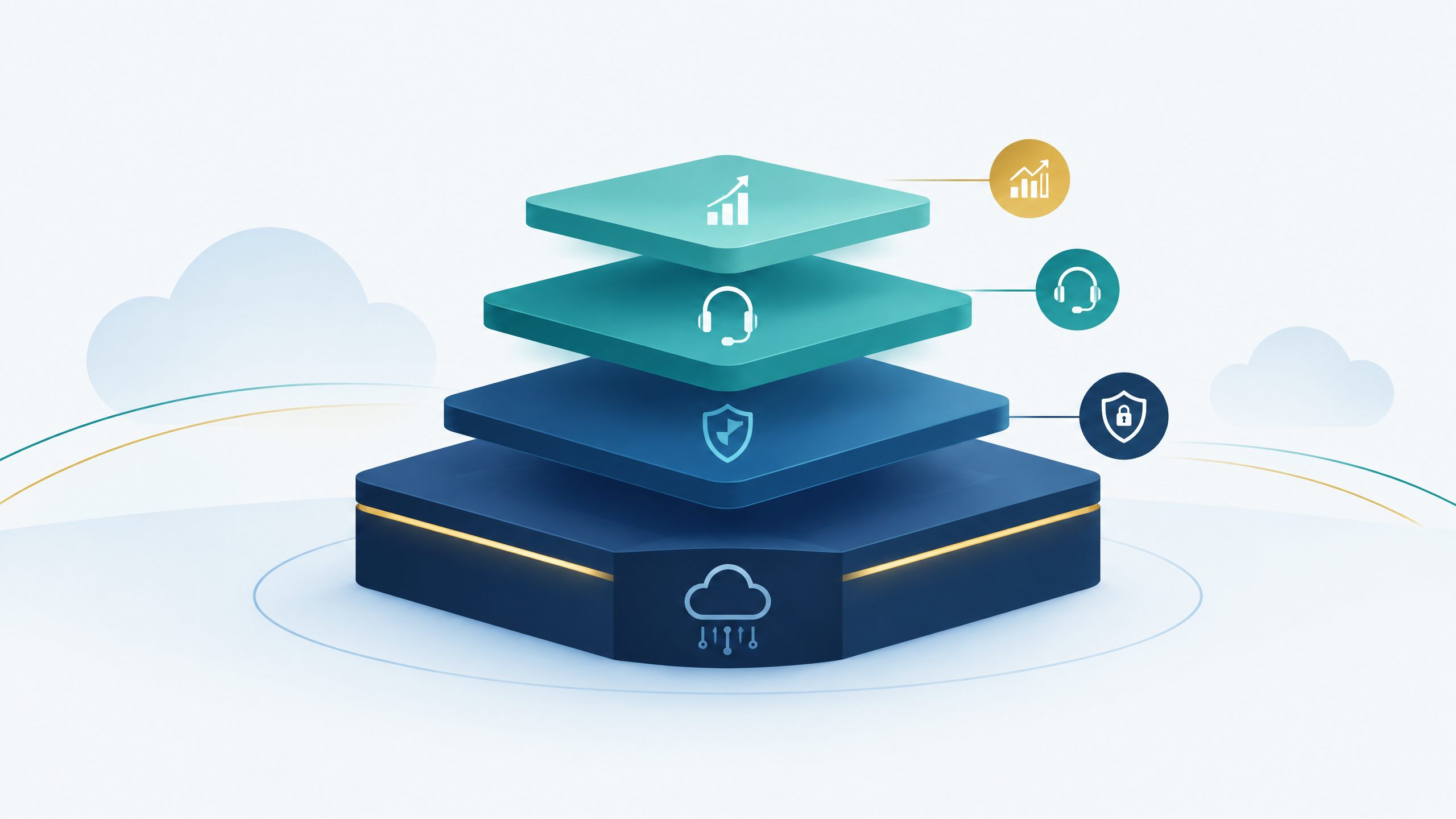
Agencies can package managed cloud operations as higher-value recurring services.
Many agencies want recurring revenue.
Hosting and maintenance are common starting points, but they are often underpriced or poorly packaged.
Clients may think they are only paying for hosting. The agency may actually be providing updates, support, security, backups, monitoring, staging, and emergency response.
That creates a messaging problem.
The agency needs to sell the value of the operating model, not just the hosting plan.
DevPanel helps agencies package premium cloud services around a clearer set of outcomes:
•Customer-owned cloud infrastructure
•Managed development and staging environments
•Git-based deployment workflows
•Application cloning
•Backup and recovery processes
•Security and access governance
•Performance support
•Multi-client Workspaces
•Ongoing cloud operations
This is a stronger recurring revenue offer.
The client is not buying commodity hosting.
The client is buying a managed cloud operations model.
That is easier to defend, easier to grow, and more aligned with how modern agencies should operate.
Cloud Credits and Grants Can Become a Strategic Advantage
Some clients have access to cloud credits, nonprofit grants, startup credits, or enterprise cloud agreements.
Traditional hosting platforms may not allow those credits to be used because the infrastructure is owned by the provider.
Customer-owned cloud changes that.
If the client or agency runs the infrastructure inside its own AWS, Azure, DigitalOcean, or other cloud account, those credits may become usable for the actual infrastructure costs.
For startups, nonprofits, and grant-funded organizations, this can matter.
The agency can help the client use existing cloud benefits while still providing a managed platform experience through DevPanel.
That creates a stronger value proposition than simply reselling hosting.
The agency becomes a strategic advisor that helps the client use cloud resources more effectively.
How Agencies Should Compare Cloud Hosting Platforms
When agencies compare cloud hosting platforms, they should look beyond surface-level features.
A better evaluation should ask:
Who owns the infrastructure?
Can the agency manage multiple clients from one platform?
Can Workspaces or similar structures isolate clients and teams?
Does the platform support dev, test, staging, and production workflows?
Can applications be cloned safely?
Does the platform support Git-based deployment workflows?
Can the agency use templates to standardize delivery?
Does it support multiple cloud providers?
Can clients use existing cloud credits or accounts?
What happens if the agency or client leaves the platform?
Does the platform help create premium recurring services?
These questions reveal whether the platform is built for agency scale or only for simple hosting.
DevPanel vs Traditional Managed Hosting
Traditional managed hosting can be convenient.
It may be a good fit for simple sites, smaller projects, or clients that do not need infrastructure ownership.
But agencies managing multiple client sites need to think beyond convenience.
They need to consider control, portability, workflows, and long-term service delivery.
Traditional managed hosting usually gives the customer a polished experience inside the provider’s infrastructure.
DevPanel gives agencies a control layer for infrastructure they or their clients own.
That is the strategic difference.
With DevPanel, the agency can create a premium cloud operations model without becoming locked into a single provider’s hosting environment.
This gives agencies more flexibility in how they support clients, price services, and scale their operations.
A Practical Agency Platform Model
An agency using DevPanel can create a clear platform model.
For example:
Cloud Foundation Service For clients that need secure hosting, backups, staging, and basic managed operations.
Cloud Growth Service For clients with active development needs, Git workflows, multiple environments, ongoing updates, and performance support.
Cloud Platform Service For clients with multiple sites, compliance requirements, advanced workflows, templates, and higher operational demands.
This kind of packaging helps agencies communicate value.
Instead of selling vague “hosting and support,” the agency sells clear service tiers based on operational maturity.
DevPanel provides the platform layer that makes those services easier to deliver repeatedly.
Why the Best Platform Is the One Your Agency Can Build On
The best cloud hosting platform for an agency is not only the one that hosts client sites today.
It is the one the agency can build on tomorrow.
As the agency grows, it may want to create templates, launch vertical offerings, standardize client onboarding, support partner agencies, manage multi-cloud environments, or create its own premium cloud services brand.
That requires more than a hosting account.
It requires a platform foundation.
DevPanel gives agencies that foundation by combining customer-owned cloud, automation, Workspaces, templates, and deployment workflows.
This helps agencies move beyond reactive support and toward repeatable service delivery.
That is how agencies protect margins, improve client outcomes, and scale without adding unnecessary operational complexity.
FAQ
What should agencies look for in a cloud hosting platform?
Agencies should look for infrastructure ownership, multi-client management, Workspaces, environment workflows, deployment automation, templates, multi-cloud support, access control, and a clear path to recurring cloud services.
Why does customer-owned cloud matter for agencies?
Customer-owned cloud matters because it keeps infrastructure under the agency’s or client’s control. This reduces lock-in, improves flexibility, and allows the agency to provide managed services without trapping the client inside a closed hosting environment.
Can agencies manage WordPress, Drupal, and Laravel on the same platform?
Yes. Agencies that manage multiple application types should choose a platform that supports more than one CMS or framework. This helps standardize operations across different client needs.
How does DevPanel help agencies manage multiple client sites?
DevPanel helps agencies manage multiple client sites through Workspaces, cloud development environments, deployment workflows, cloning, templates, access controls, and customer-owned cloud infrastructure.
Is DevPanel a managed hosting provider?
DevPanel is better understood as a cloud operations control layer. It helps agencies manage applications on infrastructure they or their clients own, rather than forcing everything into a provider-owned hosting environment.
How can agencies create recurring revenue with DevPanel?
Agencies can package DevPanel-powered services around managed cloud operations, staging environments, deployment workflows, security governance, backups, performance support, and ongoing maintenance.
Why is multi-cloud support important for agencies?
Multi-cloud support allows agencies to match client workloads to the right provider, such as AWS, Azure, or DigitalOcean. This is useful when clients have existing cloud accounts, compliance requirements, budget needs, or cloud credits.
Conclusion: Agencies Need Platforms, Not Just Hosting
Agencies managing multiple client sites need more than basic hosting.
They need a repeatable way to manage environments, deployments, access, infrastructure, and support across many clients.
The right platform helps the agency reduce manual work, protect margins, improve delivery quality, and build premium recurring services.
DevPanel gives agencies a cloud operations layer for customer-owned infrastructure. It helps teams manage Workspaces, standardize environments, automate deployments, support multiple clouds, and create a stronger service model around client operations.
That is the future of agency cloud services.
Not scattered hosting accounts.
Not one-off workflows.
Not vendor lock-in disguised as convenience.
A platform agencies can build on.