Why Owning Your Cloud Infrastructure Beats Managed Platforms (WordPress Hosting in 2026)
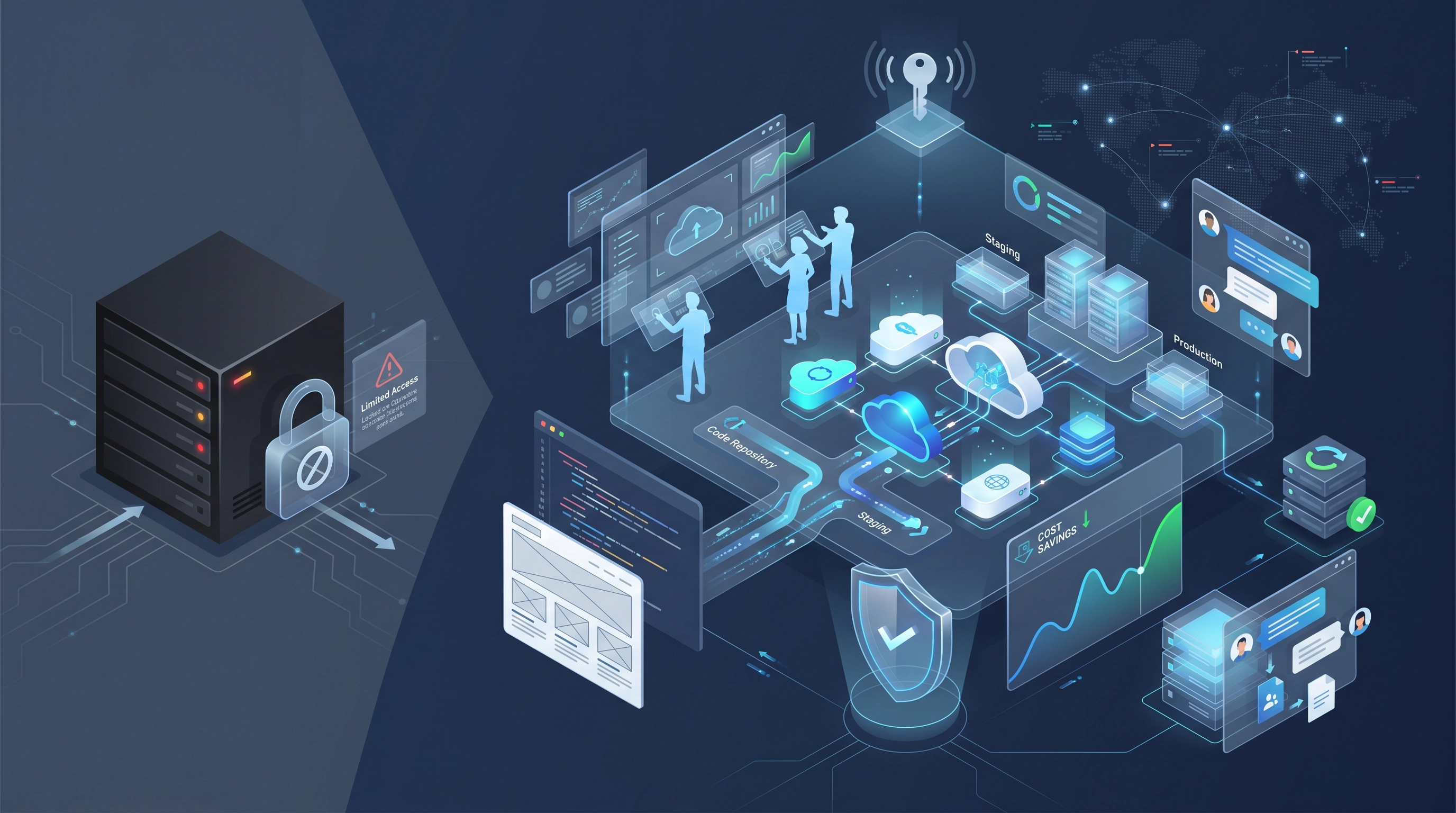
Did you know that a single hour of IT downtime can cost a mid-size or large enterprise more than $300,000? In 2026, that number is exactly why we believe Why Owning Your Cloud Infrastructure Beats Managed Platforms is not just a budget conversation, it is a reliability and control conversation for every WordPress team building in real time.
Key Takeaways
| Control your environment | Reduce black-box surprises by running in your own cloud account context. |
| Automate repeatable releases | Use branch-based previews, testing, and consistent deployments across environments. |
| Security across the lifecycle | Embed WAF, backups, DDoS mitigation, and governance into Dev to Prod workflows. |
| Cost options that match demand | Scale and pause dev and staging patterns instead of paying for always-on managed overhead. |
| Faster onboarding and collaboration | Get browser-based cloud IDEs and workspace isolation so teams move quickly and safely. |
| Avoid lock-in friction | Plan for change by owning more of the infrastructure and deployment definitions. |
- Q: Why do teams switch from managed WordPress platforms? A: They want predictable costs, clearer security ownership, and the ability to iterate faster without vendor-specific bottlenecks.
- Q: Is “owning infrastructure” only for big enterprises? A: No. We run your platform in your own AWS/Azure/DigitalOcean accounts, so smaller teams still get control with less operational load.
- Q: What does a “platform” approach mean? A: It is automation plus security embedded from development to production, not replacing your developer tools. See DevPanel’s Platform Overview.
Q: Where do Dev environments and deployments get managed? A: In a central workflow with workspaces and cloud IDE access, like DevPanel Workspaces.
From managed convenience to infrastructure ownership in 2026
Managed platforms can feel simple at first, they handle setup, patching, and baseline scaling. But once your roadmap accelerates, you typically run into the same friction points: costs that are hard to explain, deployment workflows that feel constrained, and limited visibility into how your infrastructure is actually behaving under load.
Why Owning Your Cloud Infrastructure Beats Managed Platforms starts with a practical shift. Instead of accepting a vendor’s interpretation of how your WordPress stack should run, you define the infrastructure behaviors, deployment mechanics, and security controls in a way that matches your team and your applications.
DevPanel takes that ownership approach by running as Platform as a Service (PaaS) in your own cloud provider account. The platform handles setup, configuration, tooling, and automation, while you keep the cloud account context (AWS, DigitalOcean, Azure). In other words, you get the speed of a platform with the control of owning the infrastructure layer. Learn more from the DevPanel Platform Overview.
Cost control: stop paying for “managed overhead” and start paying for usage
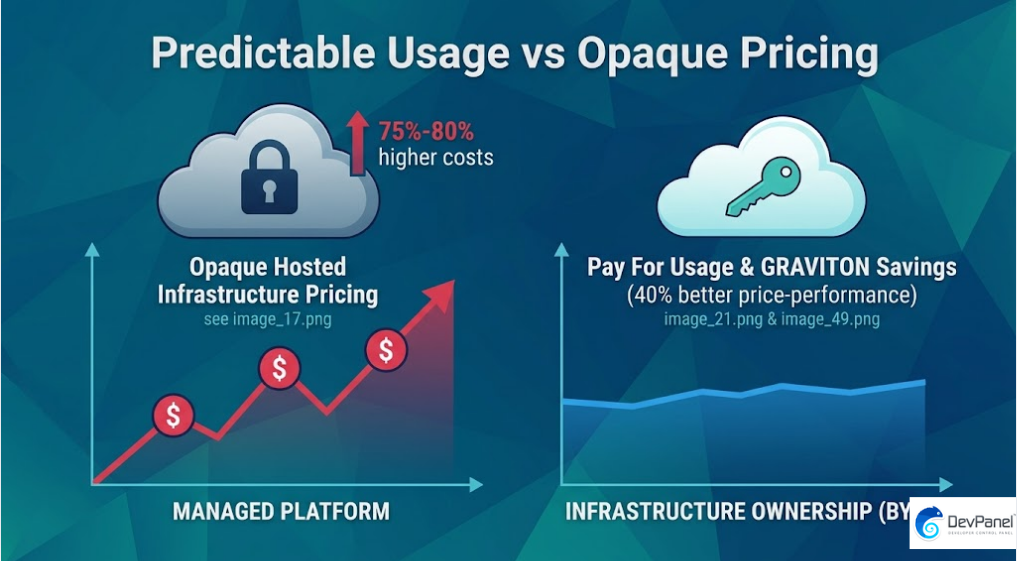
In 2026, cost pressure continues, but teams now expect more transparency. When Why Owning Your Cloud Infrastructure Beats Managed Platforms is discussed, the key point is that cost is not just about monthly dollars, it is about how your spend maps to actual work patterns.
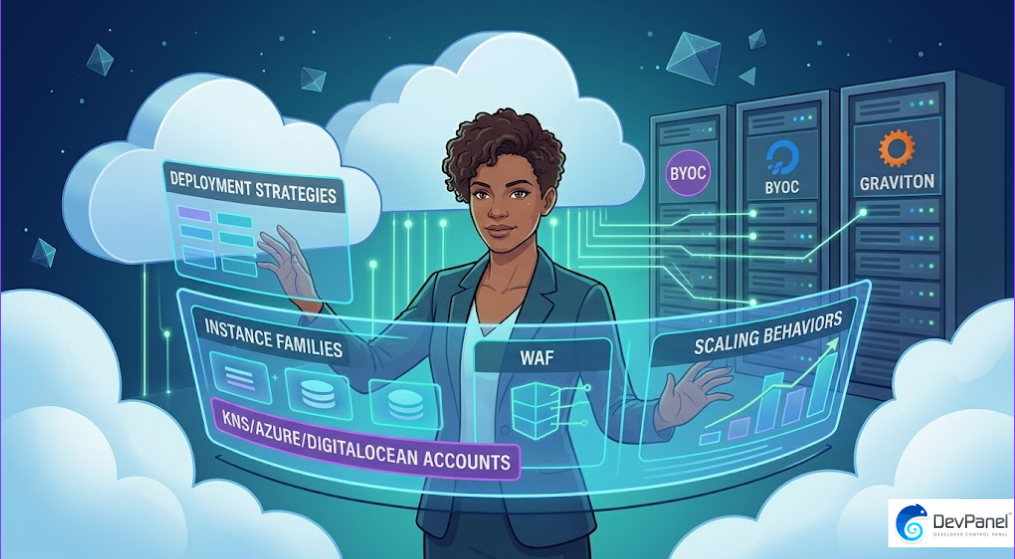
Owning more of the infrastructure lets you choose instance families, deployment strategies, caching approaches, and scaling behaviors. Managed platforms often abstract these levers behind fixed bundles, so your costs can rise even when your workload is stable or your environments should be paused.
DevPanel is built to cut friction. For example, DevPanel Community Edition is 100% free, and the enterprise approach is BYOC, meaning you run DevPanel inside your own cloud account rather than accepting opaque hosted infrastructure pricing. See DevPanel pricing for the Community Edition and Enterprise Plan structure.
Did You Know?
DevPanel on AWS reports 75%–80% lower hosting costs than legacy enterprise platforms like Pantheon
Source: DevPanel blog comparison
That is why infrastructure ownership matters. When you can align environments, deployments, and scaling with how your team actually ships, your cloud spend becomes a strategy, not a surprise.
Reliability: design for failure, then automate faster recovery
Managed platforms can offer strong uptime claims, but real-world reliability is about what happens during incidents. When something degrades, the difference between “waiting on a ticket” and “owning the levers” often shows up in recovery speed.
Why Owning Your Cloud Infrastructure Beats Managed Platforms because it encourages resilience patterns you can control. You can build deployment methods like blue/green, align backups and disaster recovery, and tune security layers such as WAF and DDoS mitigation to your traffic patterns.
DevPanel positions its platform operations around “Develop, Deploy, Manage” so reliability is not only an operations task. For example, it includes automated deployments, a security feature set that covers WAF and DDoS mitigation, and governance capabilities aimed at keeping production stable. Explore DevPanel platform features for the full breakdown.
Security and compliance: move protection closer to the code that ships
Security breaks down when it is treated like a checklist at the end. In 2026, teams increasingly want security integrated across the lifecycle, because the fastest way to reduce risk is to prevent insecure changes from reaching production in the first place.
Why Owning Your Cloud Infrastructure Beats Managed Platforms in security because ownership lets you connect controls to the pipeline you actually run. DevPanel is built for that dev-to-production flow. It runs in your own cloud account, which supports enterprise-grade compliance readiness, and it includes security controls such as:
- WAF and DDoS mitigation
- Automatic backups and disaster recovery capabilities
- Governance aligned to compliance needs
On the compliance side, DevPanel explicitly references compliance support and readiness aligned to standards such as HIPAA, FedRAMP, GDPR, and SOC2. Review DevPanel compliance to see how the platform frames data sovereignty through BYOC.
Dev workflow advantage: previews, repeatability, and cloud IDE collaboration
Managed platforms often make deployment feel like a separate activity. Your developers ship code, then someone else tries to reproduce the environment. That gap is where “it worked on staging” problems come from.
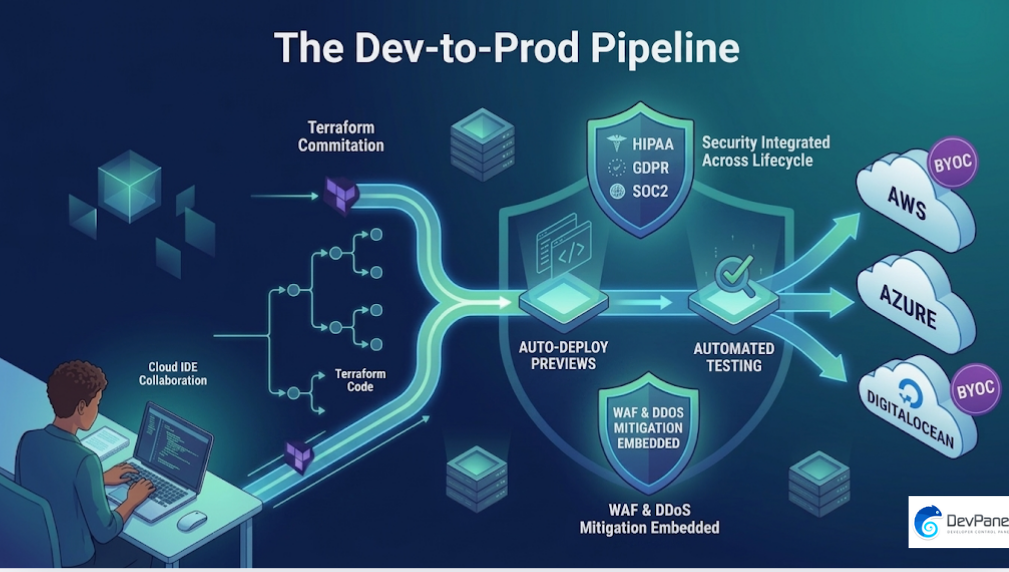
When we talk about Why Owning Your Cloud Infrastructure Beats Managed Platforms, we mean the entire chain. DevPanel focuses on dev environment creation and workflow automation so your deployments are repeatable across branches and teams.
Common pain points we see with managed platforms include slow environment provisioning and limited visibility into what is being deployed. DevPanel addresses those by using:
- Clone branches and sites and manage them from a single dashboard
- One source of truth so deployments mirror your repo branches
- Browser-based cloud IDEs so developers can work from anywhere and collaborate
For environment onboarding, start with building cloud development environments. For ongoing collaboration, see work with cloud IDEs.
Build and deploy on your terms: templates, cloning, and cloud-account linking
WordPress teams rarely build from scratch every time. They reuse themes, plugins, patterns, and architectures. The difference in 2026 is that infrastructure ownership should make reuse safer, not harder.
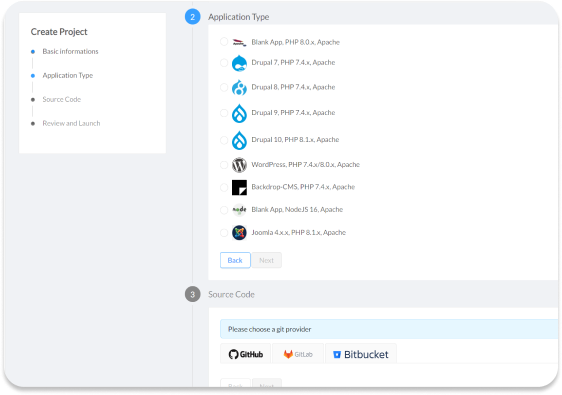
DevPanel ships prebuilt applications and preconfigured templates so you can start quickly and still stay aligned to your deployment and security approach. You can also create deployments from scratch or clone existing apps and databases, keeping branch sync consistent with your Git provider.
If you want a practical “how it works” view, use the deployment workflow in Deploy and Clone. It also describes automation into your cloud account driven by Terraform and Ansible.
Did You Know?
AWS Graviton (ARM) delivers 40% better price-performance over comparable x86/x64 instances
Source: AWS Prescriptive Guidance
When you own the infrastructure layer, you can take advantage of choices like Graviton to align performance and cost without paying a managed platform premium for configuration you cannot control.
When you need flexibility: workspaces, team isolation, and multi-audience support
In 2026, WordPress projects often involve multiple stakeholders, marketing teams, developers, IT, and sometimes agencies or contractors. Managed platforms can work, but team separation and collaboration can still become messy.
Workspaces are one of the cleanest ways to keep projects organized. DevPanel describes workspaces as isolation for teams, resources, projects, and applications. Each workspace can have admins or developers with access control, and you can invite collaborators, manage domains, and track activity across projects.
That directly supports Why Owning Your Cloud Infrastructure Beats Managed Platforms because it helps teams operate independently inside a shared organizational structure, without breaking security or slowing onboarding. See DevPanel Workspaces for the workflow model.
What we recommend for different WordPress site sizes (and why ownership still wins)
Whether you run a small site or a high-traffic platform, the ownership benefits scale. The difference is what you optimize first.
- Small sites and fast-moving teams: Prioritize faster environment onboarding, repeatable deployments, and predictable monthly spend. DevPanel Community Edition is free and BYOC keeps you in charge of your cloud account.
- Growth-stage sites: Prioritize reliability, automated previews, and scaling patterns you can tune as traffic changes. Branch cloning, Terraform/Ansible-driven deployments, and automated testing support this approach.
- Large or regulated deployments: Prioritize governance, compliance readiness, and security controls embedded across the lifecycle. DevPanel’s compliance framing and BYOC helps meet enterprise requirements.
Because DevPanel runs in your own cloud provider accounts (AWS, Azure, DigitalOcean), you keep infrastructure ownership while we provide automation that removes bottlenecks. If you want a practical walkthrough, start with DevPanel demos.
Conclusion: Why Owning Your Cloud Infrastructure Beats Managed Platforms
In 2026, Why Owning Your Cloud Infrastructure Beats Managed Platforms comes down to one simple idea. You should control the infrastructure layer that determines your costs, your reliability, and your security posture, while still using platform automation to move fast.
DevPanel applies that approach with a Platform as a Service model that runs in your own cloud account, supports browser-based cloud IDE workflows, enables branch-based cloning and repeatable deployments, and includes security and compliance readiness features. If your WordPress team wants fewer surprises and more control, owning the infrastructure layer is the most direct way to get it.
Frequently Asked Questions
Is owning your cloud infrastructure better than using managed WordPress hosting in 2026?
Often, yes. Why Owning Your Cloud Infrastructure Beats Managed Platforms is that you can align infrastructure choices with your traffic, deployment workflow, and security requirements instead of paying for constraints you cannot tune. In 2026, that control tends to improve both predictability and recovery speed during incidents.
How does owning infrastructure help reduce WordPress downtime risk?
Owning infrastructure supports reliability patterns you design and automate, including faster deployment rollbacks and lifecycle-aligned security controls. When Why Owning Your Cloud Infrastructure Beats Managed Platforms is applied correctly, your team can respond to problems without waiting for opaque platform behavior to resolve them.
What does BYOC mean for WordPress teams that want control?
BYOC means “bring your own cloud,” so you run the platform inside your own AWS, Azure, or DigitalOcean account context. That is a core reason Why Owning Your Cloud Infrastructure Beats Managed Platforms feels different in 2026, because the cloud-account ownership helps maintain data sovereignty and operational clarity.
Can we keep developer speed if we stop using a fully managed platform?
Yes. We typically see teams keep speed by automating environment creation, previews, and repeatable deployments, then integrating those steps into the workflow developers already use. DevPanel supports this idea with cloud-based development environments and deployment automation designed for repeatability.
Will infrastructure ownership make costs more predictable?
It can, because you can tune scaling behaviors and infrastructure choices rather than accepting fixed managed platform bundles. For cost leverage, Why Owning Your Cloud Infrastructure Beats Managed Platforms often includes enabling infrastructure options such as AWS instance family selection, which can improve price-performance.
How do security and compliance work when we own more of the stack?
When you own infrastructure more directly, you can embed security controls into your dev-to-production workflow rather than treating security as a final gate. In 2026, that aligns with Why Owning Your Cloud Infrastructure Beats Managed Platforms, especially when you need compliance readiness across environments and deployments.