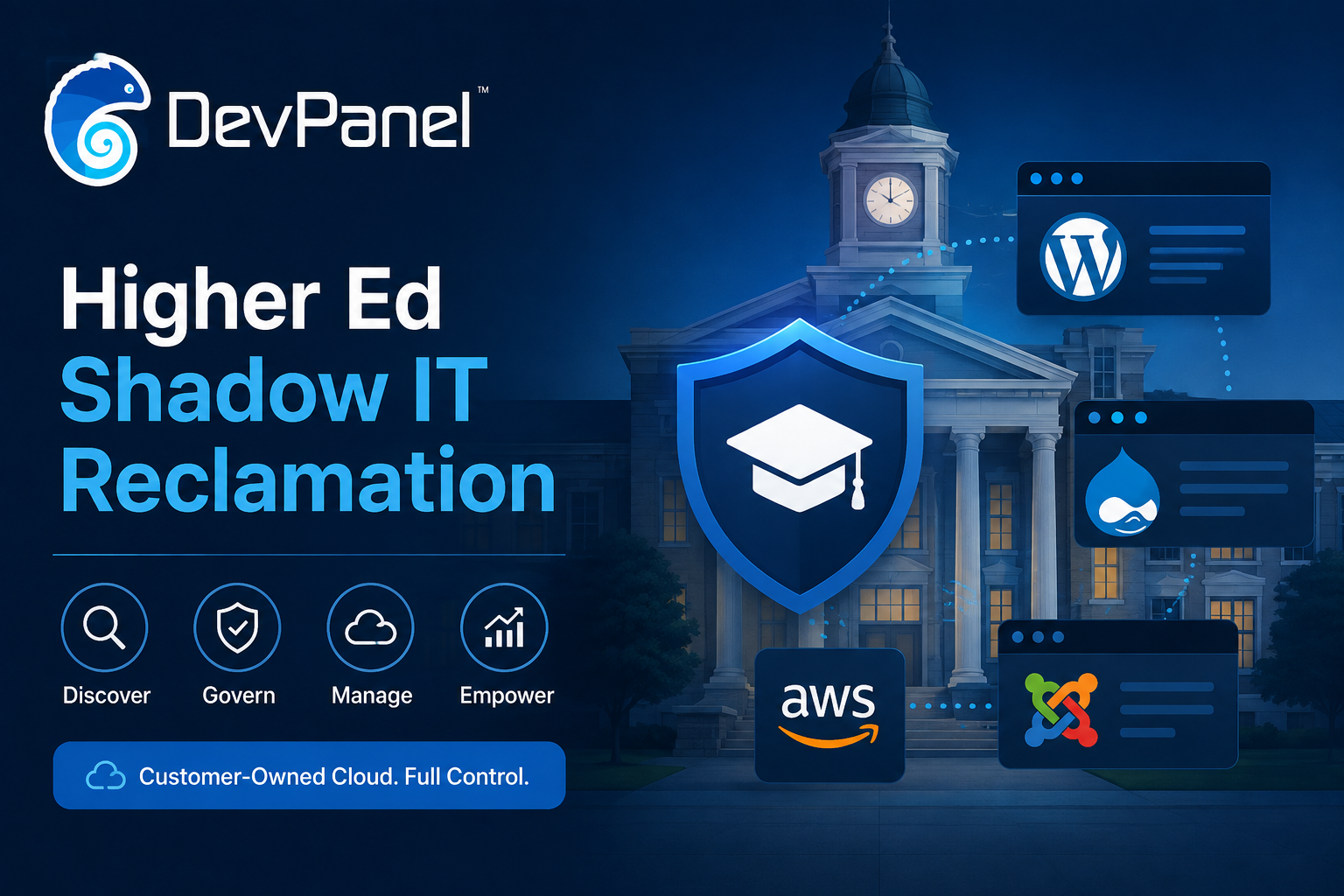
Higher Ed Shadow IT Reclamation: How Universities Can Take Back Control of Web Operations
Higher education has always had a shadow IT problem.
Departments launch websites outside central IT. Research groups buy their own SaaS tools. Faculty members create project sites on whatever platform is easiest. Student programs spin up temporary applications that quietly become permanent. Marketing teams deploy landing pages. Grant-funded initiatives create portals. Alumni groups use outside vendors. Over time, the university’s digital footprint becomes larger than anyone can fully see.
This is not usually caused by bad intent.
Most campus teams are trying to move quickly. They need a website, portal, form, dashboard, or content system, and the official process feels too slow. So they find another route.
That route becomes shadow IT.
For university leaders, the problem is not only that these systems exist. The real problem is that unmanaged systems create risk. They can weaken security, fragment budgets, duplicate tools, complicate compliance, and make it harder for central IT to know what is running across the institution.
That is why higher ed shadow IT reclamation matters.
Higher ed shadow IT reclamation is the process of identifying unmanaged websites, applications, and cloud resources, then bringing them into a governed operating model without blocking the departments that need to move quickly.
The goal is not to shut everything down.
The goal is to create a better path.
A university does not win by forcing every department into a slow ticket queue. It wins by making the governed path faster, safer, and easier than the unmanaged path.
That is where DevPanel fits.
DevPanel gives higher education teams a way to centralize governance, standardize environments, manage access through Workspaces, automate deployments, and run applications inside the institution’s own cloud infrastructure.
In other words, DevPanel helps universities reclaim control without taking away the speed departments need.

Why Shadow IT Spreads Across Campus
Higher education is uniquely vulnerable to shadow IT because campuses are decentralized by design.
A university is not one team. It is a network of schools, departments, research centers, labs, athletics programs, student services, continuing education units, public-facing initiatives, and grant-funded projects.
Each group has its own goals, timelines, budgets, and vendors.
That creates a natural tension.
Central IT needs governance, security, visibility, and consistency.
Departments need speed, autonomy, and flexibility.
When the official path is too slow, departments look for alternatives. They launch sites on unmanaged WordPress hosts. They hire outside agencies. They buy SaaS tools with departmental budgets. They create temporary systems for events, research projects, and campaigns.
At first, each decision seems reasonable.
The problem appears later, when central IT discovers dozens or hundreds of systems that do not follow the same standards.
Some have outdated software. Some have unknown admins. Some have unclear ownership. Some are connected to student or donor data. Some are still live even though the project ended years ago. Some are costing the institution money every month without any central visibility.
Higher ed shadow IT reclamation begins by accepting this reality.
The issue is not that departments want autonomy. The issue is that the university has not given them a governed way to move quickly.
What Universities Are Actually Reclaiming
Shadow IT reclamation is not just an inventory exercise.
It is an operational program.
Universities are reclaiming four things.
First, they are reclaiming visibility. IT leaders need to know what websites, applications, environments, databases, and cloud resources exist across campus.
Second, they are reclaiming governance. The institution needs consistent rules for access, domains, backups, updates, security, compliance, and deployments.
Third, they are reclaiming infrastructure ownership. The university should know where its systems run, who controls the cloud account, and what happens if a vendor relationship changes.
Fourth, they are reclaiming developer productivity. Governance should not make teams slower. A better platform should help departments launch approved environments faster than they could through unmanaged tools.
This is where many consolidation programs fail.
They focus only on control.
But if the controlled path is slower than the shadow path, shadow IT will return.
A successful higher ed shadow IT reclamation strategy gives departments a better operating model. It lets them create, test, deploy, and manage digital projects within approved guardrails.
The Higher Ed WebOps Problem
A large university may have hundreds of web properties.
Some are official institutional sites. Others are department sites, course sites, lab sites, campaign sites, conference sites, student service portals, research project pages, alumni sites, or grant-funded microsites.
Many of these systems are built on WordPress, Drupal, or custom web applications.
Without a central operating model, every site can become its own small infrastructure problem.
One department uses a shared host. Another uses a managed WordPress provider. Another uses a vendor platform. Another has a developer running something in a personal cloud account. Another has an old server nobody wants to touch.
This creates several risks:
•Inconsistent security updates
•Unclear ownership
•Duplicate hosting costs
•No standard backup model
•Unknown access permissions
•Unmanaged plugins and modules
•Weak audit trails
•Difficulty enforcing accessibility and compliance standards
•Slow recovery during incidents
•Poor visibility into what is live
Higher ed WebOps needs a central layer that can support many teams without turning central IT into a bottleneck.
DevPanel’s model is designed for this kind of challenge.
It gives institutions a way to manage applications, environments, and workflows from a centralized platform while still allowing departments and developers to work within their own controlled spaces.
Centralized Governance Without Centralized Bottlenecks
Centralized governance does not mean every small change needs central approval.
That model does not work on a campus.
The better model is centralized standards with distributed execution.
Central IT defines the rules. Departments operate within those rules. Developers get self-service workflows. Admins retain visibility and control.
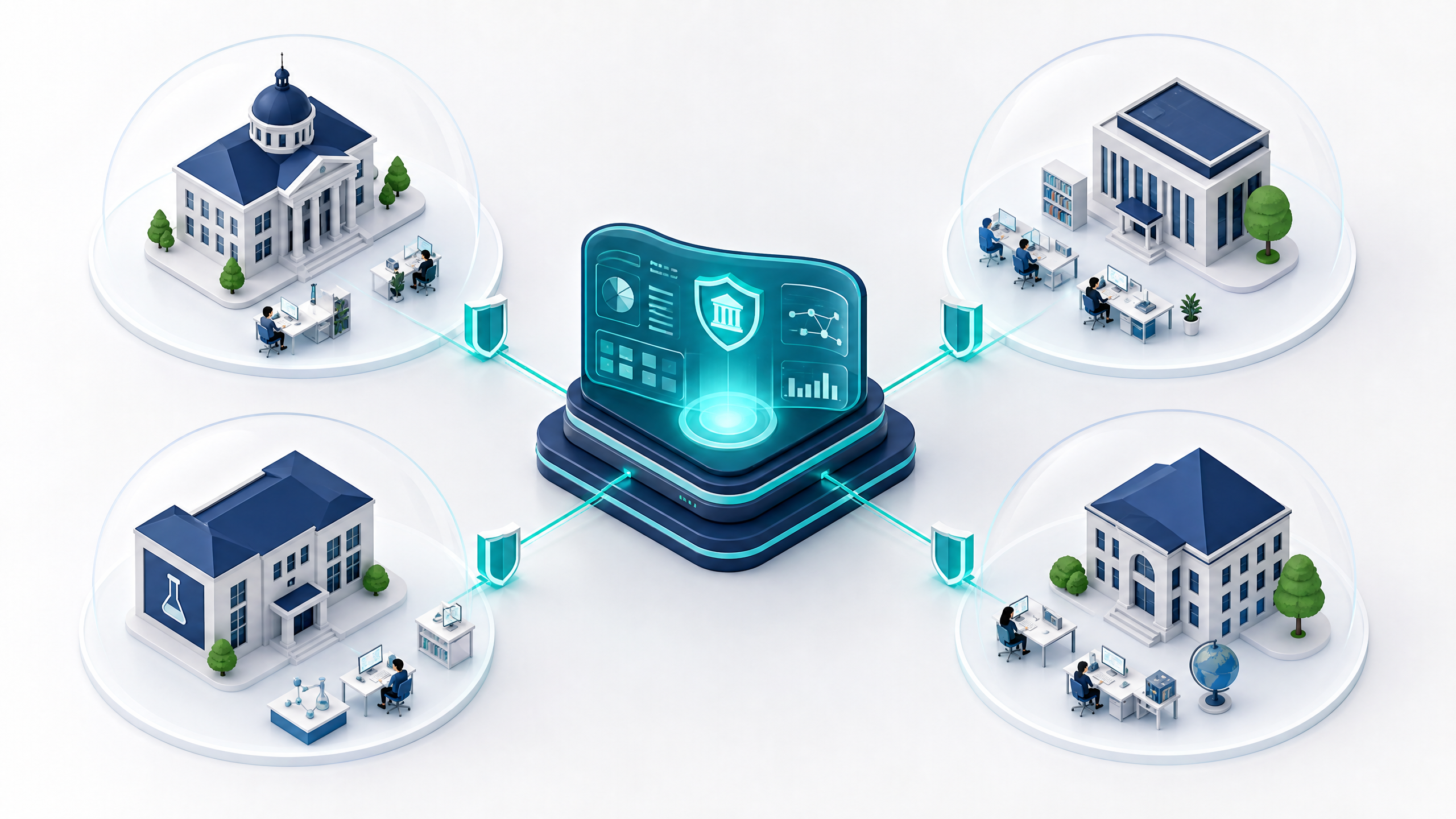
A Workspace can isolate teams, projects, applications, and access. A department can manage its own approved web projects without seeing or affecting another department’s resources. Administrators can maintain a broader governance view while developers work inside their assigned areas.
That matters because shadow IT often grows from frustration.
If departments must wait too long for every environment, deployment, or access request, they will find other tools.
But if the governed platform gives them what they need quickly, there is less reason to go around IT.
Higher ed shadow IT reclamation succeeds when the safe route becomes the easiest route.
Standardized Environments Reduce Risk
One of the clearest signs of shadow IT is environment drift.
A production site runs one version of PHP. A staging site runs another. A developer has a local copy with different dependencies. A department vendor has its own deployment scripts. The database is cloned manually. Backups are inconsistent. Nobody is completely sure which environment reflects production.
This creates risk every time the team makes a change.
DevPanel helps solve this by making environments reproducible.
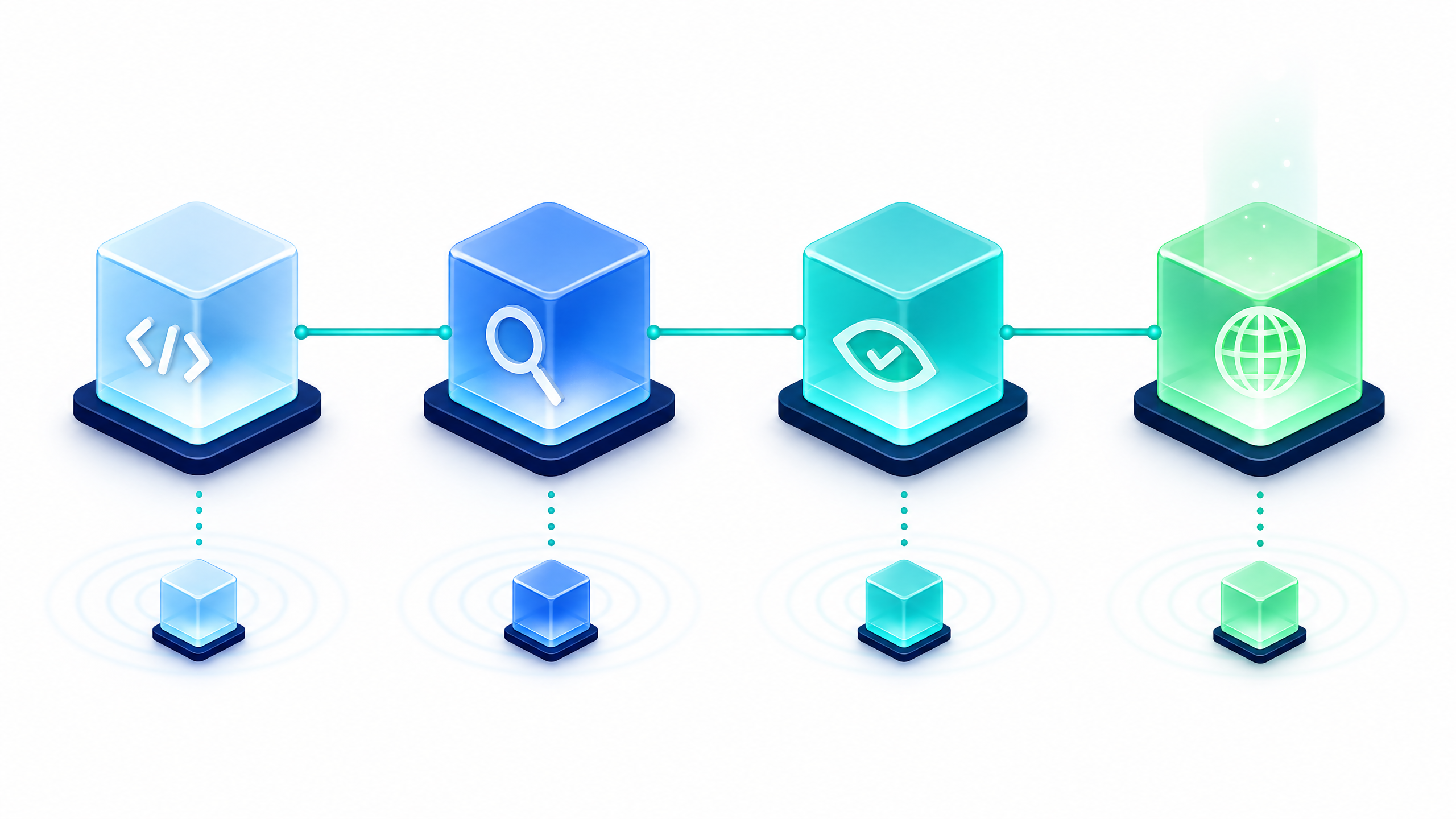
Instead of treating dev, test, staging, and production as custom one-off setups, teams can create standardized environments through the platform. Developers can test changes in controlled copies. Departments can preview work before launch. IT can reduce the number of unmanaged systems created just for testing.
This is important for universities because many shadow systems start as temporary environments.
A department needs a quick preview site. A lab needs a test server. A campaign needs a short-term landing page. A student program needs a form. The temporary system works, so it stays online.
A governed environment workflow changes that pattern.
It gives teams a way to create temporary or preview environments without creating permanent unmanaged infrastructure.
Customer-Owned Cloud Matters for Higher Education
Many universities are trying to reduce vendor lock-in while improving governance.
That is difficult when applications run inside vendor-controlled infrastructure.
A managed hosting platform may be convenient, but the university may not fully control the underlying cloud account, network architecture, infrastructure services, or portability model.
DevPanel uses a different approach.
DevPanel can run on customer-owned cloud infrastructure. The institution can use its own AWS, Azure, DigitalOcean, or other cloud account while DevPanel provides the control layer and automation.

This matters for higher education because universities often have long-term cloud strategies, security policies, procurement requirements, and compliance obligations.
Customer-owned cloud gives the institution more control over where workloads run, how infrastructure is configured, who has access, and how systems can be migrated or audited.
The Voice of America case study shows why this model matters at scale. A U.S. government news agency evaluated DevPanel on AWS because it needed more control, better performance, and lower long-term cost across dozens of high-traffic Drupal sites. DevPanel could be deployed inside the agency’s own AWS account, giving the agency sovereignty over infrastructure and data while still providing a point-and-click dashboard, development tools, and support.
Higher education buyers face a similar strategic issue.
They do not only need hosting. They need governance, ownership, and operational control.
DevPanel as the Control Layer for Campus Web Operations
DevPanel is best understood as a control layer for cloud-based web operations.
It is not just a place to host a website.
It gives teams a way to manage the application lifecycle across environments: development, testing, staging, production, cloning, deployment, access, and infrastructure automation.
For universities, this means DevPanel can become the layer that connects central IT governance with departmental execution.
A central team can define approved patterns. Departments can work inside their Workspaces. Developers can create environments without waiting for manual infrastructure work. Applications can run in the institution’s own cloud account. Updates and deployments can follow repeatable workflows.
This is how higher ed shadow IT reclamation becomes sustainable.
You do not reclaim control by manually chasing every unmanaged site.
You reclaim control by offering a platform that departments prefer to use.
Centralized CMS Governance for WordPress and Drupal
Many higher education shadow IT problems show up first at the CMS layer.
WordPress and Drupal are common across campuses because they are flexible, familiar, and widely supported. But without governance, they can spread in uncontrolled ways.
One school may have its own WordPress hosting. Another department may run Drupal through an outside vendor. A research center may have a site built years ago by a contractor. A program may be using plugins or modules that nobody has reviewed.
Centralized CMS governance gives the university a better model.
It should define:
•Approved CMS templates
•Standard development and staging workflows
•Domain and SSL policies
•Access roles
•Backup and recovery requirements
•Plugin and module review standards
•Deployment patterns
•Monitoring expectations
•Security update processes
•Retirement rules for old sites
DevPanel helps turn those standards into operational workflows.
Instead of documenting governance in a policy that teams ignore, the institution can build governance into how sites are created, cloned, tested, and deployed.
That is the difference between policy and platform.
Templates Make Governance Easier to Adopt
Templates are one of the most practical tools for higher education governance.

A university can create approved templates for common use cases:
•Department websites
•Faculty profile sites
•Research center sites
•Event sites
•Program landing pages
•Course support sites
•Admissions campaign sites
•Nonprofit or public service initiatives
•Internal knowledge bases
A template can include approved configuration, design patterns, accessibility requirements, plugins, modules, content types, security settings, and deployment workflows.
This helps departments move faster while reducing risk.
Instead of building every site from scratch, teams start from an approved foundation.
That matters because shadow IT often grows when the approved process is too slow or too vague. If a department can launch an approved template quickly, the unmanaged option becomes less attractive.
DrupalForge proves how powerful this pattern can be. Built on DevPanel, DrupalForge supports instant Drupal environments, training sessions, demos, development workflows, and templates. It was designed to scale from one to 1,000 sites in under 10 minutes and launch new Drupal development environments in about five seconds.
For higher education, the same pattern can be applied to campus web governance.
Templates can become a practical bridge between central control and departmental autonomy.
Reducing Manual Operations for University IT Teams
Central IT teams are often understaffed relative to the number of systems they support.
That is why manual operations are so damaging.
Every manual environment setup, database copy, deployment, access request, patch, SSL update, and troubleshooting ticket consumes time. Over time, central IT becomes reactive. Teams spend more time supporting fragmented systems than improving the university’s digital infrastructure.
DevPanel reduces this burden by automating repeatable operations.
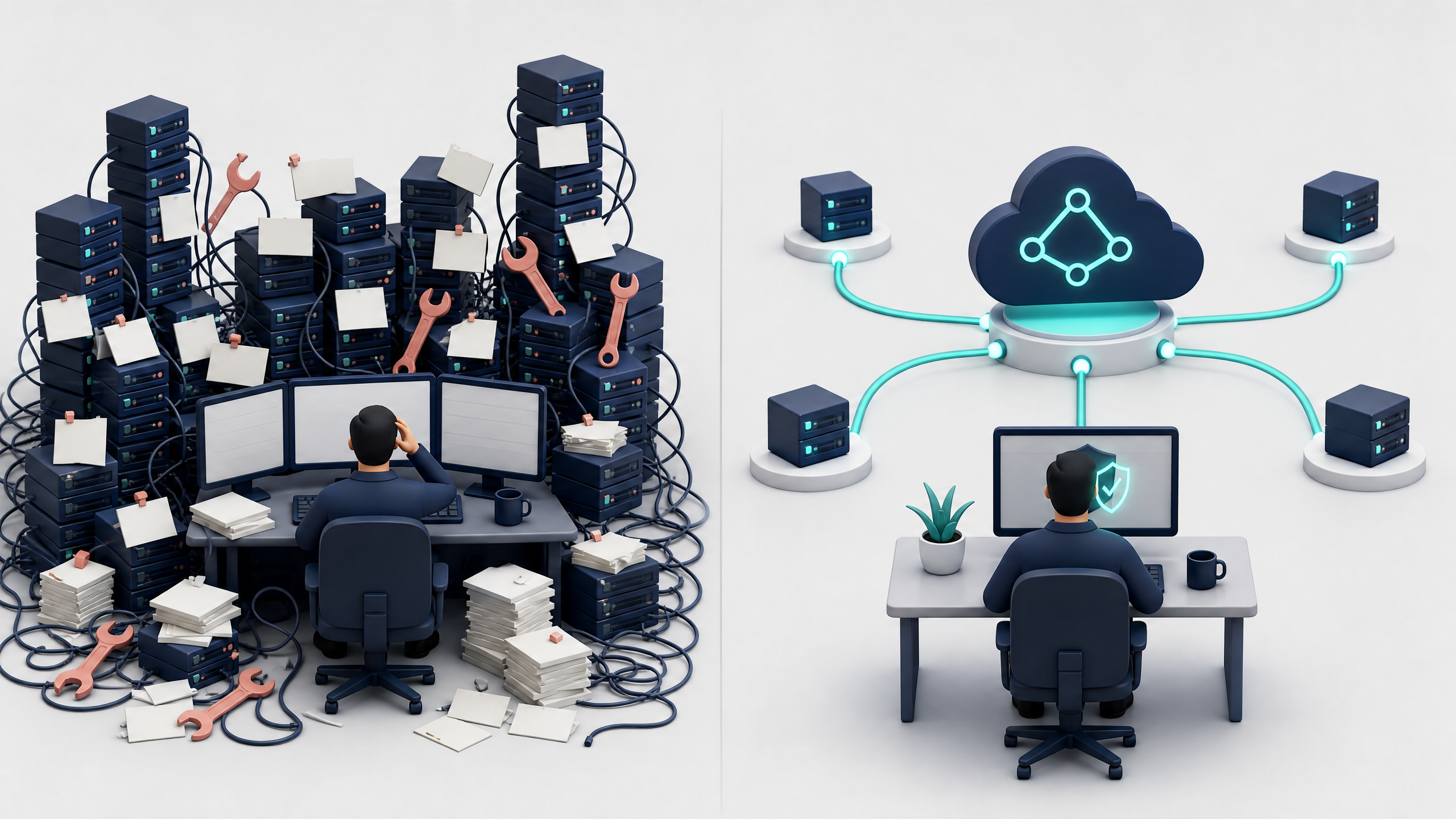
The Academy of Model Aeronautics case study gives a useful example. AMA managed more than 30 websites across Drupal, Backdrop, and WordPress. Before DevPanel, even simple tasks like creating development or staging environments required third-party vendor coordination. With DevPanel, AMA migrated 30+ sites to AWS, centralized management, automated site lifecycle workflows, and enabled one person to manage what previously required multiple team members.
That is the kind of operational leverage higher education teams need.
Universities may have more complex governance requirements than AMA, but the principle is the same: when the platform handles repeatable operational work, small teams can manage larger portfolios with more consistency.
Shadow IT Reclamation Should Start With One High-Friction Area
A university does not need to reclaim everything at once.
In fact, trying to do so usually fails.
The better approach is to start with one high-friction area where the value is obvious.
For many campuses, that area is departmental websites.
For others, it may be research project sites, grant-funded portals, campaign landing pages, event sites, or WordPress installations.
The first project should be visible enough to matter, but not so large that it becomes politically impossible.
A practical rollout might look like this:
1.Identify a group of unmanaged or inconsistently managed sites.
2.Create an approved environment pattern in DevPanel.
3.Define Workspaces for the teams involved.
4.Build or select approved templates.
5.Migrate a small set of sites into the governed workflow.
6.Give departments self-service access within clear boundaries.
7.Measure improvements in deployment speed, visibility, security, and operational burden.
8.Expand the model to more departments.
This turns reclamation into a repeatable program instead of a one-time cleanup.
Make the Governed Path Faster Than the Shadow Path
The most important rule is simple:

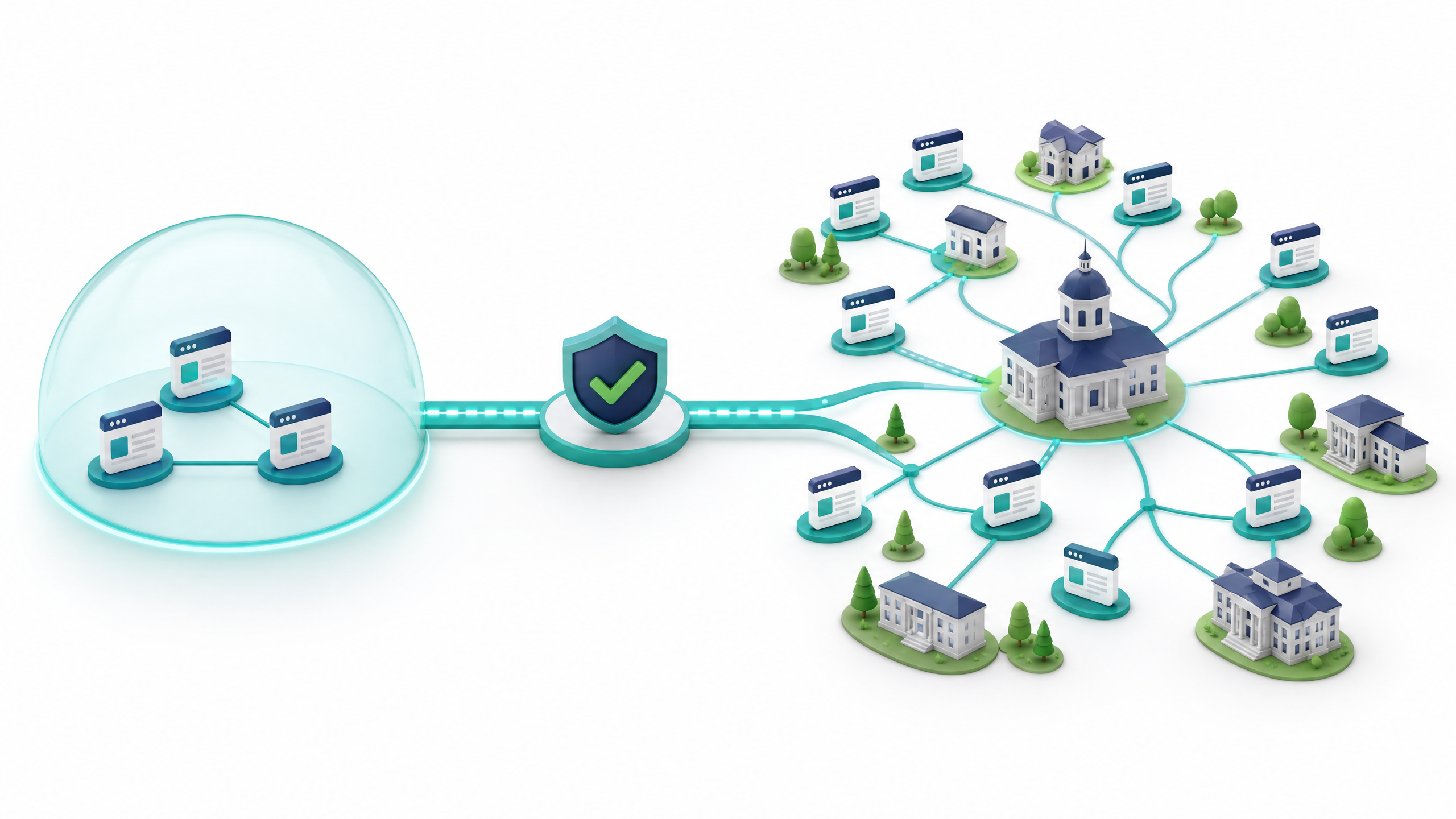
If governance is slower than shadow IT, shadow IT wins.
Departments will always choose the path that helps them meet deadlines.
The answer is not to lecture teams about policy. The answer is to build a platform that makes the approved path faster.
That means:
•Faster environment creation
•Faster previews
•Faster staging
•Faster approvals
•Faster deployments
•Faster developer onboarding
•Faster recovery
•Faster template launches
DevPanel helps by turning cloud complexity into repeatable workflows.
When a department can launch an approved environment quickly, test safely, and work inside its own Workspace, central IT no longer needs to be seen as a blocker.
It becomes an enabler.
That is the cultural shift that makes higher ed shadow IT reclamation work.
Budget Reclamation Without Cheap Positioning
Shadow IT also creates budget fragmentation.
Different departments may pay for separate hosting providers, SaaS tools, contractors, licenses, and emergency fixes. These expenses can be difficult to track because they sit in different budgets.
Reclamation gives universities a chance to consolidate spending.
But this should not be framed as cheap hosting.
For DevPanel, the stronger message is premium infrastructure ownership.
The university is not just trying to save money. It is trying to gain control, reduce risk, improve visibility, and standardize operations.
Cost improvement is a benefit, but control is the strategic value.
The Voice of America case study shows both sides of this. The agency projected significant savings by moving from Acquia to AWS with DevPanel, but the larger strategic value included full infrastructure access, AWS-native integration, VPN support, development tools, and agency-controlled deployments.
For universities, the same logic applies.
The goal is not the lowest-cost vendor.
The goal is the best operating model.
What Success Looks Like
A successful higher ed shadow IT reclamation program should produce measurable improvements.
The university should know more about what is running across campus.
Departments should have a faster path to launch approved websites and applications.
Developers should have better environments.
Security teams should have clearer access and deployment controls.
Central IT should spend less time on manual setup and emergency support.
Budgets should become easier to understand.
Old systems should be easier to retire.
New systems should be easier to govern from the start.
Most importantly, departments should feel that the governed path helps them move faster.
That is when shadow IT begins to shrink.
Not because people are forced.
Because the official platform is better.
FAQ
What is higher ed shadow IT reclamation?
Higher ed shadow IT reclamation is the process of identifying unmanaged websites, applications, cloud resources, and tools across a university, then bringing them into a governed operating model without slowing down departments.
Why does shadow IT happen in higher education?
Shadow IT happens because departments, research groups, faculty, and campus programs often need to move faster than central IT processes allow. When the official path is too slow, teams use outside tools, vendors, and hosting platforms.
How can universities reduce shadow IT without blocking departments?
Universities can reduce shadow IT by making the governed path faster and easier. This means providing self-service environments, approved templates, Workspaces, access controls, and repeatable deployment workflows.
How does DevPanel help with higher ed shadow IT reclamation?
DevPanel helps universities centralize governance, manage Workspaces, standardize environments, automate deployments, and run applications in customer-owned cloud accounts. This gives departments speed while giving central IT visibility and control.
Why is customer-owned cloud important for universities?
Customer-owned cloud helps universities retain control over infrastructure, data, access policies, cloud regions, and long-term portability. DevPanel acts as the control layer on top of that infrastructure.
What should a university reclaim first?
A university should start with one high-friction area, such as departmental websites, unmanaged WordPress installations, event sites, research project sites, or grant-funded portals. Start small, prove the model, then expand.
Conclusion: Reclaim Control Without Slowing Campus Innovation
Higher ed shadow IT reclamation is not about shutting down departmental innovation.
It is about giving departments a better path.
Universities need to know what is running, who owns it, how it is secured, where it is hosted, and how it can be maintained. But departments also need speed, flexibility, and autonomy.
DevPanel helps bridge that gap.
It gives higher education teams a platform for centralized governance, Workspaces, standardized environments, customer-owned cloud infrastructure, templates, and automated deployments.
That is how universities can take back control without turning IT into a bottleneck.
The future of campus WebOps is not unmanaged shadow systems.
It is governed self-service.
It is customer-owned cloud.
It is automation instead of manual operations.
And it is a platform model that lets universities move faster while reducing risk.