How DrupalForge Proves DevPanel Can Power Entire Cloud Platforms
Why the future of web operations is not just hosting websites, but building vertical cloud platforms that launch, train, and scale applications automatically.
Most hosting platforms are designed to do exactly one thing well: run websites. That is useful, but it is fundamentally different from powering a cloud platform.
A website hosting platform gives teams a place to deploy a single application. A cloud platform gives them a repeatable, automated way to launch environments, run instant demos, support developers, manage templates, automate CI/CD workflows, and build new digital products on top of raw infrastructure.
DrupalForge is a clear example of that difference.
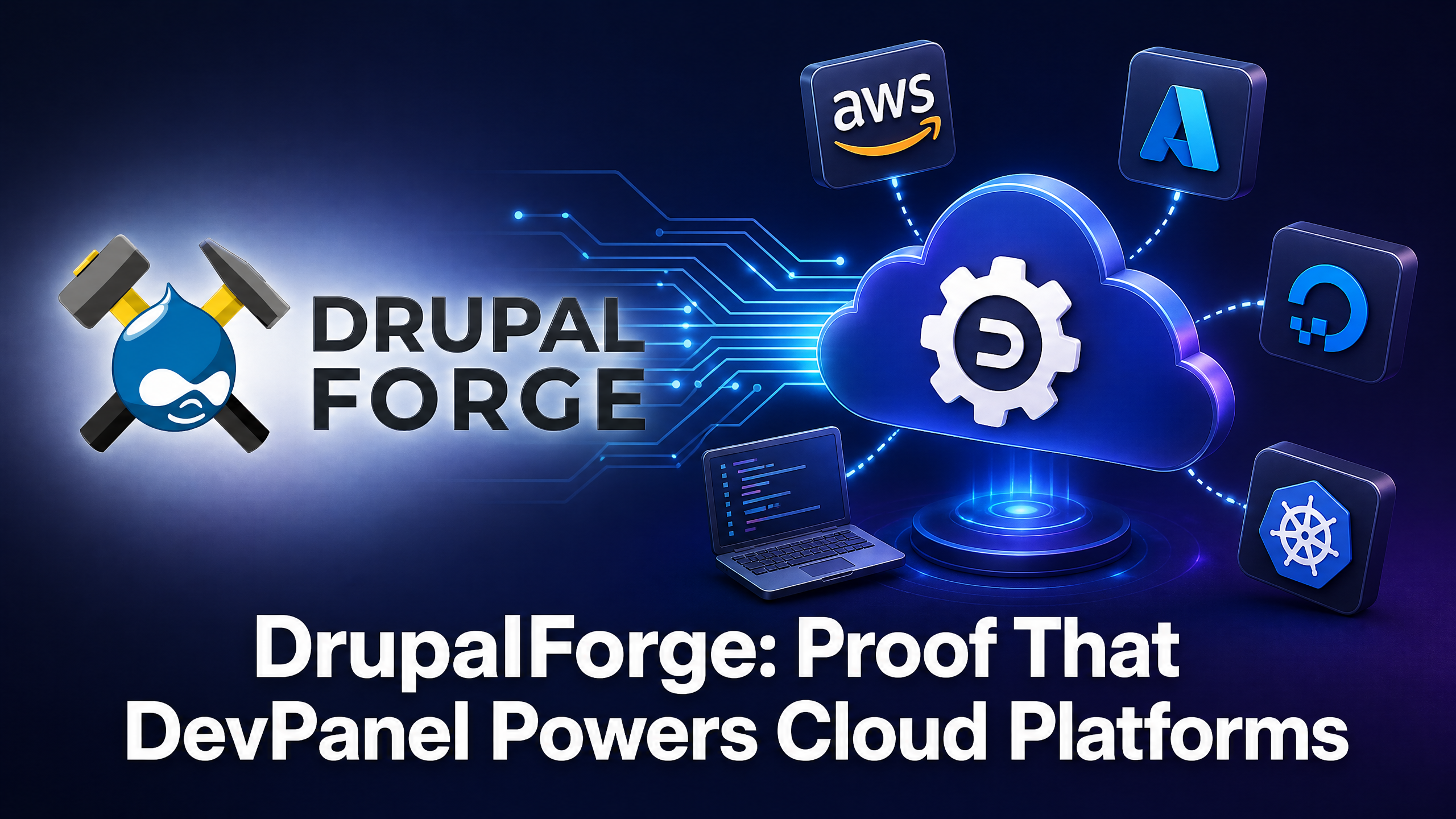
DrupalForge is built entirely on DevPanel, and it shows what becomes possible when DevPanel is used not just as a hosting dashboard, but as the engine behind a full vertical platform experience.
Instead of thinking about DrupalForge as merely “another Drupal host,” it is better to understand it as a live demonstration of what DevPanel can power: instant software demos, standardized training environments, frictionless development workflows, template-based site creation, and a path toward marketplace-style platform building.
From Commodity Hosting to Platform Building
Traditional hosting solves a basic problem: Where should the website live?
That question still matters, but many organizations now need more. They need repeatable environments, safer development workflows, faster demos, easier testing, and infrastructure that can scale without forcing every developer to become a cloud specialist.
This is where platform building begins.
A platform is not only the place where an application runs. It is the system that helps people create, test, improve, and deliver applications faster.

DrupalForge brings that idea directly to the Drupal ecosystem. A user can launch a Drupal environment, explore a template, test a new idea, use cloud development tools, and start working without spending hours on local setup. That shifts the experience from “install and configure” to “launch and build.”
If someone wants to try Drupal, teach Drupal, contribute code, or demo a complex solution to a client, the setup process should not be the hardest part of the job. DrupalForge removes much of that friction by turning complex cloud infrastructure into an easy launch experience.
DrupalForge Is the Experience. DevPanel Is the Engine.
The easiest way to understand the relationship is this: DrupalForge is the user-facing platform, and DevPanel is the engine underneath it.
DrupalForge gives Drupal users a focused, tailored experience. DevPanel provides the infrastructure automation, environment management, developer tools, automatic scaling, and CI/CD workflows that make that experience possible.
If DevPanel were only a commodity hosting product, DrupalForge would simply be a single Drupal site running on DevPanel. But DrupalForge is much more than that. It is a platform that actively creates and manages many Drupal environments for other users.
That is why DrupalForge is such a strong proof point for DevPanel. It shows that DevPanel can serve as the foundation for a vertical cloud platform.
A vertical cloud platform is built for a specific market, industry, or community. DrupalForge is focused on Drupal, but the same architectural pattern could be applied to WordPress, Shopware, healthcare websites, government CMS projects, higher education portals, nonprofit web platforms, AI application demos, or agency delivery systems.
The market can change. The pattern stays the same: DevPanel provides the platform layer, and the vertical product provides the market-specific experience.

Instant Demos Make Complex Software Easier to Try
One of the most useful things DrupalForge does is make Drupal easier to experience.
Drupal is powerful, but it can be intimidating for new users. Someone may want to explore a template, evaluate a distribution, test a module, or simply see how a modern Drupal site works, but local setup often becomes a barrier.
Instead of asking users to install everything first, DrupalForge lets them launch a working Drupal environment directly in the cloud. That makes the first experience faster, cleaner, and more positive.
This is especially valuable for new Drupal users, agencies giving client demos, trainers running workshops, contributors testing modules, and product teams evaluating templates.
A software demo becomes more powerful when it is not a screenshot or a recorded video, but a live environment the user can actually explore. That is what a platform does: it removes the delay between interest and experience.
Training Environments Become Easier to Run
Training is another area where DrupalForge shows the value of DevPanel.
Anyone who has run a technical workshop knows the problem. Some attendees have the wrong operating system. Some have outdated software. Some cannot install the required dependencies. Others lose time debugging local setup before the session even begins.
DrupalForge solves this by making standardized training environments available in the cloud.
A trainer can give students access to ready-to-use Drupal environments. Everyone starts from the same place. The tools are already there. The site is already running. The focus shifts from setup problems to learning.
This is not ordinary hosting. It is a training platform use case, and it shows why DevPanel has value far beyond production website management.
DevPanel gives DrupalForge the ability to create environments quickly and consistently. DrupalForge turns that capability into a better learning experience for the Drupal community.

Templates Can Become Live Experiences
Templates are one of the most important parts of the DrupalForge story. A template is more than a starter site. It is packaged knowledge.
A strong template can include architecture decisions, selected modules, custom configuration, content structure, theme choices, integrations, and best practices for a specific use case.
When templates are only downloadable files, the user still has to install the code, configure the environment, import data, and make everything run locally before understanding the value.
But when a template can be launched instantly as a live cloud environment, the value becomes immediate. The user can see it, test it, modify it, and decide whether it fits their needs.
This is where DrupalForge points toward a larger marketplace opportunity. If creators, agencies, and contributors can package useful Drupal templates and make them instantly launchable, DrupalForge becomes more than a demo platform. It becomes a distribution channel for reusable Drupal solutions.
The Pattern Other Markets Can Copy
The most important lesson from DrupalForge is that the model can be repeated. Drupal is simply the first example.
A Shopware platform could let ecommerce teams launch demo stores, test plugins, create development environments, and move safely toward production.
A WordPress platform could help agencies spin up client-ready templates, test plugins, and manage workflows across many projects.
A healthcare platform could provide compliant starter environments for patient portals, intake forms, and education sites.
The pattern is simple: pick a specific market, define the repeatable use cases, create launchable templates, automate the environments, simplify the experience, and use DevPanel as the engine underneath. DrupalForge proves this approach works because it takes cloud complexity and turns it into a focused experience for a real community.
Why This Matters for Product Leaders and Agencies
Product leaders should pay attention to DrupalForge because it shows a faster way to build cloud-enabled products.
Many good ideas slow down because teams spend too much time building infrastructure before they can test the market. They need user management, environment creation, application deployment, cloud tooling, auto-scaling, and operational support before customers can even experience the product.
DevPanel reduces that burden. Instead of building every operational capability from scratch, teams can use DevPanel as the foundation and focus on the product layer: the audience, templates, onboarding, workflows, marketplace, pricing, and overall customer experience.
Agencies can learn from the same model. Many agencies have valuable expertise, but they deliver it one project at a time. DrupalForge suggests a different path: turn that expertise into reusable templates, repeatable workflows, and a platform-like client experience.
An agency specializing in higher education, healthcare, or ecommerce could build its own vertical platform with launchable templates and instant demo environments. DevPanel supplies the infrastructure engine, while the agency brings the strategy, implementation, and domain knowledge.
DevPanel Powers Platforms, Not Just Websites
The larger message is simple: DevPanel powers platforms, not just websites.
DrupalForge makes that message real. It shows that DevPanel can support instant demos, training environments, templates, development tools, and cloud workflows in a focused vertical platform.
That moves DevPanel away from commodity hosting and into a stronger category: cloud platform enablement.
Cheap hosting is a race to the bottom. Platform building creates leverage. A team that owns the platform layer can create many products, workflows, and market-specific experiences. DrupalForge is one strong example, and it suggests there can be many more.
Explore DrupalForge: drupalforge.org
Learn more about DevPanel: devpanel.com