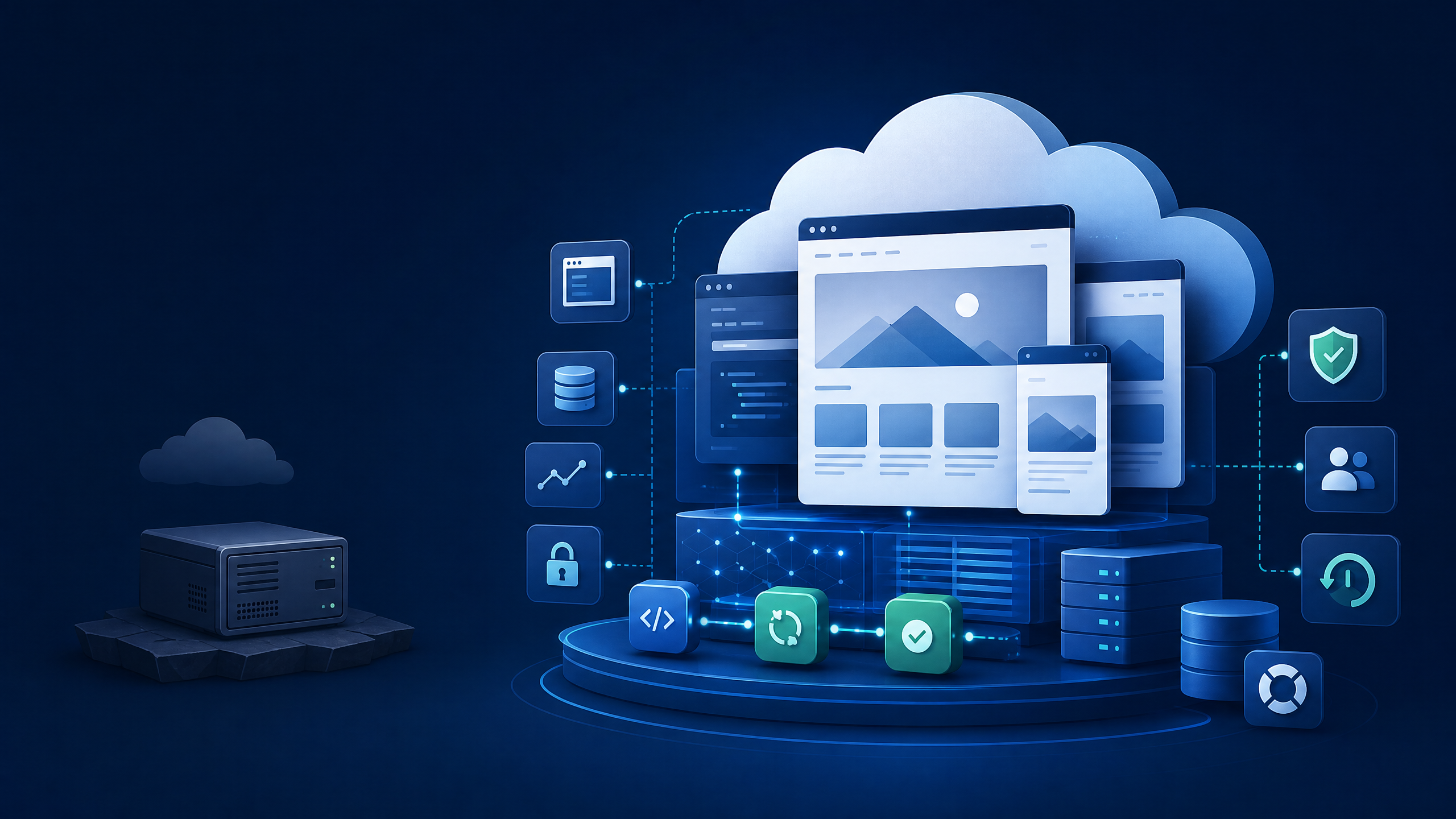
WordPress Hosting Is Cheap. WordPress Operations Are Not.
You can host a WordPress site almost anywhere.
For a few dollars a month, you can get a server, a control panel, a one-click install, and a promise that your website will be “fast and secure.”
For many websites, that is enough.
A personal blog does not need enterprise operations. A small brochure site does not need advanced deployment workflows. A simple landing page does not need a backup DevOps team.
But once WordPress becomes important to the business, the conversation changes.
The real cost is no longer hosting.
The real cost is operational failure.
Cheap Hosting Works Until the Website Becomes Mission-Critical
The problem with most WordPress hosting conversations is that they start too low.
They focus on:
| Common hosting question | Why it matters | Why it is not enough |
| Monthly price | It affects the visible budget. | It does not measure operational risk. |
| Storage and bandwidth | The site needs enough capacity to run. | Capacity does not guarantee continuity. |
| Page speed and caching | Performance affects user experience. | Speed alone does not protect deployments, backups, or recovery. |
| Plugin compatibility | WordPress sites often depend on plugins. | Compatibility does not replace update discipline or staging. |
| Basic backups | Backups are essential. | Backups only matter if restoration is tested and understood. |
Those things matter. But they are not the whole picture.
For a serious organization, the website is not just a website.
It may be the main marketing engine, the public face of the organization, the lead generation system, the member portal, the donor platform, the event registration hub, the publishing workflow, the customer education center, or the place where campaigns live or die.
When the site becomes part of the business operation, cheap hosting stops being the main question.
The better question becomes:
Can your organization operate this site safely, consistently, and confidently over time?
Hosting Is Infrastructure. Operations Are Continuity.
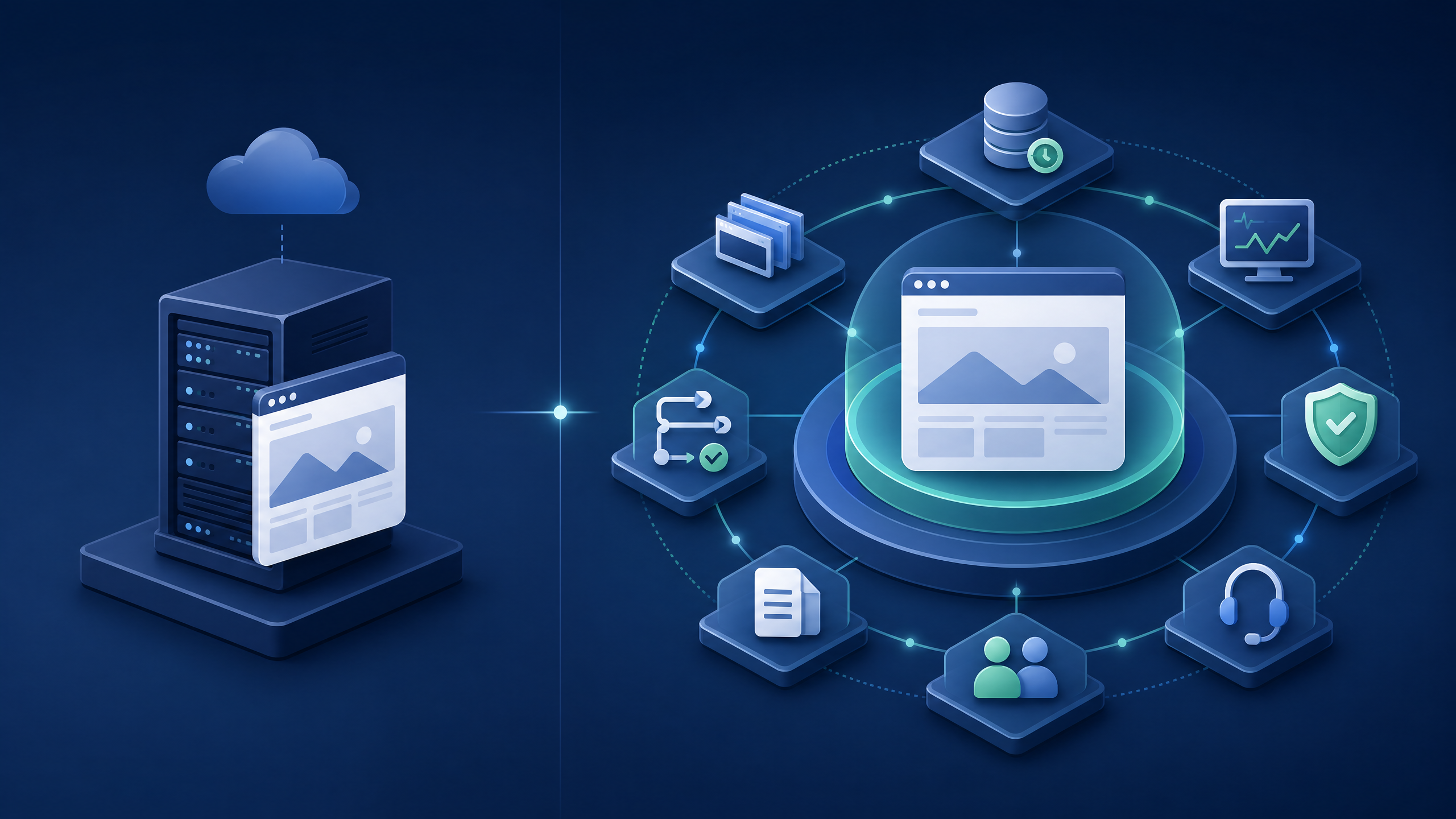
Hosting answers one question:
Where does the site run?
Operations answer a much bigger set of questions:
Who knows how the site is deployed? Who can restore it if something breaks? Who manages staging and production? Who handles updates? Who monitors failures? Who manages access? Who knows how the cloud infrastructure is configured? Who responds when the developer is unavailable? Who understands the difference between a quick plugin update and a risky production deployment? Who makes sure the website keeps moving when internal IT is overloaded?
This is where many organizations quietly struggle.
They have hosting.
They have developers.
They may even have an agency.
But they do not have a clear operational layer behind the website.
That creates risk.
The Hidden Risk: One Developer, One Agency, One Fragile Workflow
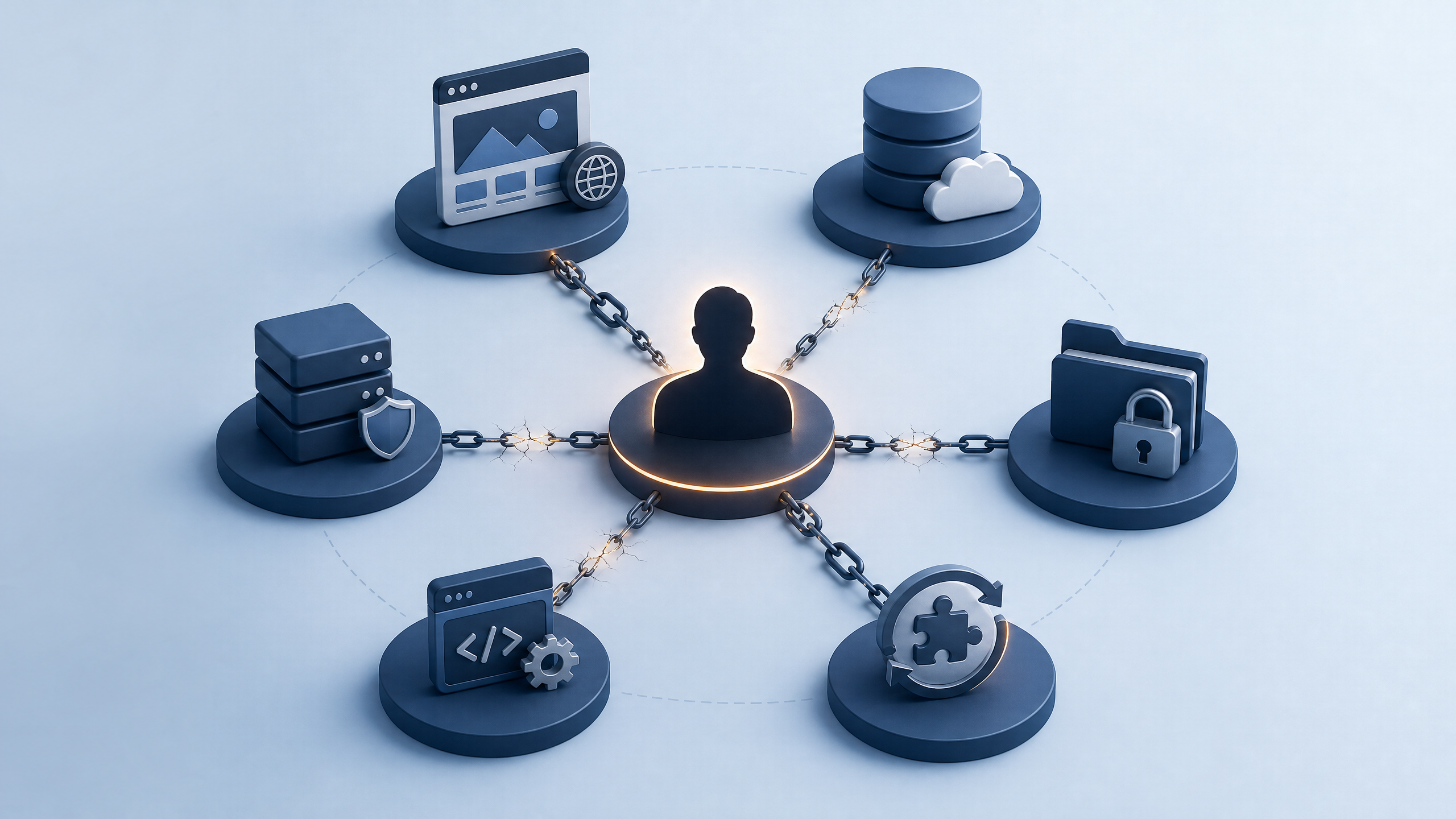
Many WordPress sites depend too heavily on one person.
Sometimes it is an internal developer. Sometimes it is a freelancer. Sometimes it is one person at an agency. Sometimes it is an IT administrator who inherited the site years ago and is now the only person who understands how everything works.
That may seem fine until something changes.
The developer gets sick. The freelancer disappears. The agency relationship ends. The internal IT team gets overloaded. The person who knows the deployment process leaves the company. The hosting account is under someone else’s login. The backups exist, but nobody has tested restoring them. The production site works, but nobody wants to touch it because nobody is fully confident about what will break.
This is not a hosting problem.
This is an operational continuity problem.
And it is exactly why serious WordPress organizations need more than cheap hosting.
Marketing Teams Feel This Pain First
Marketing and communications teams are often the first to experience the problem.
They are expected to move fast.
They need to launch campaigns, publish content, update landing pages, add integrations, test new ideas, and respond to leadership requests.
But their website operations may depend on IT ticket queues, slow deployment processes, limited developer availability, unclear staging workflows, fragile plugin updates, hosting restrictions, security concerns, and lack of emergency support.
So the marketing team waits.
A campaign is ready, but the site is not. A landing page needs to launch, but staging is broken. A plugin needs to be updated, but nobody wants to risk production. A developer is on vacation, and everything slows down.
This is where a cheap hosting plan becomes expensive.
Not because the monthly bill is high.
Because the organization loses speed, confidence, and control.
Agencies Feel This Pain Too
WordPress agencies face a different version of the same problem.
Many agencies want recurring revenue from hosting and website management. But hosting clients can quickly become support-heavy.
The agency wants to own the client relationship. The agency wants to provide long-term value. The agency wants predictable monthly revenue.
But the agency may not want to build a full DevOps department.
That means hosting becomes a trap.
It looks profitable at first, but the margin disappears into emergency tickets, broken updates, migrations, DNS issues, staging problems, performance complaints, security incidents, unclear responsibility, and after-hours support.
This is why agencies need a better model.
They do not need to become a hosting company.
They need a backup operations partner behind them.
What Professional WordPress Operations Should Include
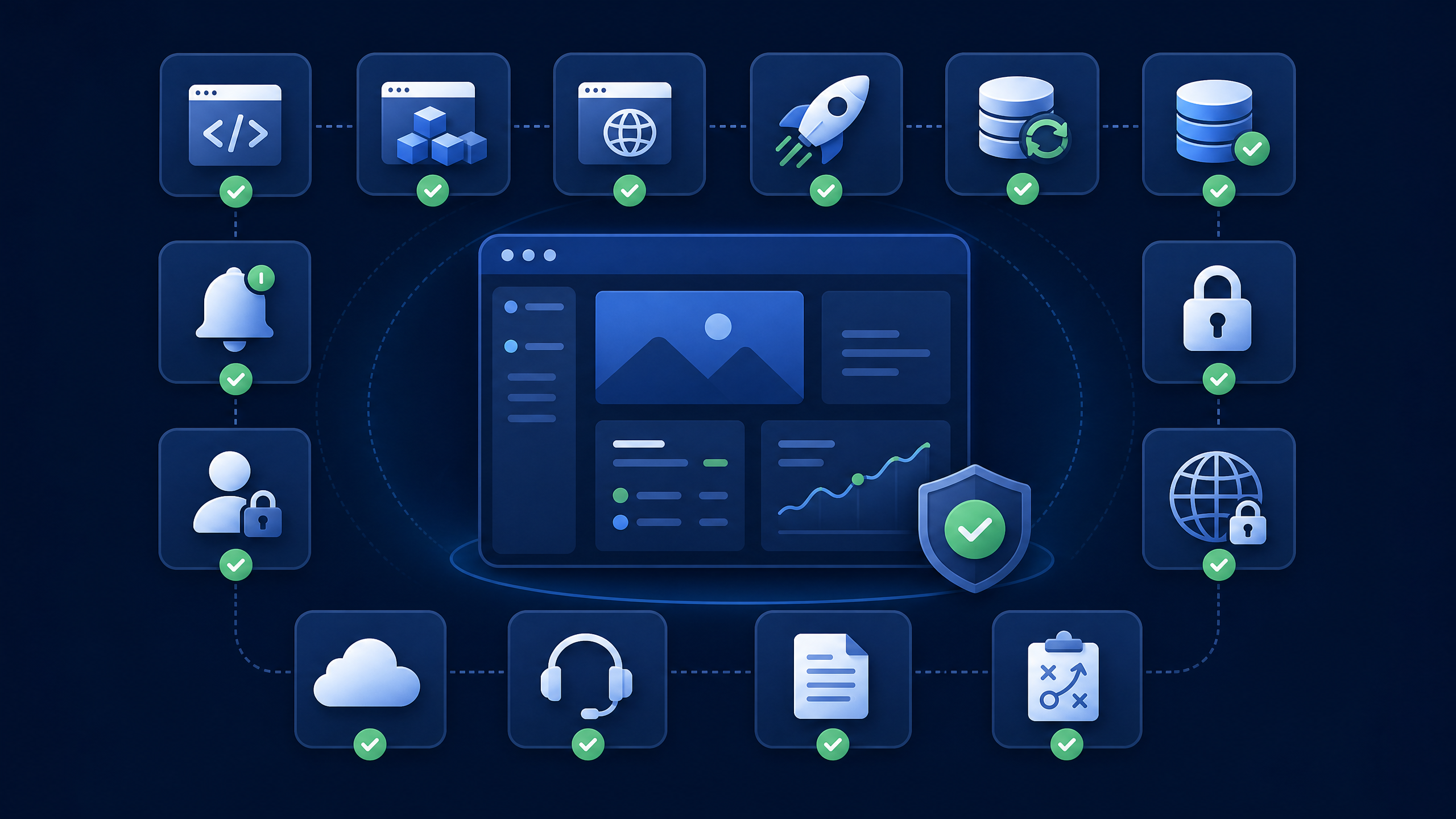
A serious WordPress operations model should include more than a place to run the website.
It should include:
| Operational capability | What it protects |
| Development, staging, and production environments | Safer testing before changes reach visitors. |
| Safe deployment workflows | More predictable releases and fewer production surprises. |
| Automated backups and tested restores | Recovery confidence when something breaks. |
| Monitoring and alerts | Faster awareness of failures and performance issues. |
| Access control | Reduced risk from unclear ownership or unmanaged credentials. |
| Security hardening | Better protection against avoidable exposure. |
| SSL and domain management | Fewer preventable outages and trust issues. |
| Cloud infrastructure support | More flexibility as the website grows or changes platforms. |
| Escalation support | A backup path when internal teams or agencies are unavailable. |
| Documentation | Less dependence on one person’s memory. |
| Continuity planning | A clear answer for what happens when key people are unavailable. |
This is the difference between “the site is hosted” and “the site is operationally covered.”
One is infrastructure.
The other is peace of mind.
The Better Question: Who Has Your Back?
When organizations evaluate WordPress hosting, they often ask:
How fast is it? How much does it cost? Does it support my plugins? Can it handle traffic?
Those are fair questions.
But serious organizations should also ask:
What happens if our developer leaves? What happens if our agency is unavailable? What happens if an update breaks production? What happens if we need to restore the site quickly? What happens if IT is too busy to help? What happens if we need a staging environment today? What happens if we want to move to AWS, Azure, DigitalOcean, OVH, or another cloud later? What happens if our website grows from one site to twenty?
These are operational questions.
And operational questions require more than cheap hosting answers.
DevPanel’s View: WordPress Needs an Operational Layer
DevPanel is built around a simple belief:
Serious websites need operational continuity.
That means your organization should not be trapped by one developer, one hosting vendor, one fragile workflow, or one undocumented deployment process.
DevPanel helps teams run WordPress and other web applications with the support of a professional operations layer behind them.
That can include cloud environments, Dev/Test/Live workflows, deployments, backups, monitoring, scaling, and escalation support.
The goal is not to sell another cheap hosting plan.
The goal is to help organizations and agencies keep their websites deployable, supportable, recoverable, and ready for change.
Cheap Hosting Has Its Place
Cheap WordPress hosting is not bad.
It is useful for many sites.
If your website is simple, low-risk, and easy to rebuild, a low-cost host may be perfectly reasonable.
But if your WordPress site supports revenue, reputation, campaigns, customers, members, donors, students, or public communication, then the risk profile is different.
At that point, the question is not:
What is the cheapest place to host WordPress?
The question is:
Who is responsible for keeping this platform operational?
The Real Cost Is Not the Hosting Bill
A cheap hosting bill is easy to understand.
Operational risk is harder to see.
But it shows up eventually.
It shows up when a deployment fails. It shows up when a site goes down during a campaign. It shows up when a developer leaves and nobody knows how to maintain the site. It shows up when backups cannot be restored. It shows up when a security issue becomes an emergency. It shows up when marketing waits days or weeks for a simple infrastructure request. It shows up when leadership asks why the website team cannot move faster.
That is the real cost.
Not the monthly hosting fee.
The real cost is lost confidence.
WordPress Hosting Is Cheap. WordPress Confidence Is Valuable.
The WordPress ecosystem has no shortage of hosting options.
That is good for the market.
But serious organizations need to recognize the difference between buying hosting and buying operational confidence.
Hosting gives your website a place to run.
Operations give your organization a way to keep moving.
That is the difference.
And for teams that depend on WordPress every day, that difference matters.
Ready to Rethink WordPress Operations?

DevPanel helps organizations and agencies run WordPress with professional cloud operations, Dev/Test/Live workflows, backups, monitoring, deployment support, and a backup operations team behind them.
Your developers keep building.
Your marketing team keeps moving.
DevPanel keeps the operational layer covered.
Schedule an operational review to see whether your WordPress environment is built for continuity, not just hosting.