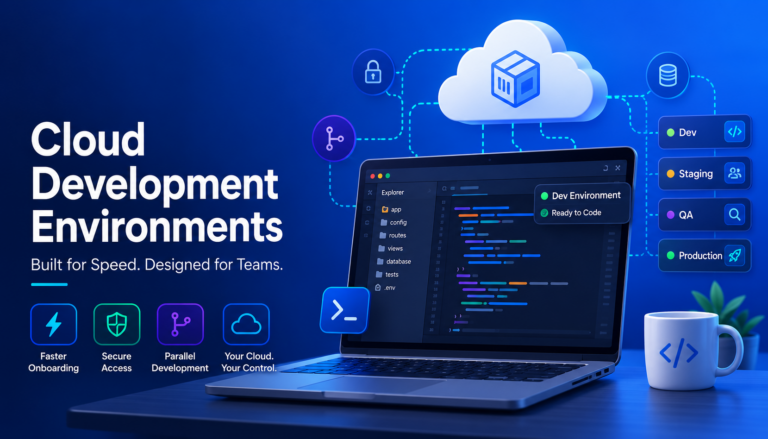
Illustration of a laptop with a cloud-based code editor, connected to development, staging, QA, and production environments.

Cloud Development Environments: The New Standard for Developer Velocity

Why the future of software engineering is moving from fragile local setups to standardized, browser-based cloud workspaces. Cloud development environments are rapidly moving from early adoption to mainstream engineering practice. The reason is simple: they solve the everyday problems that slow software teams down — broken local setups, slow onboarding, inconsistent environments, scattered access, and…
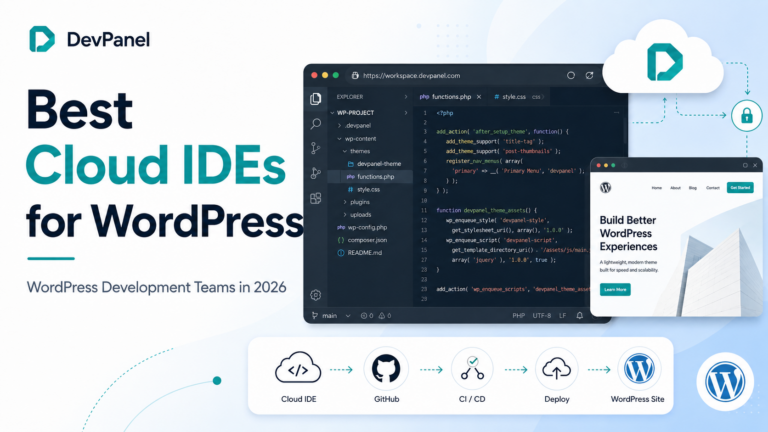
Best Cloud IDEs for WordPress in 2026 with DevPanel, a browser-based code editor, cloud deployment workflow, and WordPress site preview.

Best Cloud IDEs for WordPress Development Teams in 2026

WordPress still powers approximately 41.5% of all websites as of June 23, 2026. Yet many WordPress development teams continue to rely on local environments that are difficult to configure, inconsistent across developers, and disconnected from production infrastructure. The best cloud IDEs for WordPress solve this problem by giving developers a complete browser-based development environment with…

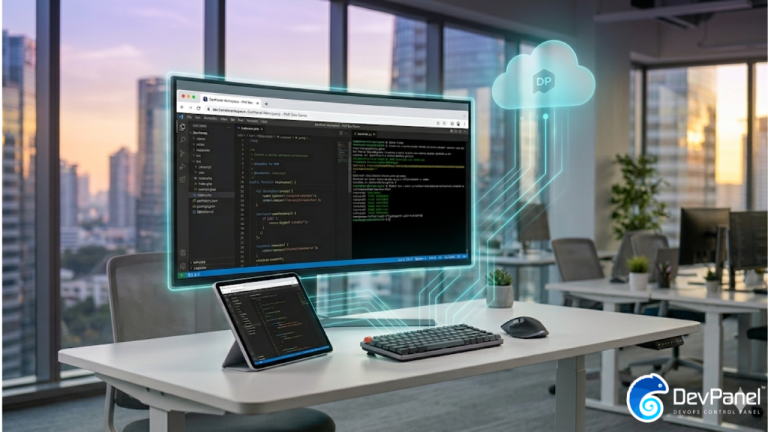
A focused developer in a modern, light-filled 2026 office, wearing a dark blue DevPanel branded t-shirt, using a tablet and an external keyboard to code in a cloud IDE. The connected monitor shows a web browser running a split-screen VS Code editor with syntax-highlighted code and a Linux terminal. A subtle cyan glowing line connects the workspace to a stylized floating cloud icon, symbolizing seamless remote compute and cloud synchronization. Warm natural light from a cityscape sunset illuminates the ergonomic setup. (Featured image for 'What Is a Cloud IDE?')

What Is a Cloud IDE? The Complete Guide to Browser-Based Development in 2026

A cloud IDE (cloud integrated development environment) is a fully browser-based coding environment that runs on remote servers instead of your local machine, and in 2026, the shift is no longer optional for competitive teams. 60% of developers now use a cloud IDE as their primary workspace, marking a definitive transition away from traditional, heavy…

Cloud Development Environments: The Complete Guide For Faster, Safer, Remote‑Ready Software Teams

Only 7% of organizations can create development environments in under an hour, which means most teams still lose days before writing a single line of code on a new project or branch. Cloud Development Environments change that by giving teams on‑demand, browser‑based workspaces that are secure, consistent, and ready for collaboration from anywhere. Key Takeaways…

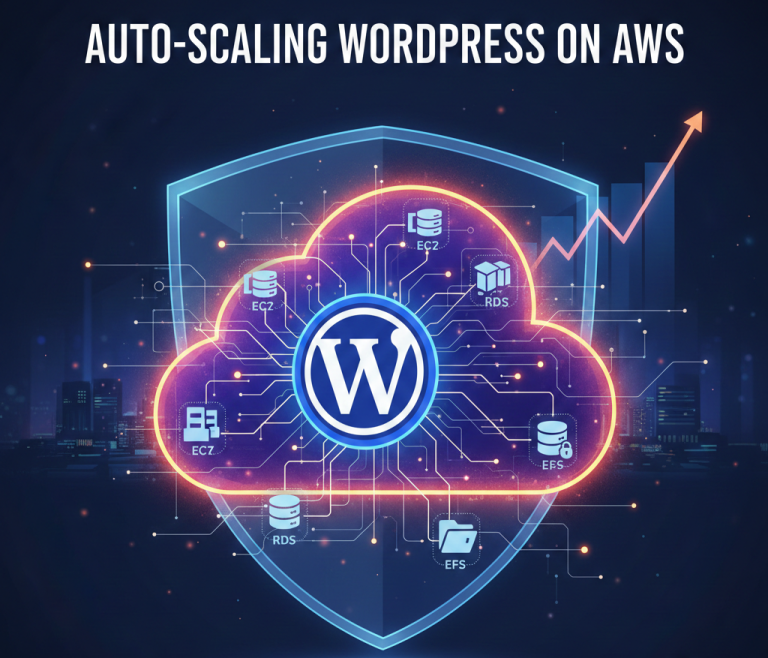
DevPanel logo next to a technical diagram of an auto-scaling WordPress architecture on AWS with cloud, database, and server icons.

Auto-Scaling WordPress on AWS: The Practical Guide To CMS Growth Without Outages

WordPress powers more than 43% of all websites, and as traffic spikes, manual server management quickly turns into a bottleneck. Auto-scaling WordPress on AWS gives growing CMS teams a way to handle surges predictably, with some sites cutting hosting costs by over 50% after migrating to autoscaled AWS infrastructure. Key Takeaways Question Answer What is…

Drupal hosting cost compared across different Providers

Pantheon vs. Acquia vs. DevPanel: Choosing the Best Drupal Hosting in 2026

The Atomic Answer (Executive Summary): In 2026, the primary factor in choosing a Drupal host is Infrastructure Orchestration. Enterprises are moving away from “Opinionated PaaS” models like Pantheon and Acquia to avoid high markups and vendor lock-in. The strategic choice for 2026 is Hybrid Orchestration via platforms like DevPanel. This model allows you to deploy…

Infographic comparison for WordPress hosting AWS vs Pantheon, featuring technical icons for Pantheon's containerized platform, a manual AWS infrastructure map, and the DevPanel automation dashboard, titled 'The Ultimate 2026 Cloud Showdown

The Ultimate WordPress Hosting Showdown: Pantheon vs. AWS vs. DevPanel

Choosing a hosting environment for WordPress is no longer just about “uptime” or “disk space.” For modern organizations, it is a strategic decision that impacts developer velocity, operational costs, and long-term scalability. The choice between managed platforms and self-managed infrastructure represents one of the most consequential decisions for organizations deploying WordPress at scale. This guide…