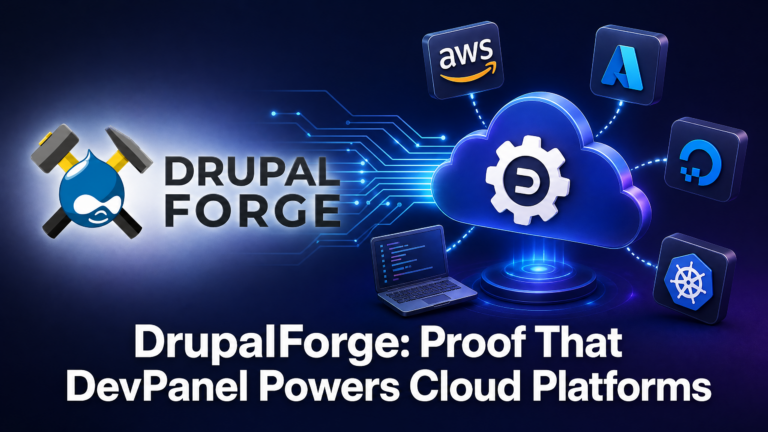
DrupalForge logo connected to a DevPanel cloud platform with AWS, Azure, DigitalOcean, Kubernetes, and developer tools, showing how DevPanel powers vertical cloud platforms.

How DrupalForge Proves DevPanel Can Power Entire Cloud Platforms

Why the future of web operations is not just hosting websites, but building vertical cloud platforms that launch, train, and scale applications automatically. Most hosting platforms are designed to do exactly one thing well: run websites. That is useful, but it is fundamentally different from powering a cloud platform. A website hosting platform gives teams…

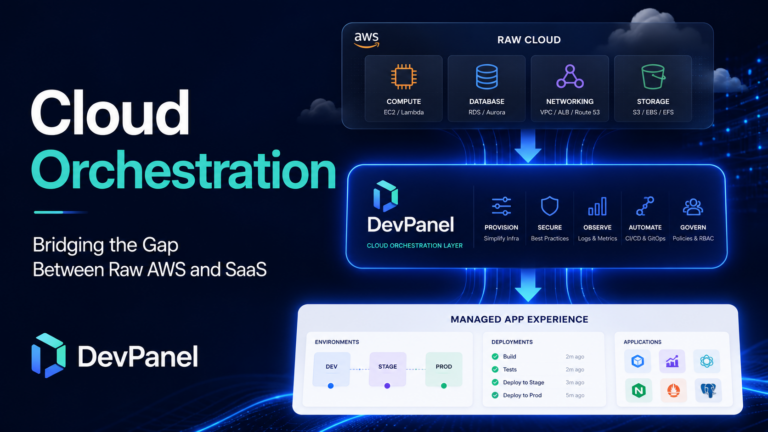
Cloud orchestration graphic showing DevPanel bridging raw AWS infrastructure and managed SaaS-style application workflows.

Cloud Orchestration: Bridging the Gap Between Raw AWS and SaaS

Cloud teams often feel trapped between two imperfect choices. On one side, there is raw cloud infrastructure: AWS, Azure, DigitalOcean, Kubernetes, databases, storage, networking, security rules, deployment pipelines, monitoring, backups, and scaling. This gives you power and control, but it also creates operational complexity. On the other side, there are managed SaaS hosting platforms. They…

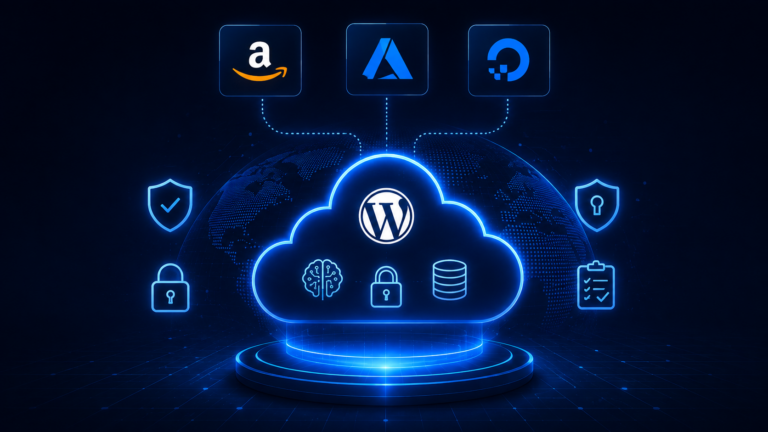
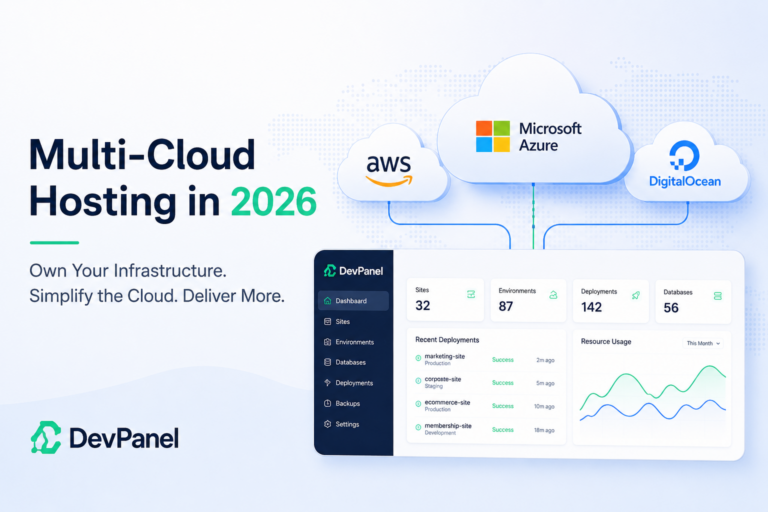
Featured image for “Multi-Cloud Hosting in 2026” showing DevPanel connecting AWS, Microsoft Azure, and DigitalOcean clouds through a unified infrastructure dashboard.

Multi-Cloud Hosting in 2026: Own Your Infrastructure Without Managing Cloud Complexity

Multi-cloud hosting is becoming a serious strategy for organizations that want more control over cost, performance, compliance, and vendor risk. For years, many website teams had only two realistic options. They could use a traditional managed hosting platform and accept its limits, or they could move directly to AWS, Azure, or DigitalOcean and take on…

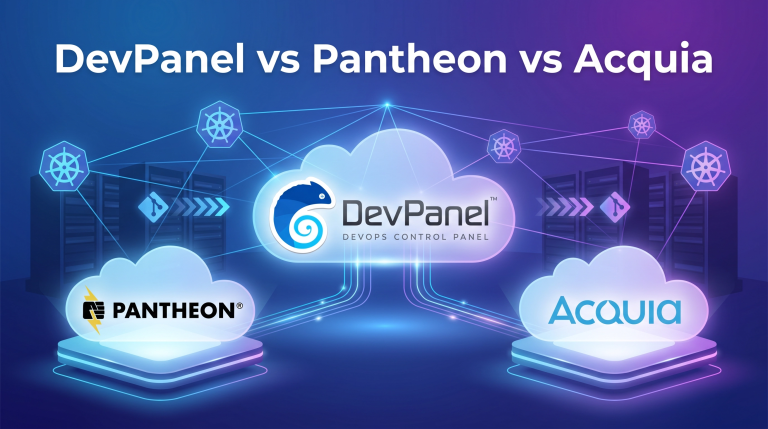
DevPanel vs Pantheon vs Acquia comparison featured image showing DevPanel as a central cloud orchestration platform connected to Pantheon and Acquia WebOps environments.

DevPanel vs Pantheon vs Acquia: The Shift from Legacy WebOps to Cloud Orchestration Ownership

The evolution of web infrastructure has reached a critical tipping point. For nearly a decade, platforms like Pantheon and Acquia improved an old model by abstracting the complexities of server management into a streamlined workflow. They made websites easier to operate, but they did not solve the foundational challenges of cloud ownership, deployment freedom, or…

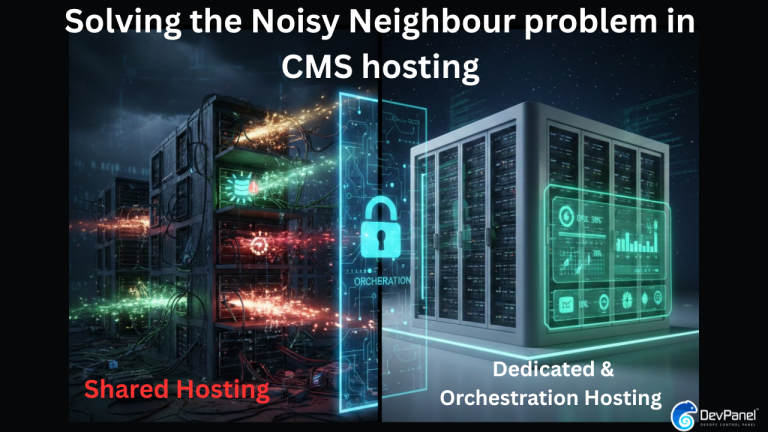
A split-screen illustration comparing shared CMS hosting with high resource contention (left) and dedicated orchestrated CMS hosting with clean, isolated performance metrics (right).

Solving the Noisy Neighbor Problem in CMS Hosting: The Ultimate Guide to Performance Isolation

The “noisy neighbor” problem represents one of the most persistent yet frequently misunderstood challenges in modern CMS hosting. For organizations running complex content management systems like Drupal and WordPress, this phenomenon can manifest as unpredictable performance degradation, inconsistent response times, and operational complexity that defies straightforward diagnosis. If you’ve ever experienced that sinking feeling where…

A conceptual 3D visualization of data sovereignty in a server room, comparing "Shared" hosting infrastructure with complex wiring and "Dedicated" hosting infrastructure protected by a glowing digital shield and lock icons, featuring a holographic global map and GDPR compliance checklist in the background.

Data Borders and CMS Architecture: Navigating Sovereignty in the Age of Cloud Compliance

In the modern digital landscape, the question “Where is my data?” has evolved from a simple IT inquiry into a multi-million dollar boardroom concern. For organizations deploying Content Management Systems (CMS) like Drupal and WordPress, the physical location of data is no longer the only factor—the legal jurisdiction governing that data is what defines its…

Here is the alt text for the image, optimized for both accessibility and SEO: ``` Infographic titled "DRUPAL ON AWS: ARCHITECTURE PITFALLS & BEST PRACTICES (2026 GUIDE)". The left side, colored red and labeled "PITFALLS", shows chaotic, tangled server wires and a broken rack next to a sad Drupal logo and AWS logo. The right side, colored blue and labeled "BEST PRACTICES", shows a clean, organized, and secure cloud server setup next to a happy Drupal logo and AWS logo. ```

Drupal on AWS: Architecture Pitfalls & Best Practices (2026 Guide)

🎧 Listen, Watch, & Learn Before diving into the architecture breakdown, explore the deep-dive research and multimedia discussions behind this guide. Key Takeaways (TL;DR) Why Your Drupal on AWS Architecture is Probably Wrong Hosting Drupal on Amazon Web Services (AWS) is far more complex than deploying a simple static application. A proper, production-grade setup is…