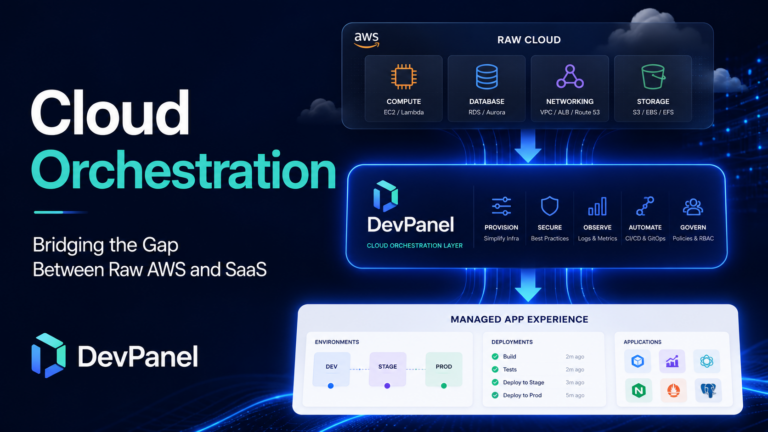
Cloud orchestration graphic showing DevPanel bridging raw AWS infrastructure and managed SaaS-style application workflows.

Cloud Orchestration: Bridging the Gap Between Raw AWS and SaaS

Cloud teams often feel trapped between two imperfect choices. On one side, there is raw cloud infrastructure: AWS, Azure, DigitalOcean, Kubernetes, databases, storage, networking, security rules, deployment pipelines, monitoring, backups, and scaling. This gives you power and control, but it also creates operational complexity. On the other side, there are managed SaaS hosting platforms. They…

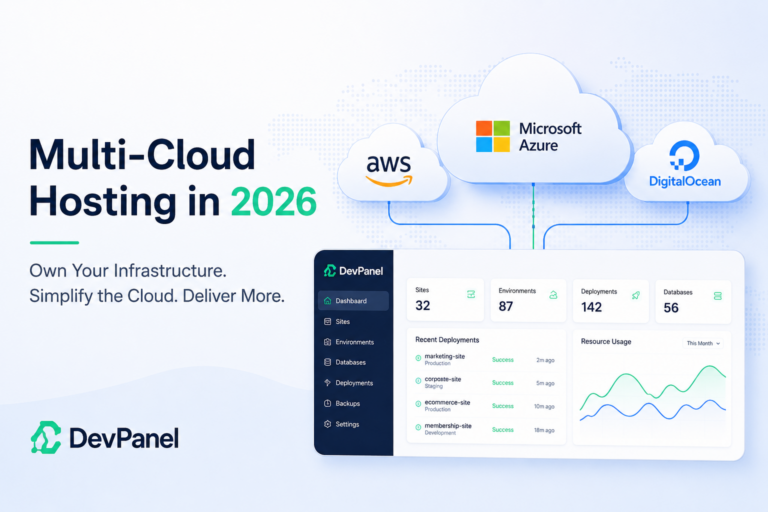
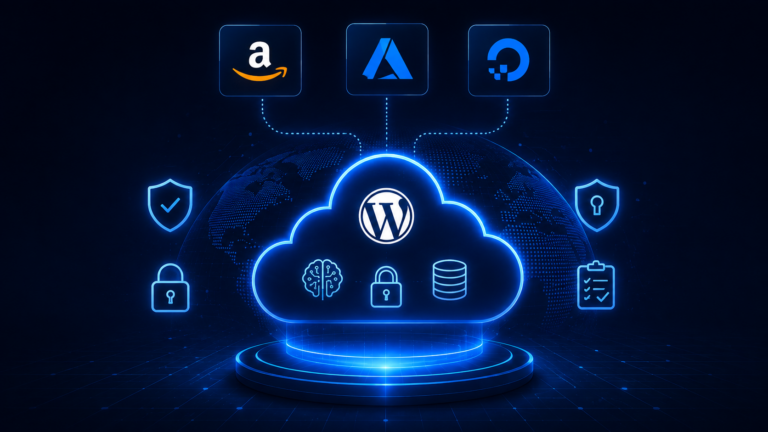
Featured image for “Multi-Cloud Hosting in 2026” showing DevPanel connecting AWS, Microsoft Azure, and DigitalOcean clouds through a unified infrastructure dashboard.

Multi-Cloud Hosting in 2026: Own Your Infrastructure Without Managing Cloud Complexity

Multi-cloud hosting is becoming a serious strategy for organizations that want more control over cost, performance, compliance, and vendor risk. For years, many website teams had only two realistic options. They could use a traditional managed hosting platform and accept its limits, or they could move directly to AWS, Azure, or DigitalOcean and take on…

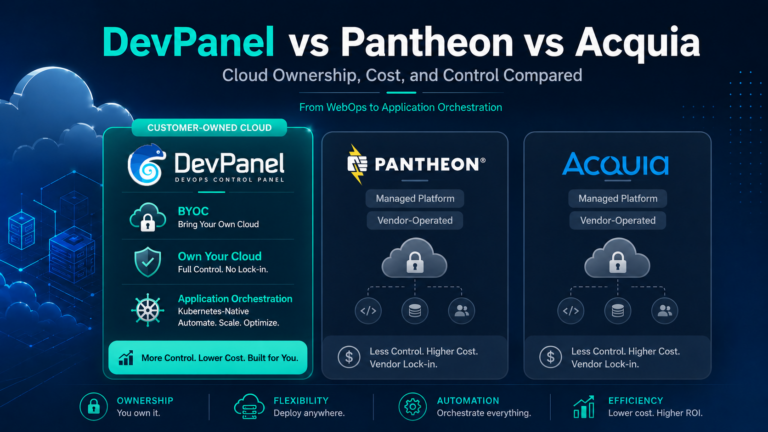
DevPanel vs Pantheon vs Acquia comparison highlighting customer-owned cloud infrastructure and vendor-operated platforms.

DevPanel vs Pantheon vs Acquia: Cloud Ownership, Cost, and Control Compared

The evolution from WebOps to application orchestration platforms Pantheon, Acquia, and DevPanel all help organizations standardize development, deployment, and application operations. The fundamental difference is not whether they provide modern workflows. It is where those workflows run, who controls the infrastructure, and how much freedom the organization retains. Pantheon provides a managed WebOps platform for…