Illustration of a laptop with a cloud-based code editor, connected to development, staging, QA, and production environments.

Cloud Development Environments: The New Standard for Developer Velocity

Why the future of software engineering is moving from fragile local setups to standardized, browser-based cloud workspaces. Cloud development environments are rapidly moving from early adoption to mainstream engineering practice. The reason is simple: they solve the everyday problems that slow software teams down — broken local setups, slow onboarding, inconsistent environments, scattered access, and…

DrupalForge logo connected to a DevPanel cloud platform with AWS, Azure, DigitalOcean, Kubernetes, and developer tools, showing how DevPanel powers vertical cloud platforms.

How DrupalForge Proves DevPanel Can Power Entire Cloud Platforms

Why the future of web operations is not just hosting websites, but building vertical cloud platforms that launch, train, and scale applications automatically. Most hosting platforms are designed to do exactly one thing well: run websites. That is useful, but it is fundamentally different from powering a cloud platform. A website hosting platform gives teams…

Best hosting platform shown as a cloud foundation teams can build on with automation, security, CI/CD, and scale.

The Best Hosting Platform Is the One Your Team Can Build On

Commodity hosting is no longer enough for serious web operations. In 2026, the strongest digital teams are not just looking for a place to put their website—they are looking for a platform engineering foundation. The best hosting platform is not always the cheapest platform, the most familiar platform, or the one with the most polished…

Cloud orchestration graphic showing DevPanel bridging raw AWS infrastructure and managed SaaS-style application workflows.

Cloud Orchestration: Bridging the Gap Between Raw AWS and SaaS

Cloud teams often feel trapped between two imperfect choices. On one side, there is raw cloud infrastructure: AWS, Azure, DigitalOcean, Kubernetes, databases, storage, networking, security rules, deployment pipelines, monitoring, backups, and scaling. This gives you power and control, but it also creates operational complexity. On the other side, there are managed SaaS hosting platforms. They…

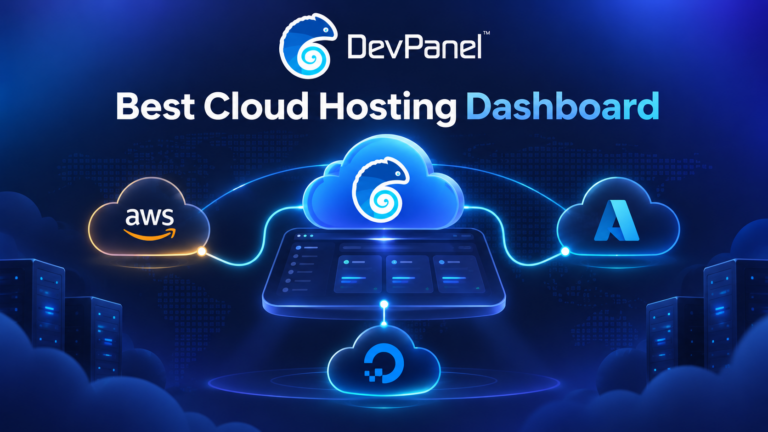
Featured image for “Multi-Cloud Hosting in 2026” showing DevPanel connecting AWS, Microsoft Azure, and DigitalOcean clouds through a unified infrastructure dashboard.

Multi-Cloud Hosting in 2026: Own Your Infrastructure Without Managing Cloud Complexity

Multi-cloud hosting is becoming a serious strategy for organizations that want more control over cost, performance, compliance, and vendor risk. For years, many website teams had only two realistic options. They could use a traditional managed hosting platform and accept its limits, or they could move directly to AWS, Azure, or DigitalOcean and take on…

WordPress on AWS Without AWS Complexity

WordPress on AWS Without AWS Complexity

AWS gives organizations extraordinary control over how their WordPress websites are hosted. You can choose where your infrastructure runs, control how resources are allocated, integrate with other cloud services, build for traffic spikes, and keep your applications and data inside your own cloud account. But that control comes with a catch. AWS gives you cloud…

Best Cloud IDEs for WordPress in 2026 with DevPanel, a browser-based code editor, cloud deployment workflow, and WordPress site preview.

Best Cloud IDEs for WordPress Development Teams in 2026

WordPress still powers approximately 41.5% of all websites as of June 23, 2026. Yet many WordPress development teams continue to rely on local environments that are difficult to configure, inconsistent across developers, and disconnected from production infrastructure. The best cloud IDEs for WordPress solve this problem by giving developers a complete browser-based development environment with…

Drupal hosting without vendor lock-in — Drupal connected to AWS, Azure, and DigitalOcean clouds with a broken chain symbolizing freedom from vendor lock-in

Drupal Hosting Without Vendor Lock-In: Run Drupal on AWS, Azure, or Your Own Cloud

Choosing the best Drupal hosting provider used to be simple: pick the company that could keep your Drupal site fast, secure, and online. That still matters, but it is no longer enough. Drupal teams need more than servers. They need Dev/Test/Live workflows, Git-based deployments, Composer, Drush, database access, logs, backups, staging environments, security controls, monitoring,…